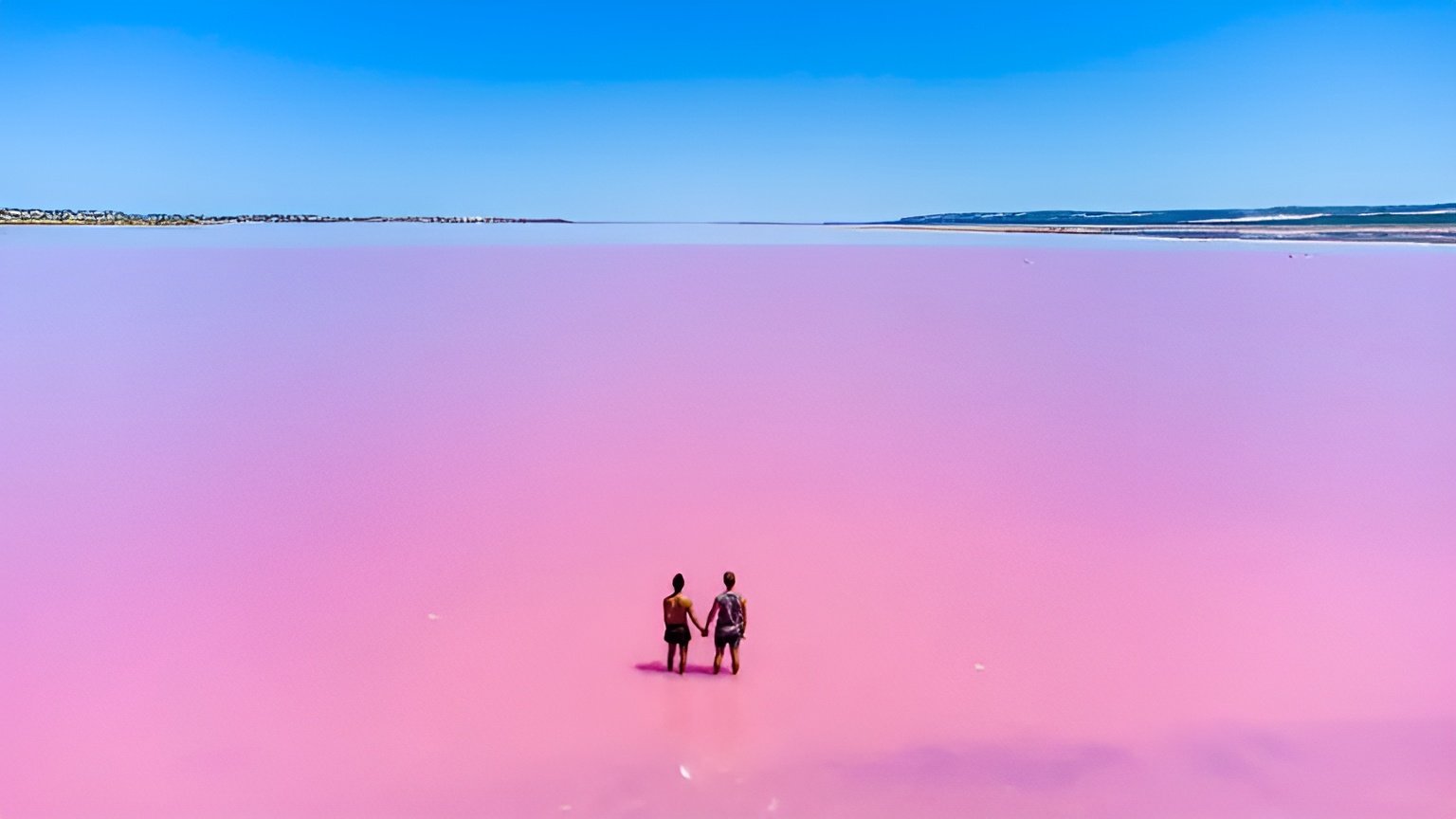

Scattered across continents, pink landscapes emerge where extreme conditions meet delicate biology, creating surreal environments that shift in tone, intensity, and texture with light, season, and chemistry.
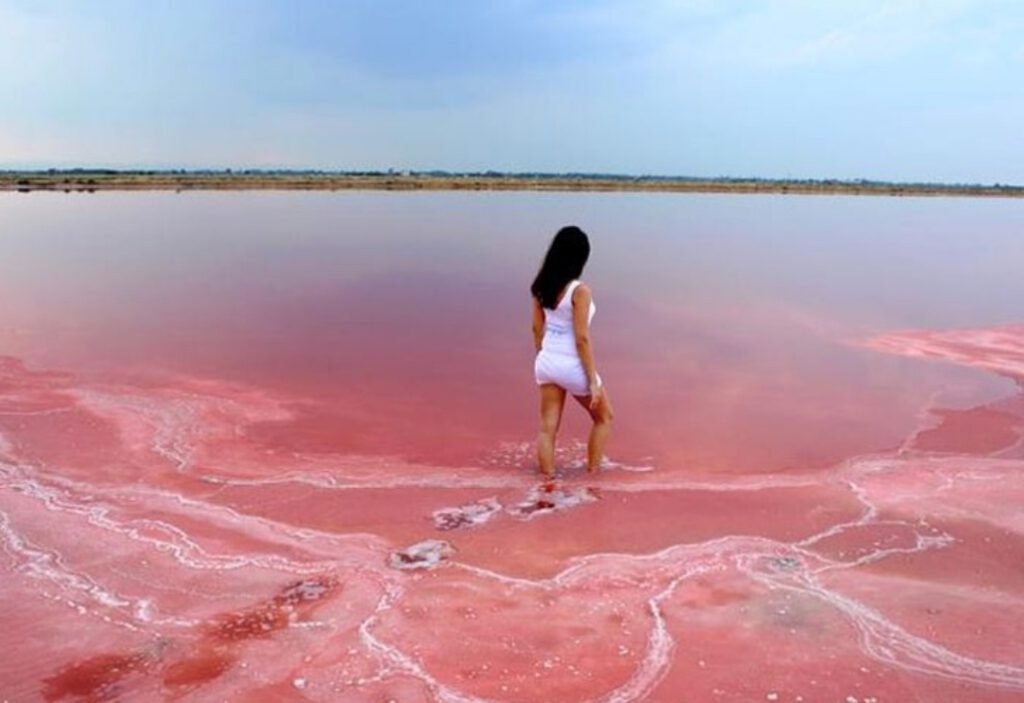
Lake Hillier, Australia
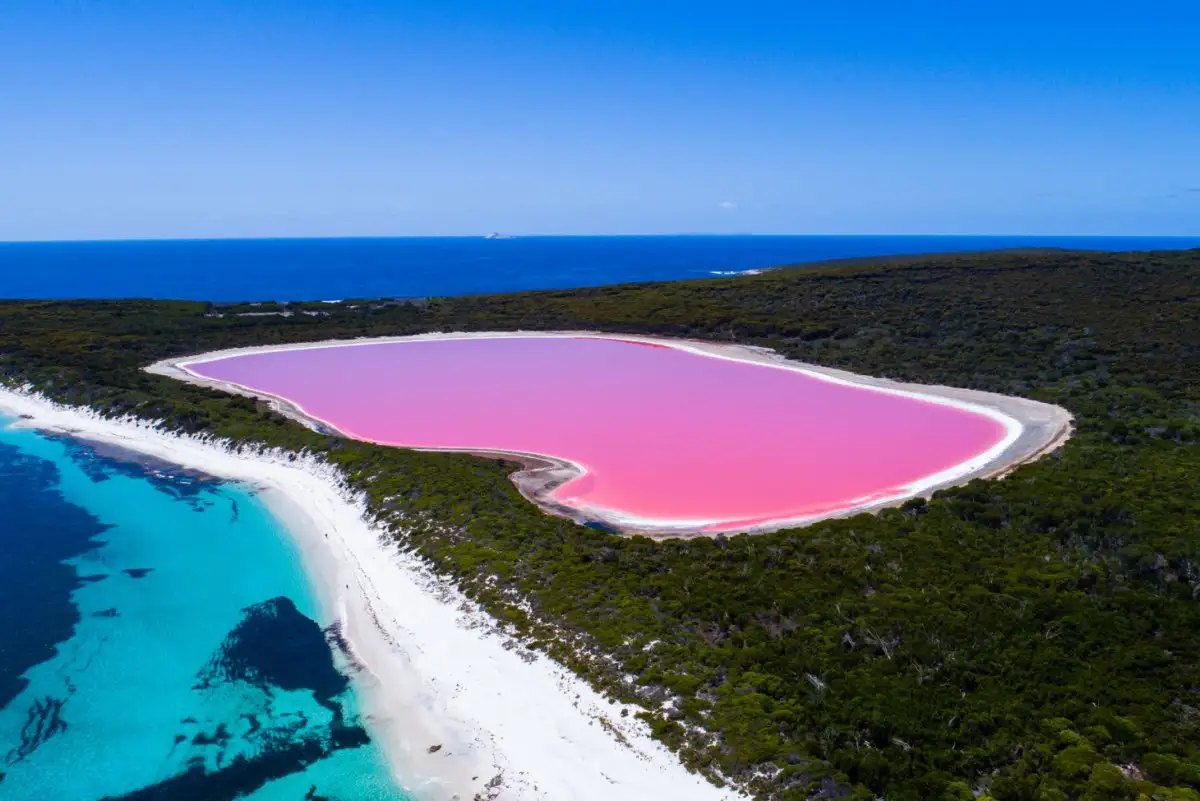
On Middle Island off the southern coast of Western Australia lies Lake Hillier, one of the most striking natural anomalies on Earth. Its water holds a vivid, bubblegum-pink hue that appears almost artificial, especially when contrasted with the deep blue of the surrounding Southern Ocean and the dark green fringe of eucalyptus forest.
Unlike many other pink lakes around the world, Lake Hillier retains its colour consistently throughout the year, regardless of weather conditions or time of day.
Scientists attribute the colour to the presence of halophilic microorganisms, particularly the algae Dunaliella salina and certain salt-loving bacteria, which produce carotenoid pigments. These thrive in the lake’s hypersaline environment, which is several times saltier than seawater. The result is a surreal landscape that feels more like a painter’s imagination than a natural formation.
The lake is relatively small, measuring about 600 metres in length, but its visual impact is immense, especially when viewed from the air. From above, the clean separation between pink water, white salt crust, and the surrounding forest creates a near-perfect colour palette. Access to the island is limited, meaning most visitors experience it via scenic flights, which only adds to its mystique. The remoteness preserves both the lake’s fragile ecosystem and its sense of wonder. Despite its unusual appearance, the water is considered safe for human contact, though swimming is rarely permitted. Lake Hillier stands as a reminder that even in a world mapped and measured, nature still produces phenomena that feel improbable and quietly extraordinary.
Hutt Lagoon, Australia
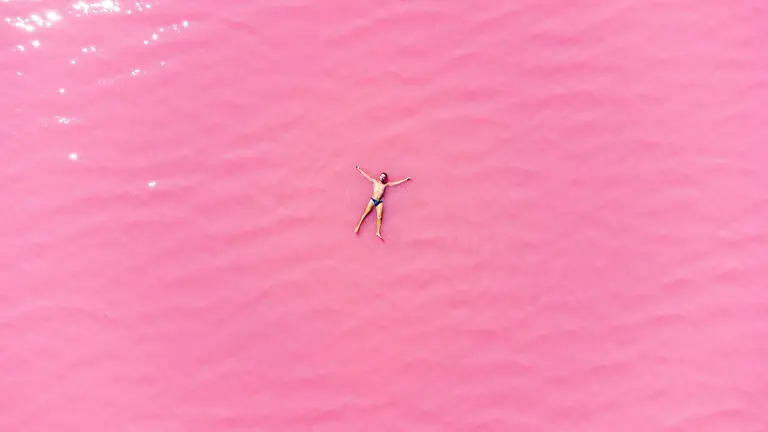
Hutt Lagoon, located near the coastal town of Port Gregory in Western Australia, is a vast and shifting pink expanse that changes colour depending on the season, time of day, and cloud cover. Unlike Lake Hillier’s constant shade, Hutt Lagoon ranges from pale lilac to deep magenta and even crimson, creating a dynamic visual experience that never quite looks the same twice. The lagoon stretches over 70 square kilometres, making it one of the largest pink lakes in the world, and its size amplifies the dramatic effect of its colour variations.
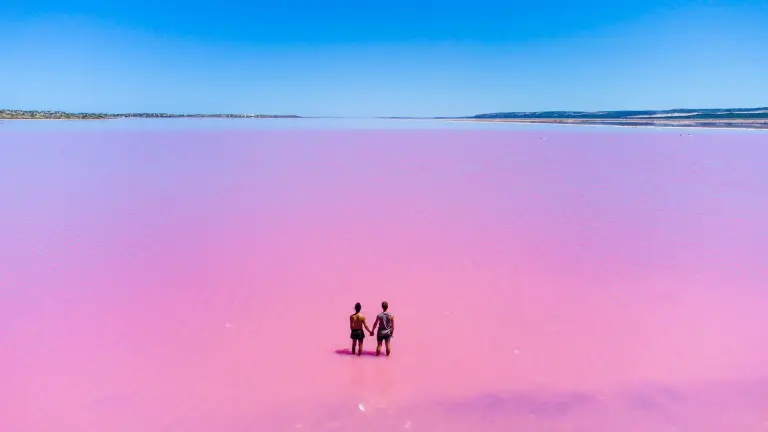
The pink tones are caused by the same microorganism, Dunaliella salina, which produces beta-carotene as a response to high salinity and intense sunlight. This pigment not only colours the water but is also commercially harvested for use in cosmetics and dietary supplements. Portions of the lagoon are managed for this purpose, adding an industrial layer to an otherwise ethereal landscape.
Visitors can drive along the lagoon’s edge, where the contrast between the dusty road, pale salt flats, and vibrant water creates a cinematic effect. At sunrise and sunset, the colours deepen and soften simultaneously, producing a dreamlike atmosphere that photographers find irresistible. The lagoon’s shallow depth means the water reflects the sky easily, further altering its appearance throughout the day. Despite its beauty, the environment is harsh and fragile, with extreme salinity limiting most forms of life. Hutt Lagoon exemplifies how extreme conditions can give rise to extraordinary aesthetics, transforming a simple body of water into a constantly evolving natural spectacle.
Las Coloradas, Mexico
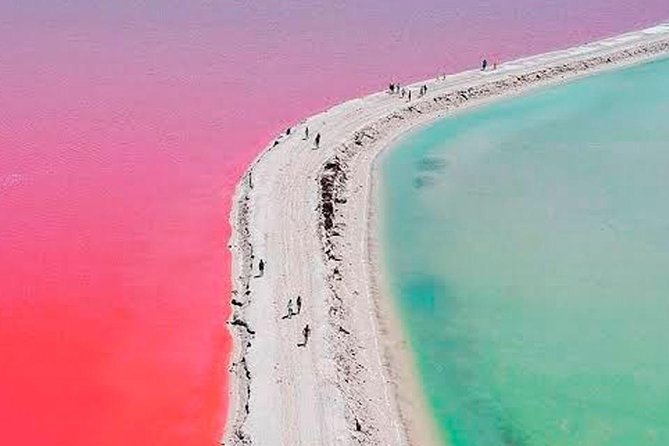
On the northern coast of Mexico’s Yucatán Peninsula lies Las Coloradas, a network of salt evaporation ponds that glow in shades of pink, coral, and red. At first glance, the landscape appears almost unreal, as though the colours have been digitally enhanced. In reality, the hues are the result of a carefully managed interaction between nature and industry. The shallow lagoons are part of a salt production facility, where seawater is allowed to evaporate under the intense tropical sun, increasing salinity and encouraging the growth of pigmented microorganisms.
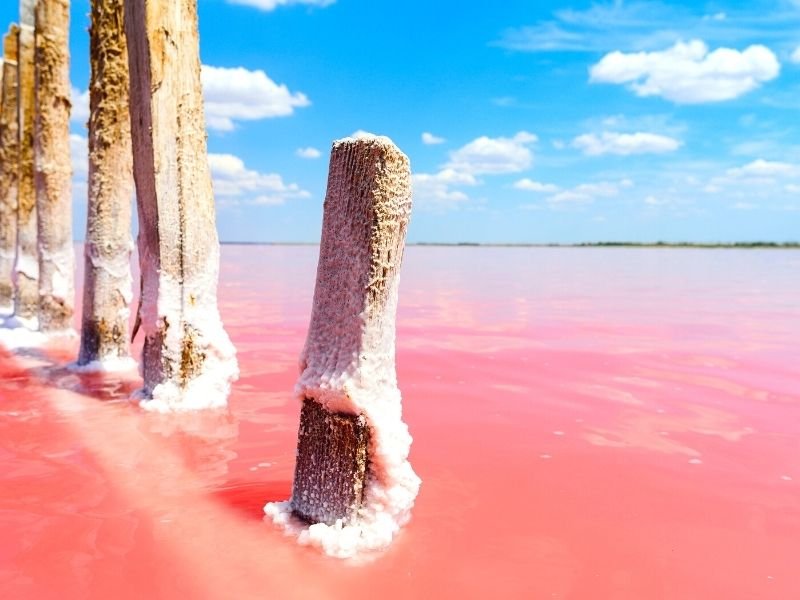
Dunaliella salina algae and halophilic bacteria again play a central role, producing carotenoids that give the water its distinctive colour. The intensity of the pink varies depending on the stage of evaporation, with some pools appearing pale and others reaching a deep, saturated red. The geometric layout of the ponds adds an unusual visual order to the landscape, creating a patchwork of colour that is best appreciated from elevated viewpoints.
The surrounding region is also home to wildlife, including flamingos, whose own pink coloration comes from a diet rich in similar pigments. Their presence reinforces the sense that this is a place where colour defines the environment at every level. While the site is primarily industrial, controlled tourism allows visitors to walk along designated paths and observe the process up close. Las Coloradas blurs the boundary between natural wonder and human intervention, demonstrating how biological processes can be harnessed to create landscapes of unexpected beauty.
Lake Retba, Senegal
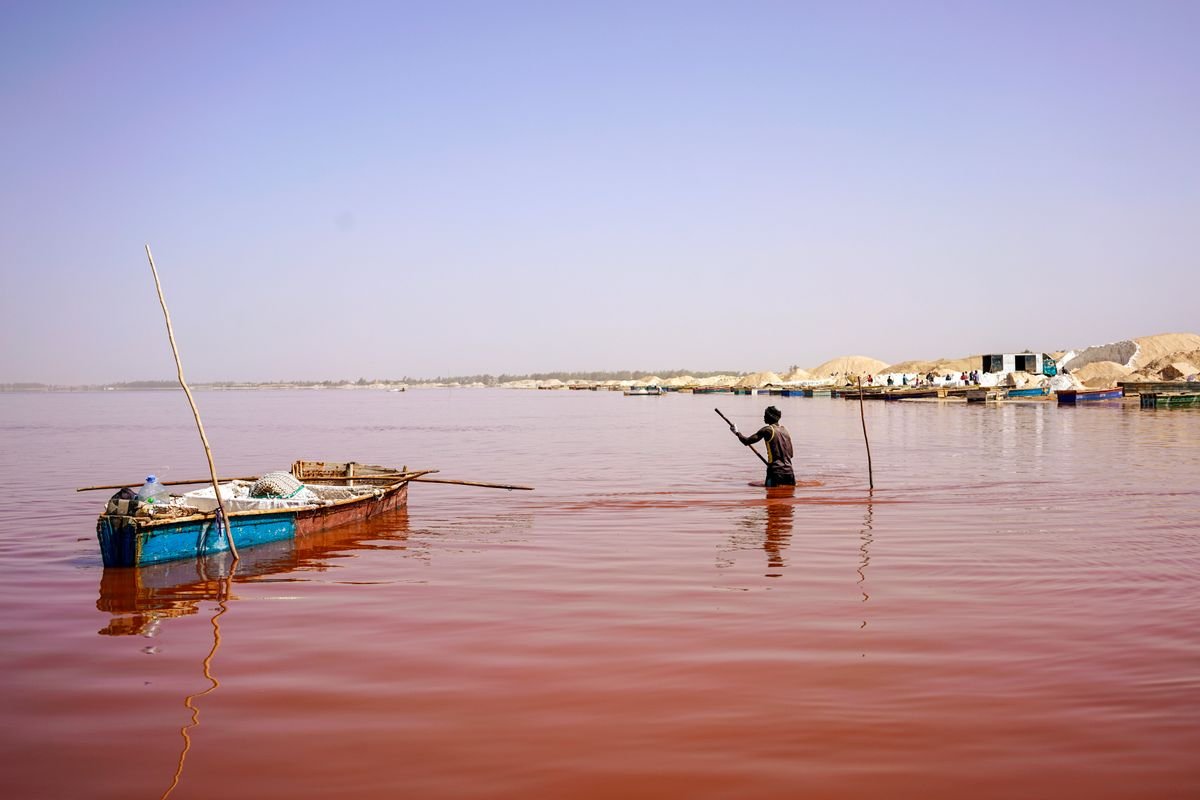
Lake Retba, commonly known as Lac Rose, lies just northeast of Dakar in Senegal and has long been one of the world’s most famous pink lakes. Its waters, once vividly rose-coloured, owe their hue to high concentrations of salt and the presence of Dunaliella salina algae. The lake’s salinity can reach levels comparable to the Dead Sea, allowing people to float effortlessly on its surface. The pink colouration is most pronounced during the dry season, when evaporation intensifies the concentration of salt and microorganisms.
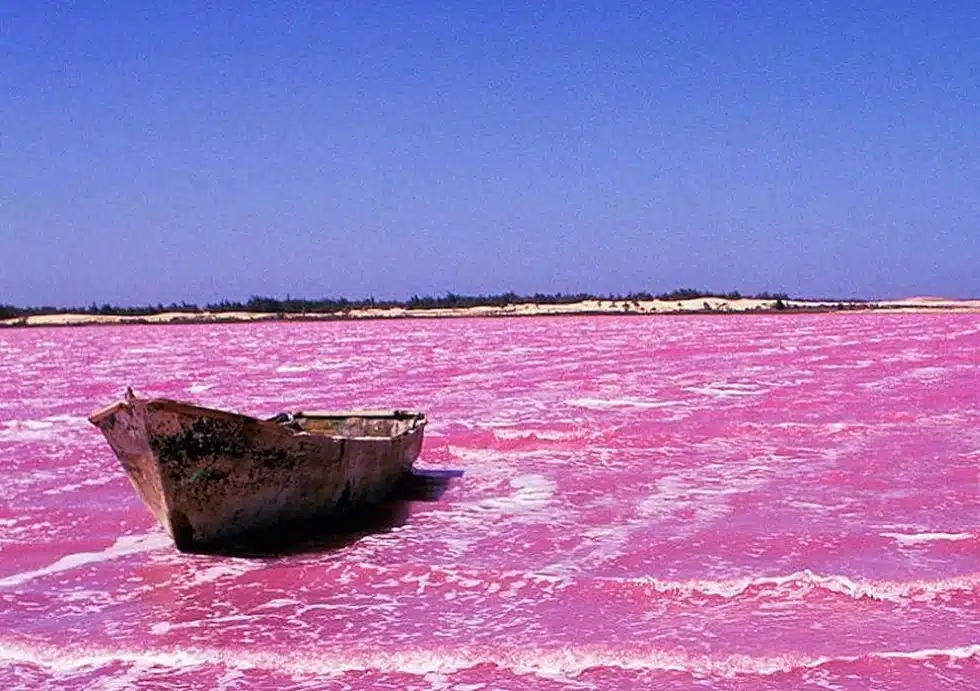
Beyond its visual appeal, Lake Retba is an important site of human activity. Local workers harvest salt from the lake using traditional methods, wading into the water and collecting crystallised deposits from the lakebed. To protect their skin from the harsh salinity, they coat themselves in shea butter, creating a striking visual contrast against the pink water and white salt piles that line the shore. This combination of labour and landscape gives the lake a distinctive cultural identity, where natural beauty and economic necessity coexist.
The surrounding terrain is sandy and sparse, which further emphasises the unusual colour of the water. In certain lighting conditions, the lake can appear almost metallic, reflecting the sun in shimmering tones of pink and gold. Although environmental changes have affected the intensity of its colour in recent years, Lake Retba remains an iconic example of how extreme natural conditions can produce landscapes that are both visually arresting and deeply intertwined with human life.
Pink Sands Beach, Bahamas
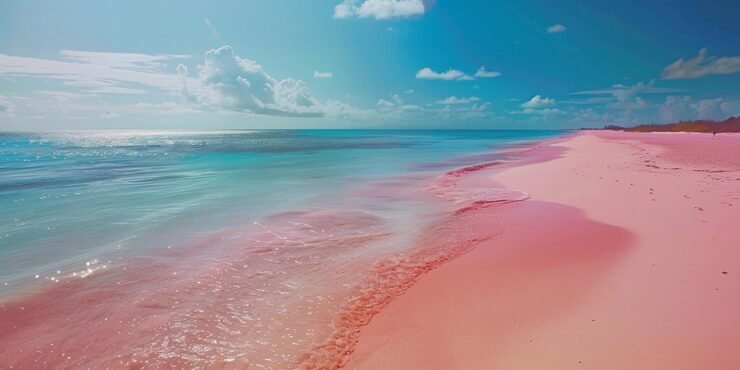
On Harbour Island in the Bahamas lies Pink Sands Beach, a stretch of shoreline that glows with a soft, blush-toned hue. Unlike the vivid pink of salt lakes, the colour here is subtle and delicate, emerging from the interaction between white sand and microscopic fragments of red and pink foraminifera, tiny marine organisms with coloured shells. Over time, waves break down these organisms and mix them with coral and shell debris, creating a fine sand that appears gently pink under sunlight.
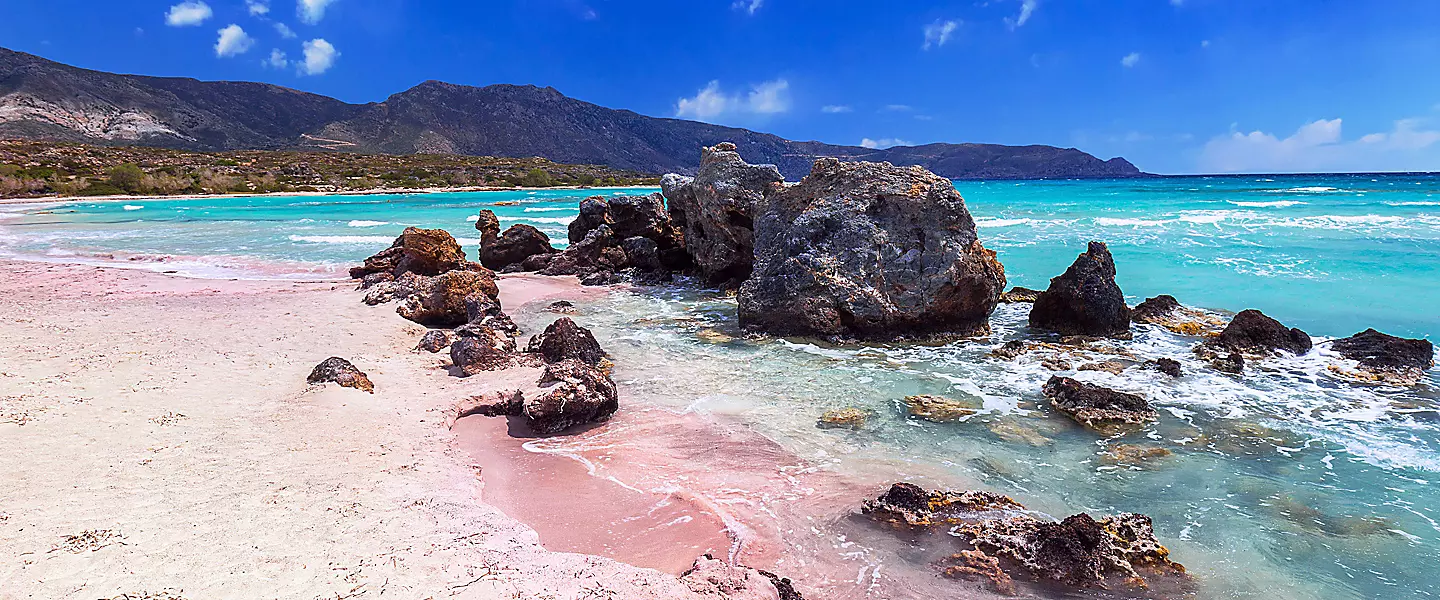
The beach extends for several kilometres, and its colour is most noticeable during early morning and late afternoon, when the angle of the sun enhances the warm tones. The surrounding ocean shifts between turquoise and deep blue, providing a serene contrast to the pastel shoreline. The effect is less dramatic than that of a pink lake but arguably more immersive, as visitors can walk, swim, and experience the colour up close.
Despite its popularity, the beach retains a sense of calm, with relatively gentle waves and a wide, open shoreline. The sand itself feels soft and powdery, adding a tactile dimension to its visual appeal. The pink hue is not uniform; it appears in varying intensities depending on the concentration of foraminifera and the movement of the tide. Pink Sands Beach demonstrates a quieter expression of natural colour, where subtle biological processes create a landscape that feels both tranquil and quietly extraordinary.
Chott el Jerid, Tunisia
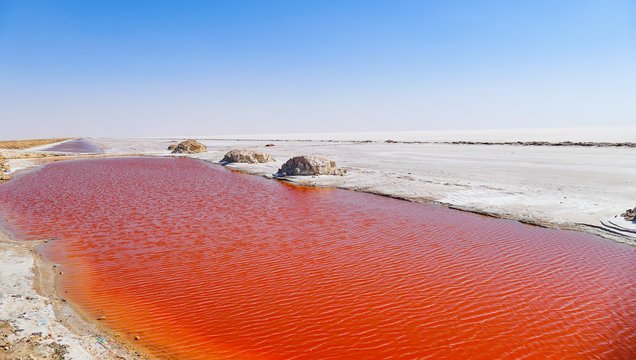
In southern Tunisia lies Chott el Jerid, a vast seasonal salt lake that transforms into a shimmering, otherworldly landscape where pink hues emerge under the desert sun. Covering thousands of square kilometres at the edge of the Sahara, it is the largest salt pan in North Africa, a place where water, salt, and heat interact to produce an environment that feels both stark and surreal.
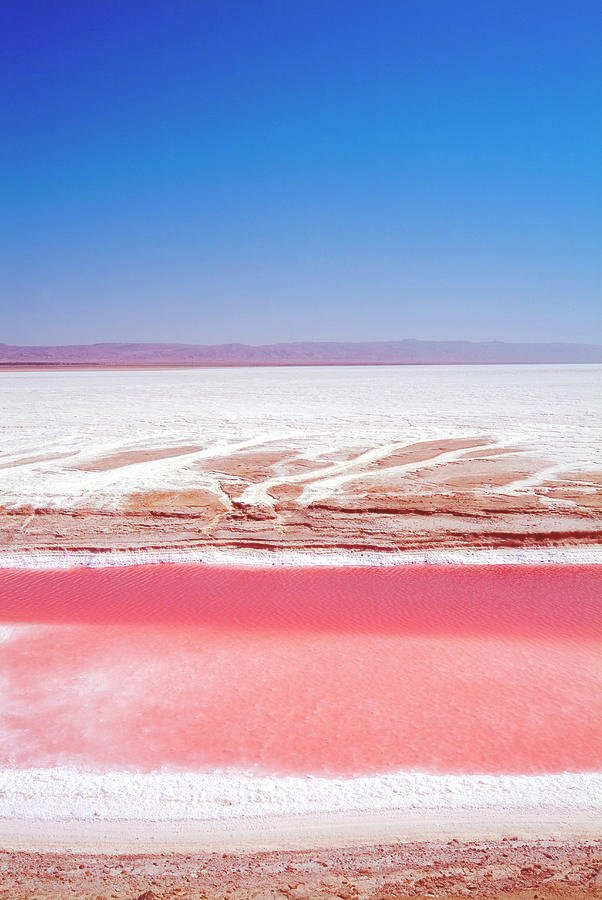
For much of the year, Chott el Jerid appears as a blinding white expanse of crystallised salt. Yet during certain conditions—particularly in the hotter months or after rainfall—shallow pools form across its surface. Within these thin films of water, salt-tolerant algae and mineral concentrations can create subtle washes of pink, peach, and amber. The effect is often fleeting and delicate, visible in patches rather than across the entire lake, but it lends the landscape an unexpected softness amid its harshness.
Mirages are common here, adding to the sense of unreality. Distant objects seem to float, and the horizon blurs into shifting bands of colour, where pale pinks can merge with gold and blue. A causeway crosses part of the lake, allowing travellers to venture into its centre, where the scale becomes overwhelming and the silence profound.
Despite its apparent emptiness, Chott el Jerid has long been part of trade routes and local culture. Today, it remains a place of quiet spectacle, where the interplay of salt, light, and heat creates a landscape that is never entirely fixed, and occasionally, unexpectedly touched with pink.Lake Hillier, Australia
On Middle Island off the southern coast of Western Australia lies Lake Hillier, one of the most striking natural anomalies on Earth. Its water holds a vivid, bubblegum-pink hue that appears almost artificial, especially when contrasted with the deep blue of the surrounding Southern Ocean and the dark green fringe of eucalyptus forest.
Unlike many other pink lakes around the world, Lake Hillier retains its colour consistently throughout the year, regardless of weather conditions or time of day. Scientists attribute the colour to the presence of halophilic microorganisms, particularly Dunaliella salina algae and certain salt-loving bacteria that produce carotenoid pigments. These thrive in the lake’s hypersaline environment, which is several times saltier than seawater. The result is a surreal landscape that feels more like a painter’s imagination than a natural formation.
The lake is relatively small, measuring about 600 metres in length, but its visual impact is immense, especially when viewed from the air. From above, the clean separation between pink water, white salt crust, and surrounding forest creates a near-perfect colour palette. Access to the island is limited, meaning most visitors experience it via scenic flights, which only adds to its mystique. The remoteness preserves both the lake’s fragile ecosystem and its sense of wonder. Despite its unusual appearance, the water is considered safe for human contact, though swimming is rarely permitted. Lake Hillier stands as a reminder that even in a world mapped and measured, nature still produces phenomena that feel improbable and quietly extraordinary.
Leave a Reply