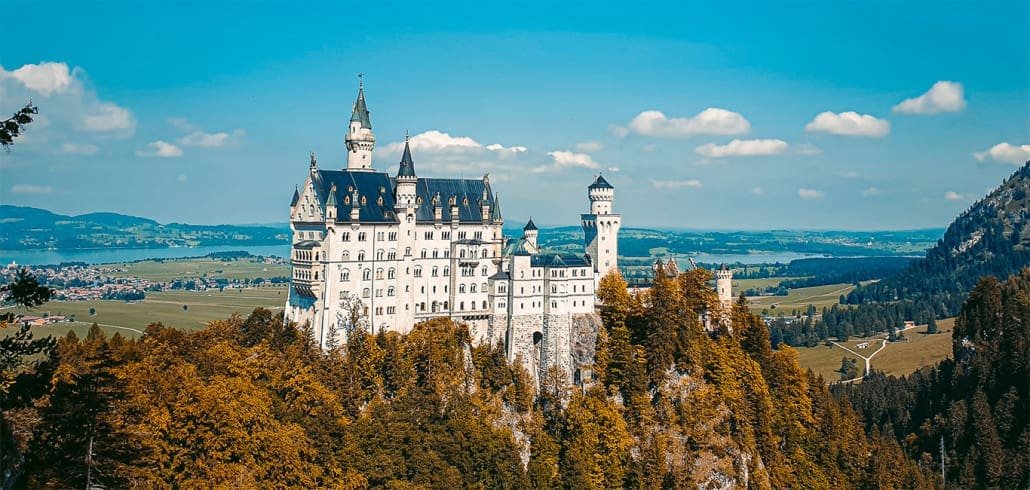

Across Europe, Gothic castles rise from forests, cliffs, and riverbanks with a theatrical sense of drama that continues to shape the continent’s visual imagination.
These structures, built primarily between the twelfth and fifteenth centuries, combine military engineering with an emerging taste for verticality, ornament, and symbolic power. Many remain among the most beautiful and evocative landmarks in Europe.
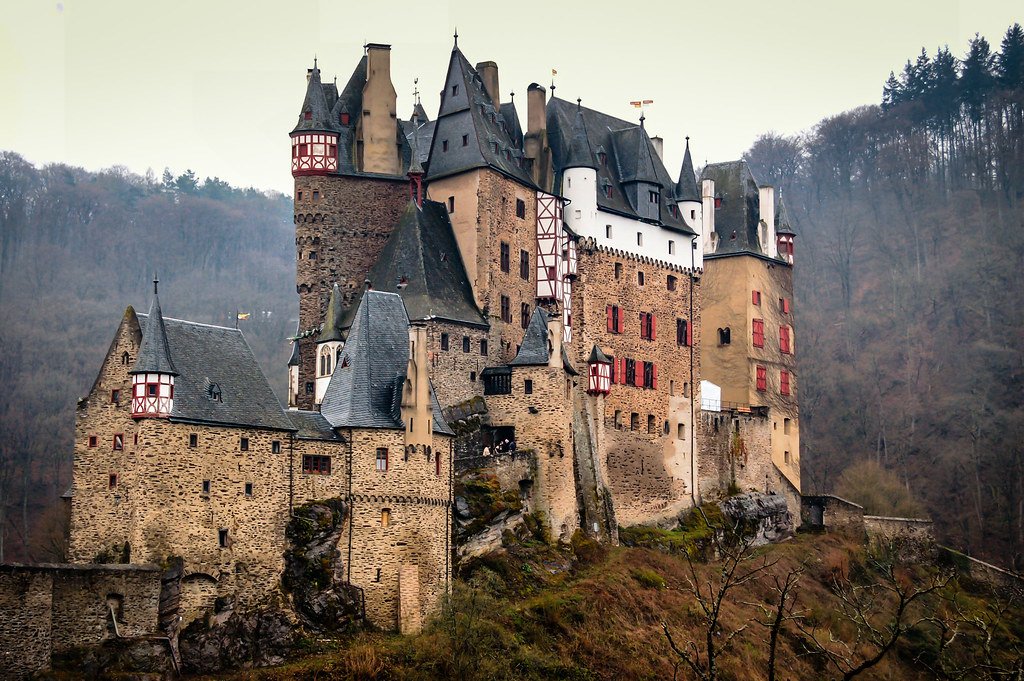
Burg Eltz castle, Germany
In Germany, Burg Eltz is often cited as one of the purest survivals of medieval castle architecture. Nestled in a wooded valley above the Moselle River, it appears almost untouched by time. Its clustered towers, steep slate roofs, and timber-framed upper levels form an irregular silhouette that feels both defensive and fantastical. Unlike many castles, Burg Eltz was never destroyed, preserving a genuine sense of Gothic domestic life alongside its romantic exterior.
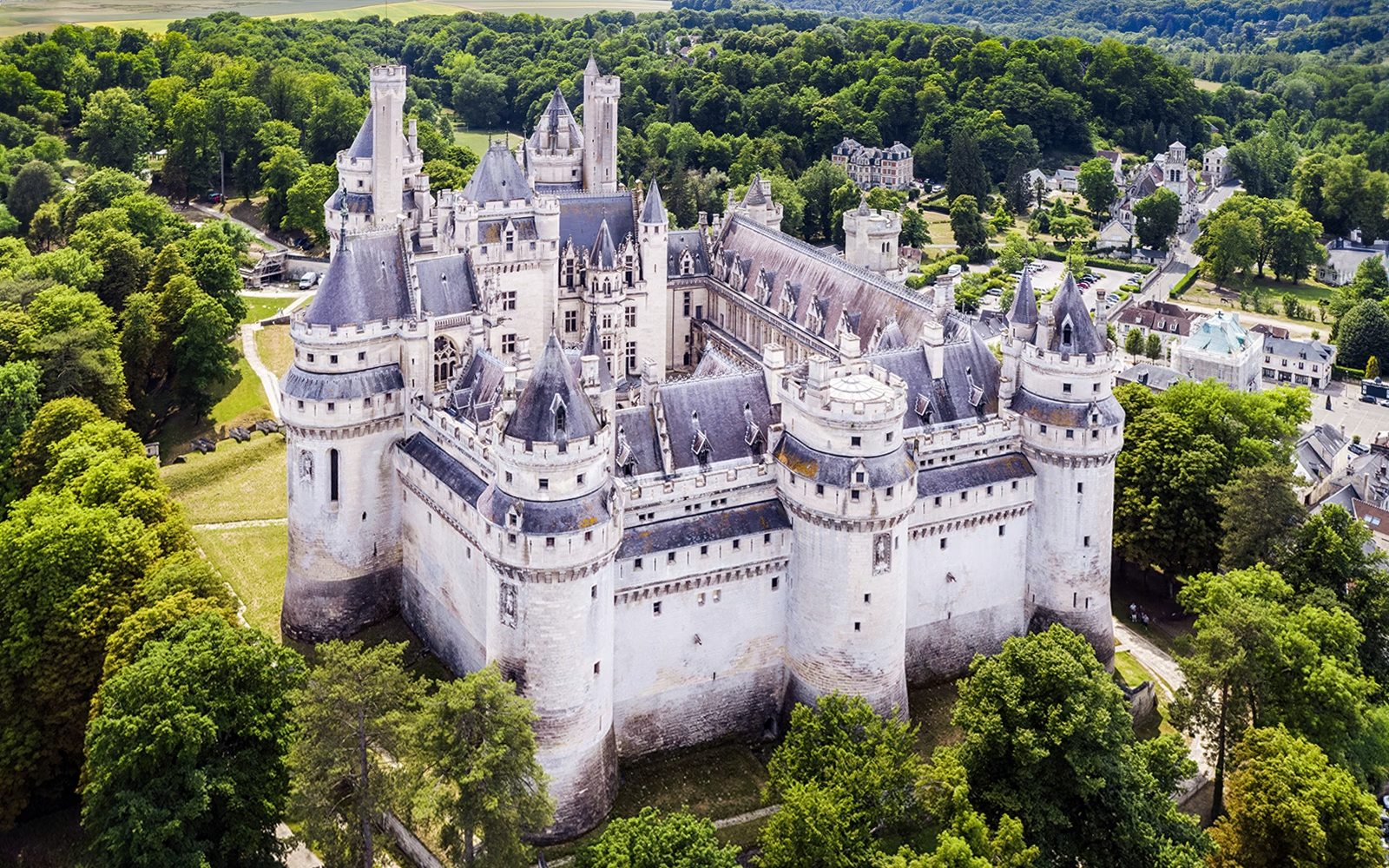
France offers a wealth of Gothic castles, but few match the dramatic presence of Château de Pierrefonds. Rebuilt in the nineteenth century by Viollet-le-Duc, it embodies an idealised vision of medieval Gothic architecture. Soaring towers, crenellated walls, and pointed arches give it an almost operatic quality. Though partially reimagined, its design is deeply rooted in Gothic principles and has influenced popular ideas of what a medieval castle should look like.
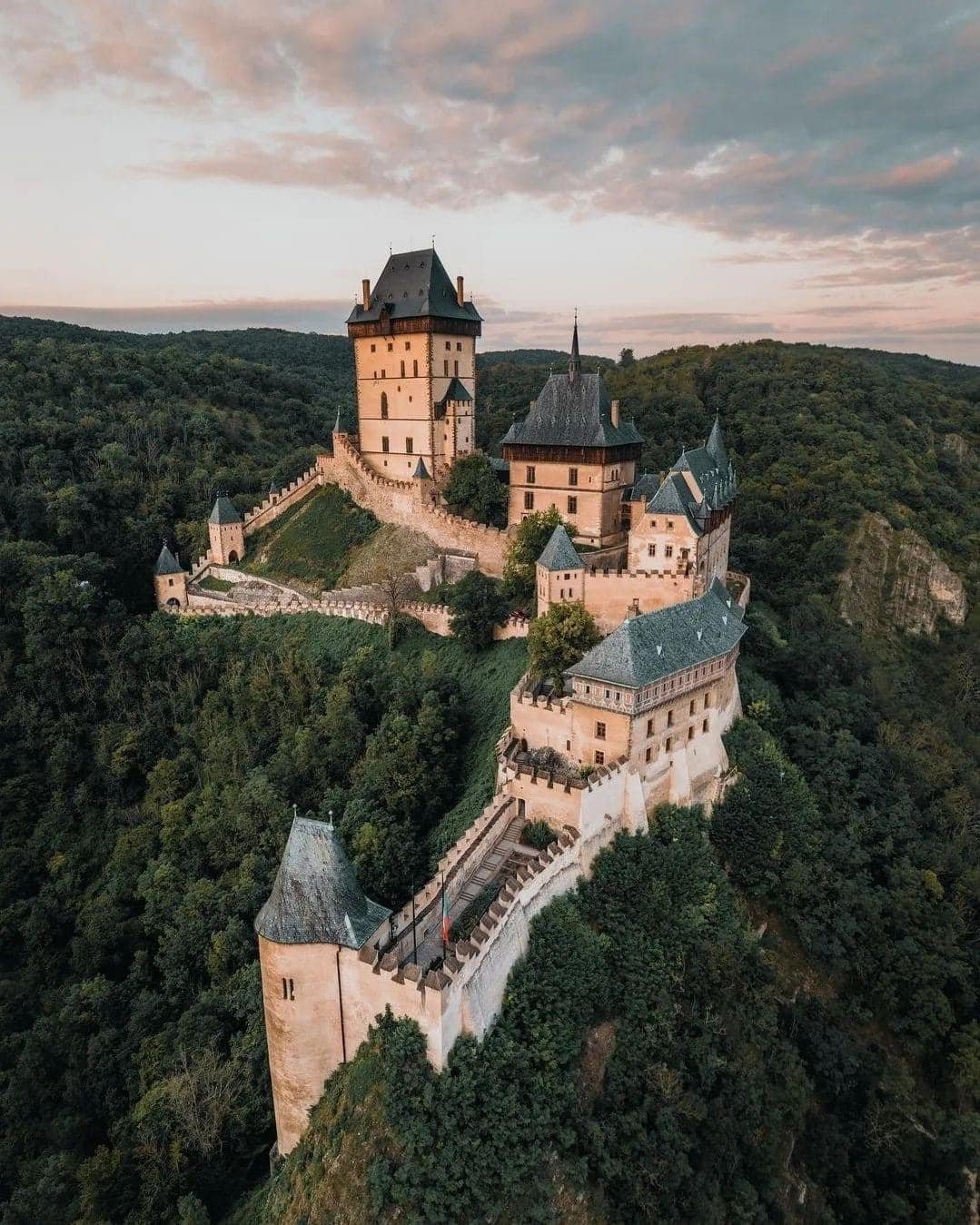
Further east, Karlštejn Castle in the Czech Republic stands as a powerful symbol of imperial ambition. Built by Emperor Charles IV, it rises in a series of fortified terraces above the Bohemian countryside. Its Great Tower, with thick walls and minimal openings, contrasts sharply with the richly decorated interiors once used to house imperial regalia. The castle’s stark vertical composition and strategic placement exemplify the Gothic emphasis on height and authority.
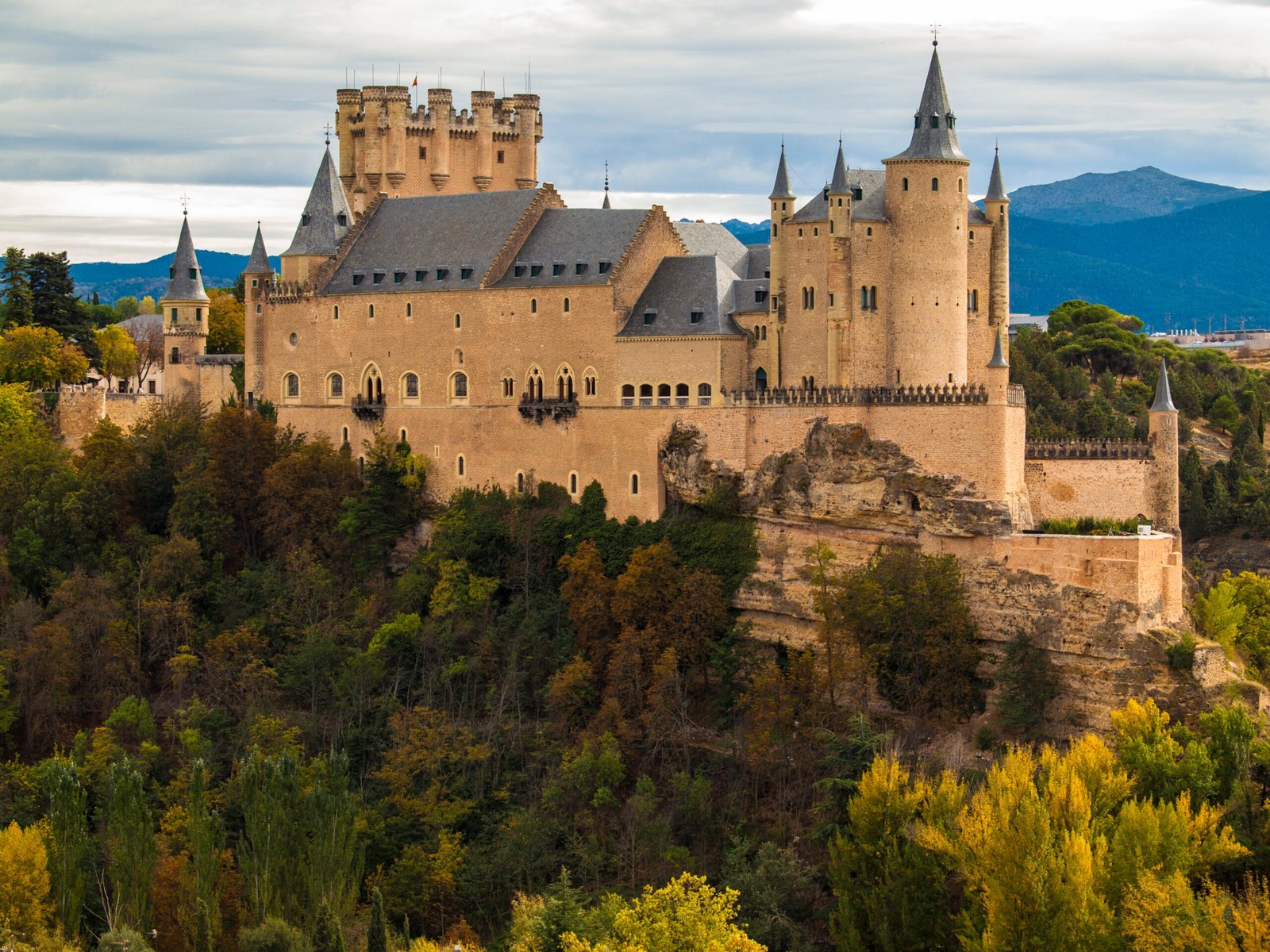
In Spain, the Alcázar of Segovia blends Gothic form with Moorish and later Renaissance influences, creating one of Europe’s most distinctive silhouettes. Perched dramatically on a rocky outcrop, its slender turrets and steeply pitched roofs evoke a fairy-tale quality. Despite its hybrid origins, the Gothic elements dominate the visual impression, particularly in its towers and fortified walls, which appear designed as much for spectacle as for defence.
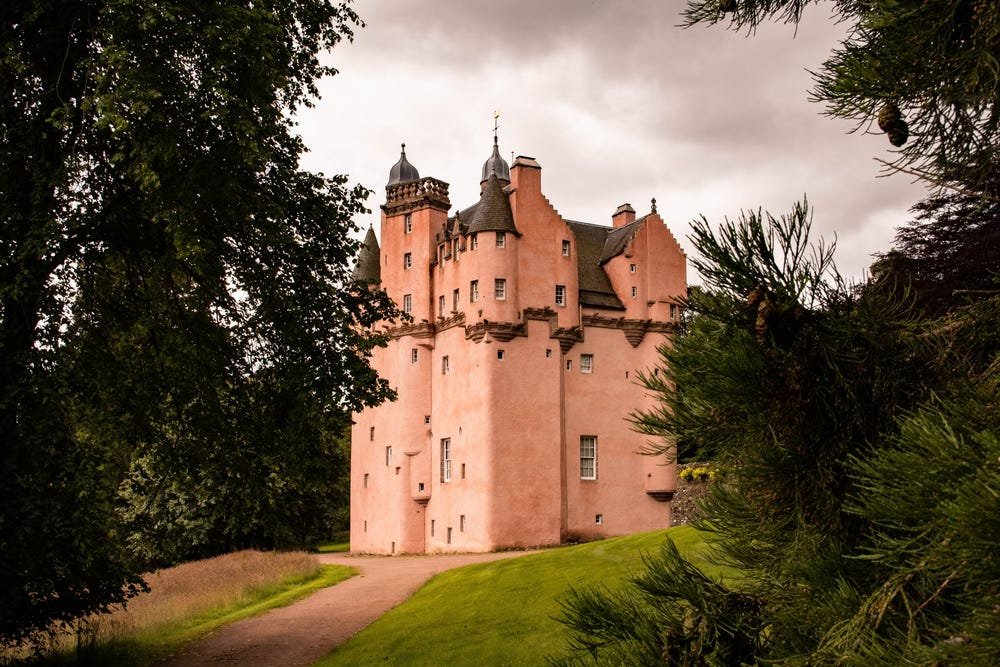
Scotland’s Craigievar Castle, though later in date, carries the Gothic spirit into a more romantic register. Rising in pink harled stone, its turrets, corbelled balconies, and vertical emphasis create a dreamlike presence against the landscape. While less overtly militaristic, it represents the enduring influence of Gothic aesthetics on castle design, prioritising drama and visual impact.
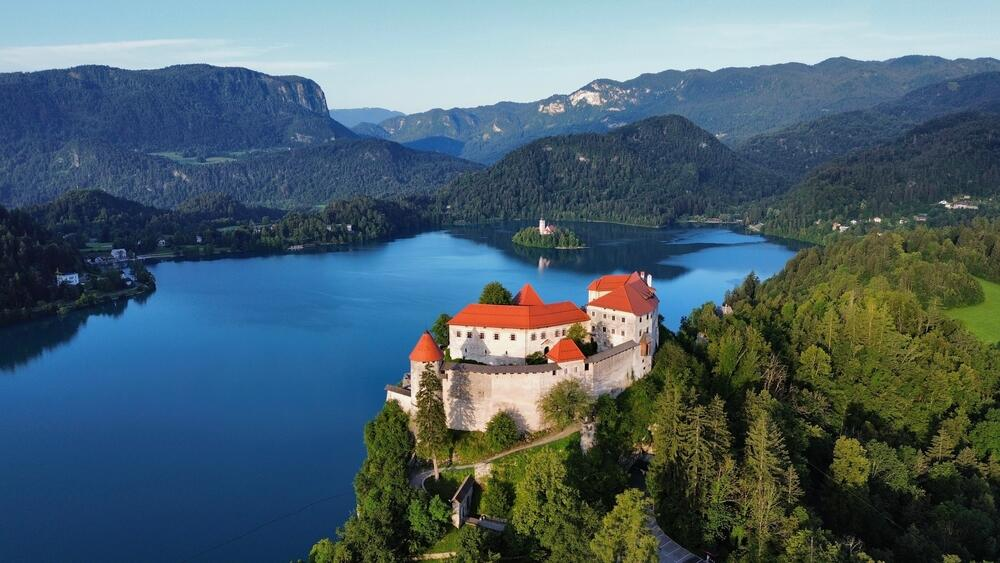
In Slovenia, Bled Castle dramatically crowns a sheer cliff overlooking Lake Bled, one of Europe’s most picturesque alpine settings. Though its origins predate the Gothic period, the castle’s later medieval development gave it a distinctly Gothic character, particularly in its defensive walls, towers, and pointed architectural details. The stark white walls contrast sharply with the deep blue lake and surrounding mountains, creating an almost unreal sense of elevation and isolation. From a distance, the castle appears to float above the landscape, reinforcing the Gothic preoccupation with dominance over nature and the sublime. Its setting, more than any single architectural feature, elevates Bled Castle into the realm of the fantastic.
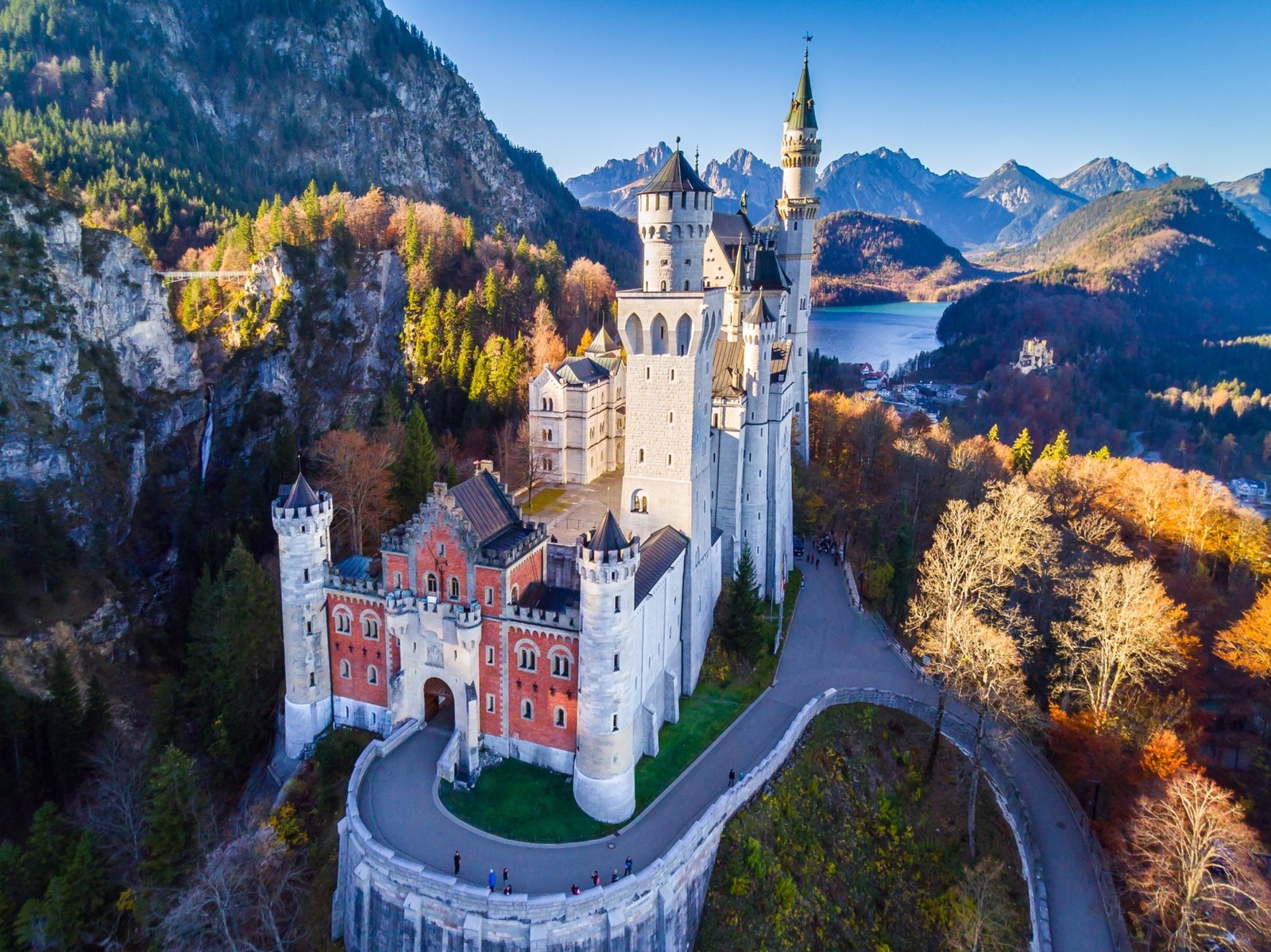
The castle made famous in the film Chitty Chitty Bang Bang is Schloss Neuschwanstein in Bavaria, Germany, and it stands as perhaps the ultimate romantic interpretation of Gothic architecture. Commissioned by King Ludwig II in the nineteenth century, it was never intended as a fortress but as a theatrical homage to medieval legend and opera. With its soaring towers, narrow windows, and cliffside position above the Pöllat Gorge, Neuschwanstein embodies an exaggerated Gothic fantasy rather than historical accuracy. Its dreamlike appearance has made it one of the most recognisable castles in the world, influencing everything from cinematic depictions of fairy tales to the design of modern theme-park castles. Though a product of Romanticism, it distils the emotional essence of the Gothic ideal into a single, unforgettable form.
Together, these castles demonstrate the enduring appeal of Gothic architecture across Europe. Whether preserved in their medieval form or reinterpreted through later restorations, they embody a fascination with height, mystery, and power. Each stands not only as a historical monument but as a testament to Europe’s long-standing desire to build structures that inspire awe and imagination.
Leave a Reply