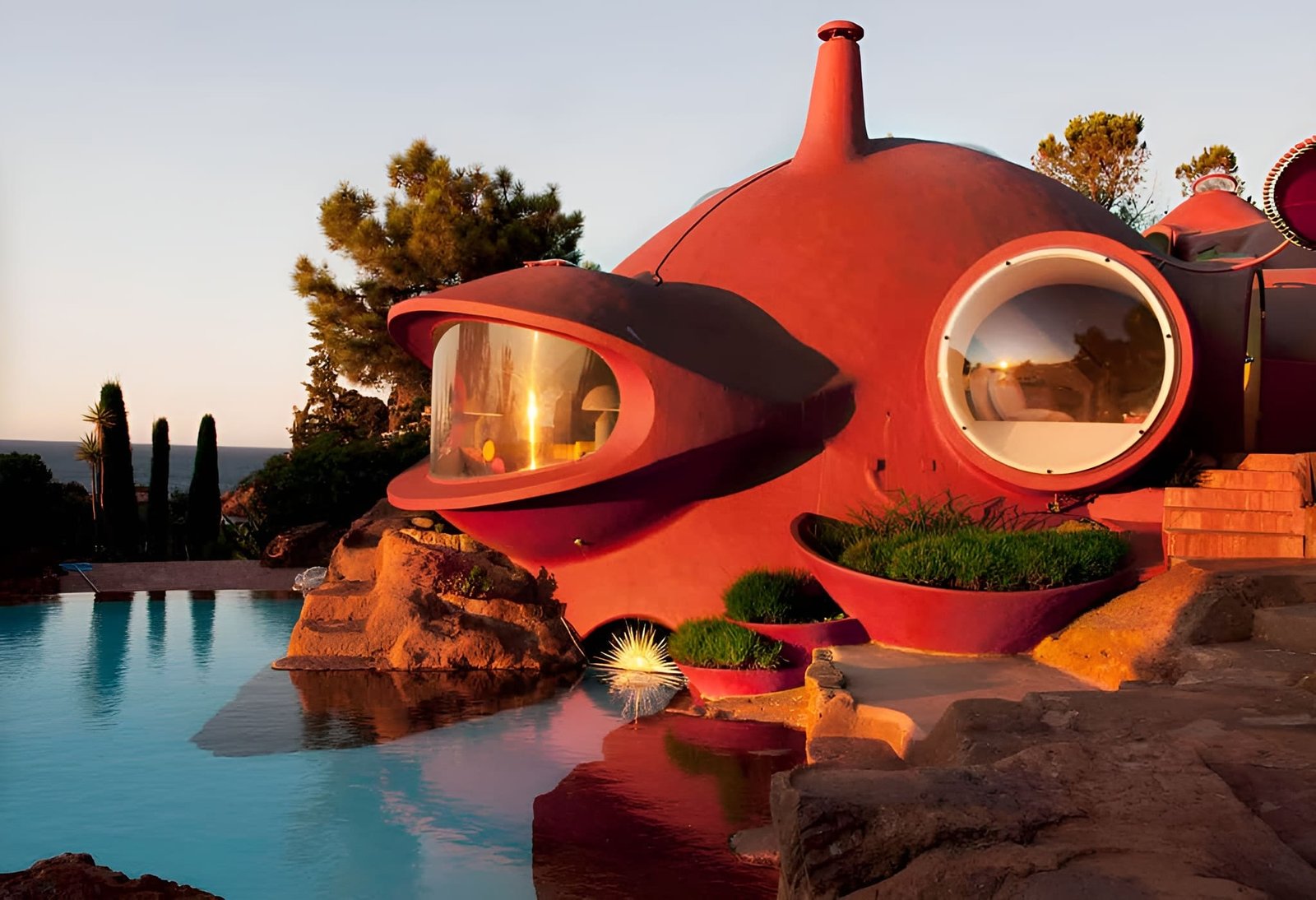

From the psychedelic architecture of the 1960s to contemporary digital renderings of Mars colonies and eco-retreats, biomorphic buildings continue to fascinate designers and the public alike.
Yet despite their enduring visual appeal, truly organic architecture remains rare outside experimental homes, museums and artistic projects. The tension between fantasy and practicality lies at the centre of biomorphic design.
The modern image of the bubble house owes much to visionary artists as much as to architects. The fantastical landscapes painted by Roger Dean, particularly his album covers for progressive rock bands during the 1970s, helped cement the visual language of organic architecture in popular culture.
Roger Dean’s ‘Home For Life’ project
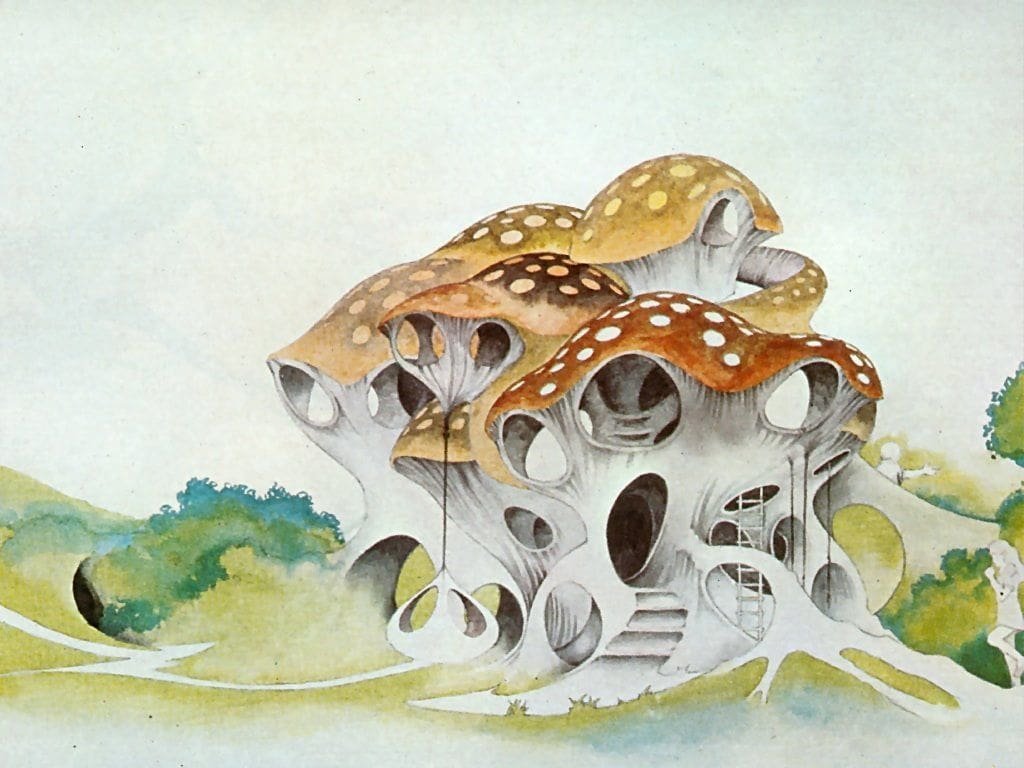
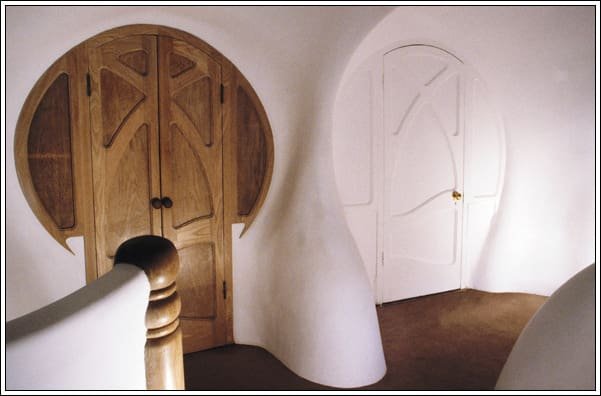
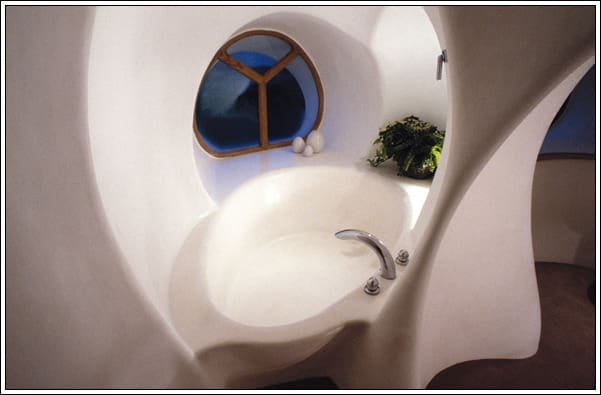
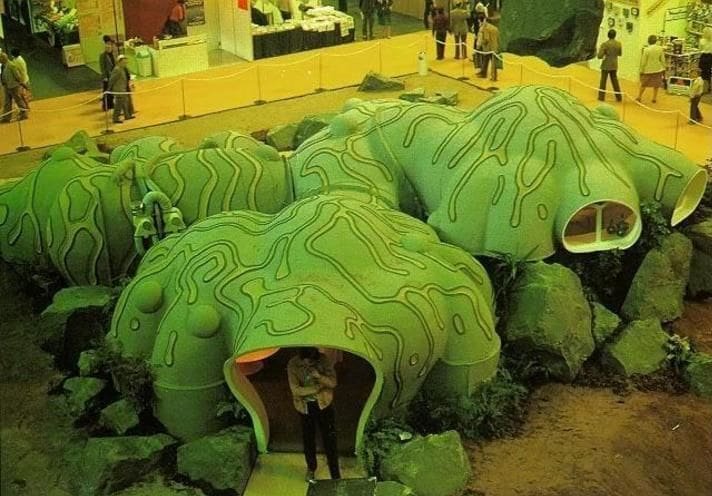
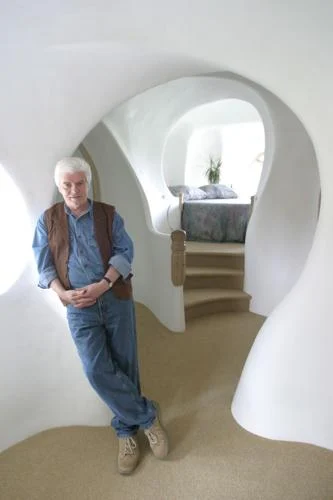
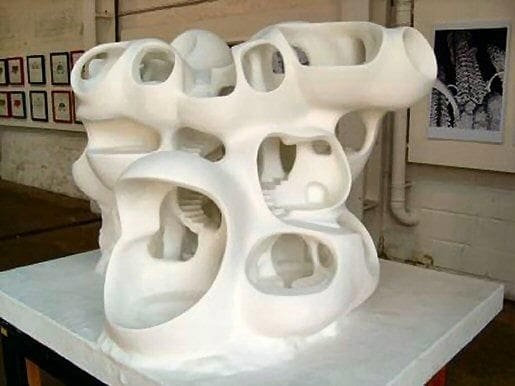
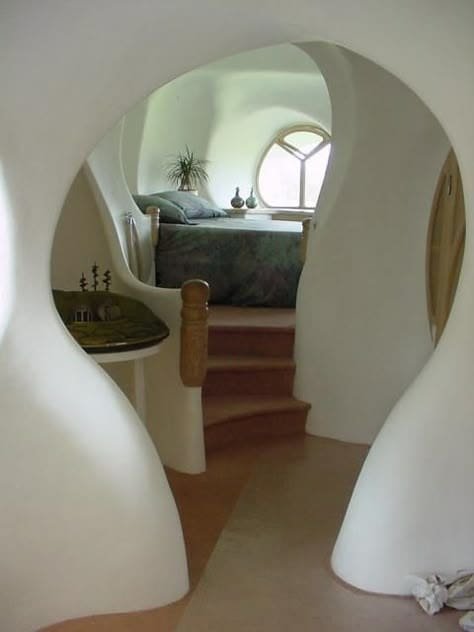
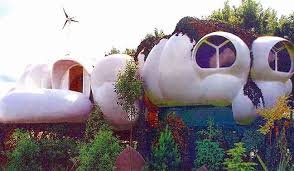
Dean imagined vast rounded dwellings perched on cliffs or emerging from forests like living organisms. His structures appeared grown rather than built, shaped by natural forces instead of engineering calculations. Similar imagery appeared in the work of architects such as Antti Lovag, whose famous Palais Bulles in France transformed the bubble house into physical reality through interconnected spherical chambers.
Psychologically, these forms appeal to deep human instincts. Biomorphic architecture imitates curves found throughout nature: caves, shells, eggs, hills and the human body itself. Cognitive studies have repeatedly suggested that people respond more positively to curved forms than to sharp angles. Curves are perceived as softer, safer and more welcoming, while straight lines and corners can feel mechanical or defensive.
Rounded interiors also evoke childhood associations with protection and enclosure, recalling womb-like spaces or natural shelters. In a world increasingly dominated by glass towers, concrete grids and digital interfaces, organic architecture offers emotional escape. It promises a more harmonious relationship between humans and nature.
There is also a utopian dimension to bubble houses. Since the early twentieth century, futuristic architecture has often reflected hopes for social transformation. Biomorphic buildings imply freedom from industrial repetition and suburban conformity. They suggest individuality, creativity and environmental integration. Their flowing shapes seem anti-bureaucratic, rejecting the standardisation of mass housing developments. This partly explains why such structures frequently appear in science fiction, countercultural movements and ecological design concepts.
Flowing shapes seem anti-bureaucratic, rejecting the standardisation of mass housing developments
Yet the very qualities that make biomorphic buildings attractive also make them difficult to construct and inhabit at scale. Modern building systems are fundamentally based on straight lines and modular repetition. Standard bricks, timber lengths, steel beams, plasterboard sheets and window units are designed for rectangular construction because it is efficient, economical and easy to maintain. Curved walls and irregular spaces demand custom fabrication, specialist labour and complex engineering. Costs rise rapidly when every component must be individually shaped or adjusted.
Practical living also favours geometry. Furniture, appliances and storage systems are overwhelmingly rectangular because straight edges maximise usable space. In bubble houses, fitting kitchens, wardrobes or shelving into curved interiors can become awkward and inefficient. Repairs and renovations are similarly complicated. Waterproofing unusual roof shapes, replacing bespoke windows or extending organic structures often requires expensive specialist work.
Urban planning presents another obstacle. Large-scale housing depends upon density, repeatability and infrastructure efficiency. Rectangular buildings stack neatly, connect easily to roads and utilities, and simplify construction logistics. Biomorphic housing, by contrast, resists repetition. What works as a striking artistic statement for a single luxury home becomes economically unsustainable when multiplied across thousands of dwellings.
Forever a fantasy
For this reason, biomorphic architecture survives mainly as fantasy, spectacle or niche experimentation. Its enduring popularity reveals less about how people truly want to live and more about what they feel modern cities lack: softness, individuality and emotional connection to the natural world.
Living in a bubble
Here are a few of the bubble house projects that came to fruition, and the problems they encountered.
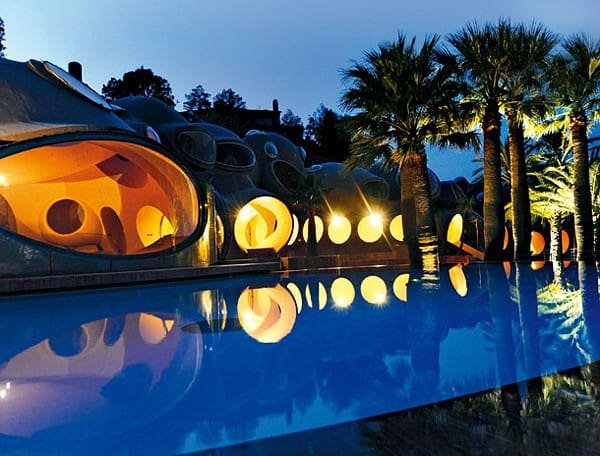
Palais Bulles
Perhaps the definitive bubble house, Palais Bulles remains the benchmark against which all biomorphic residential architecture is measured. Designed by Hungarian architect Antti Lovag and completed between 1975 and 1989, the sprawling Mediterranean complex was conceived as a rejection of orthogonal architecture.
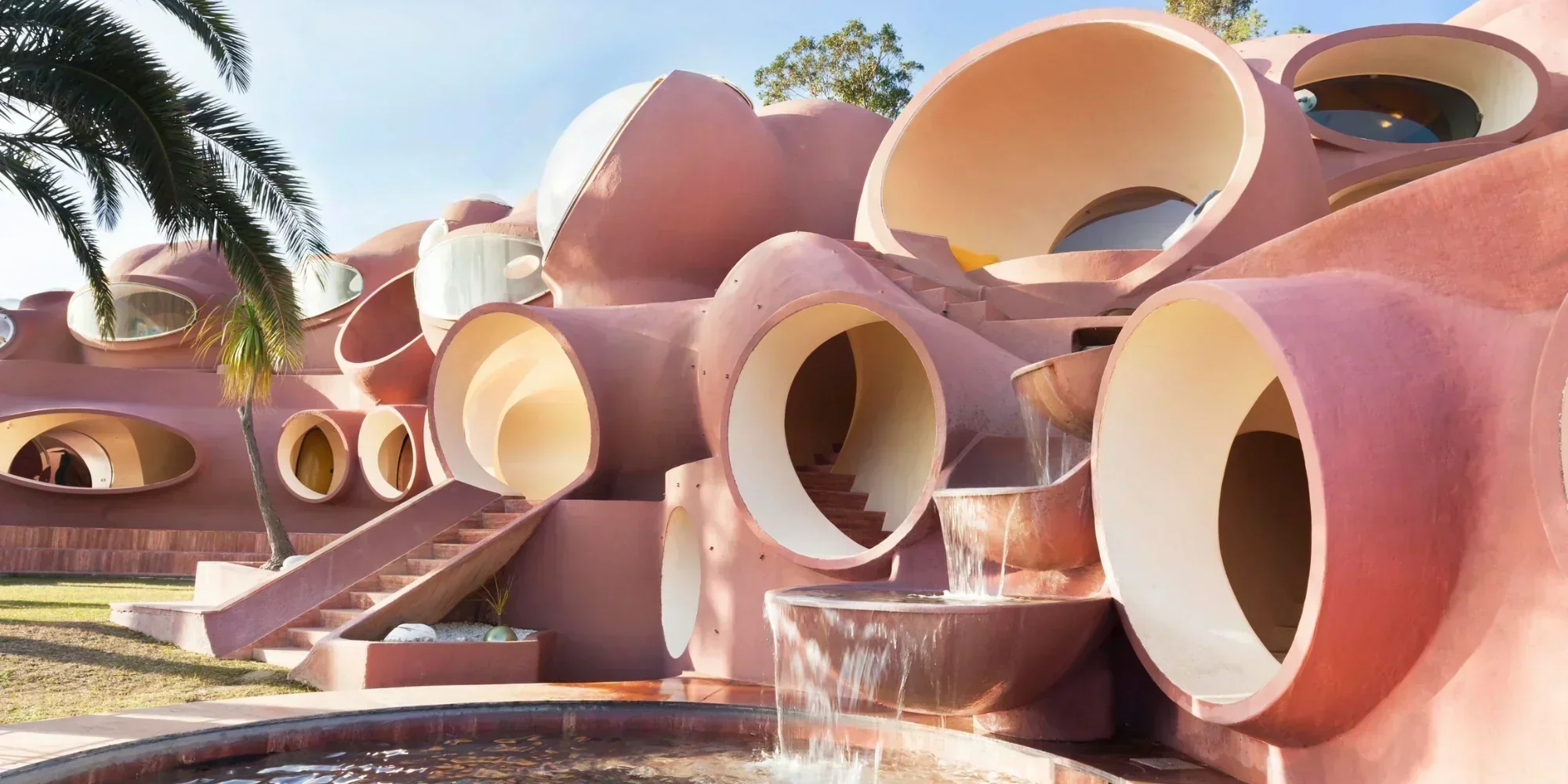
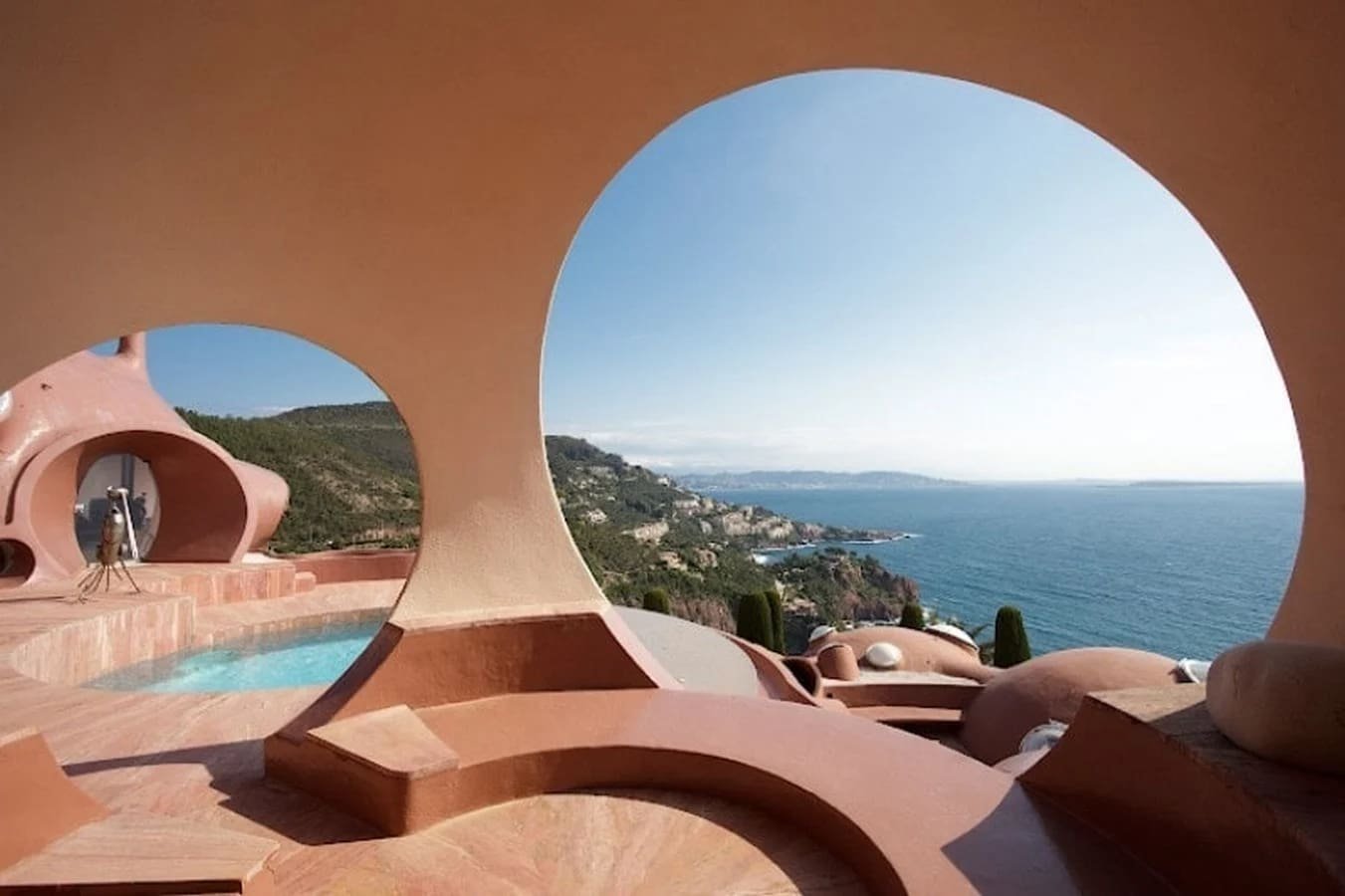
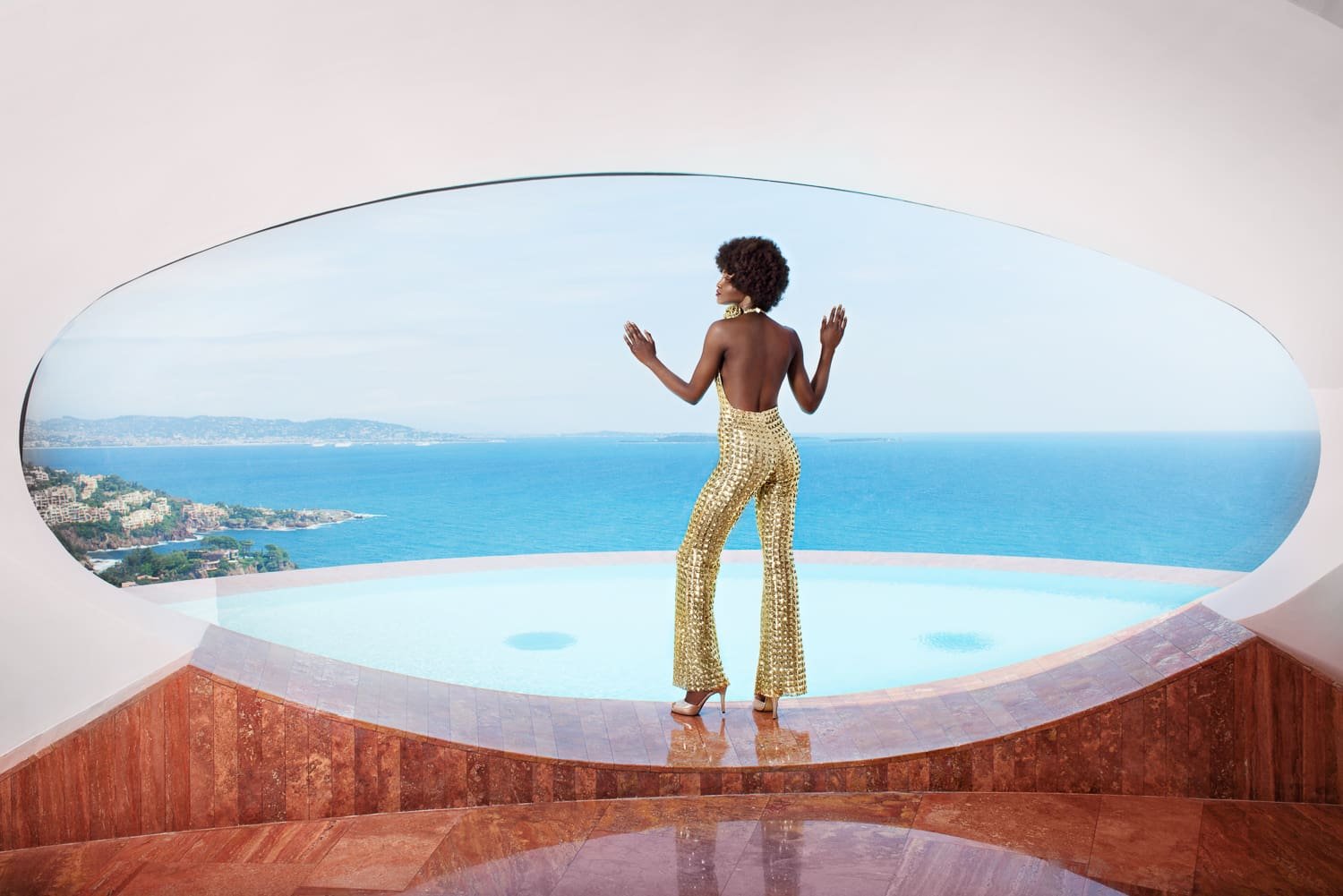
Lovag argued that humans had “confined themselves to cubes,” and the building’s interconnected pink domes, circular windows and flowing tunnels sought to restore movement and sensuality to domestic space. Later owned by fashion designer Pierre Cardin, the property became both architectural manifesto and cultural stage set. (Wikipedia)
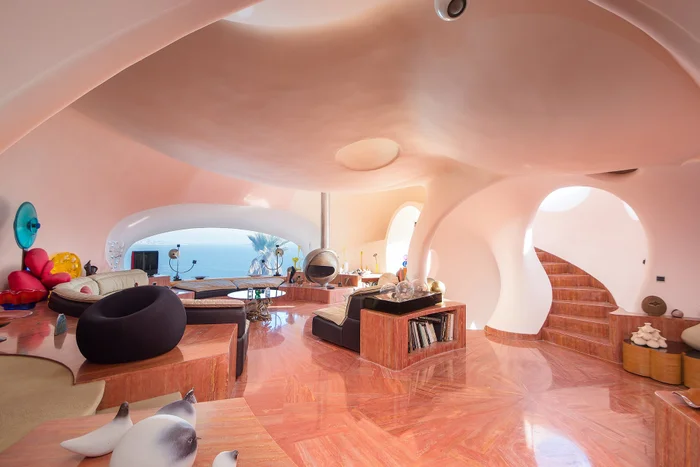
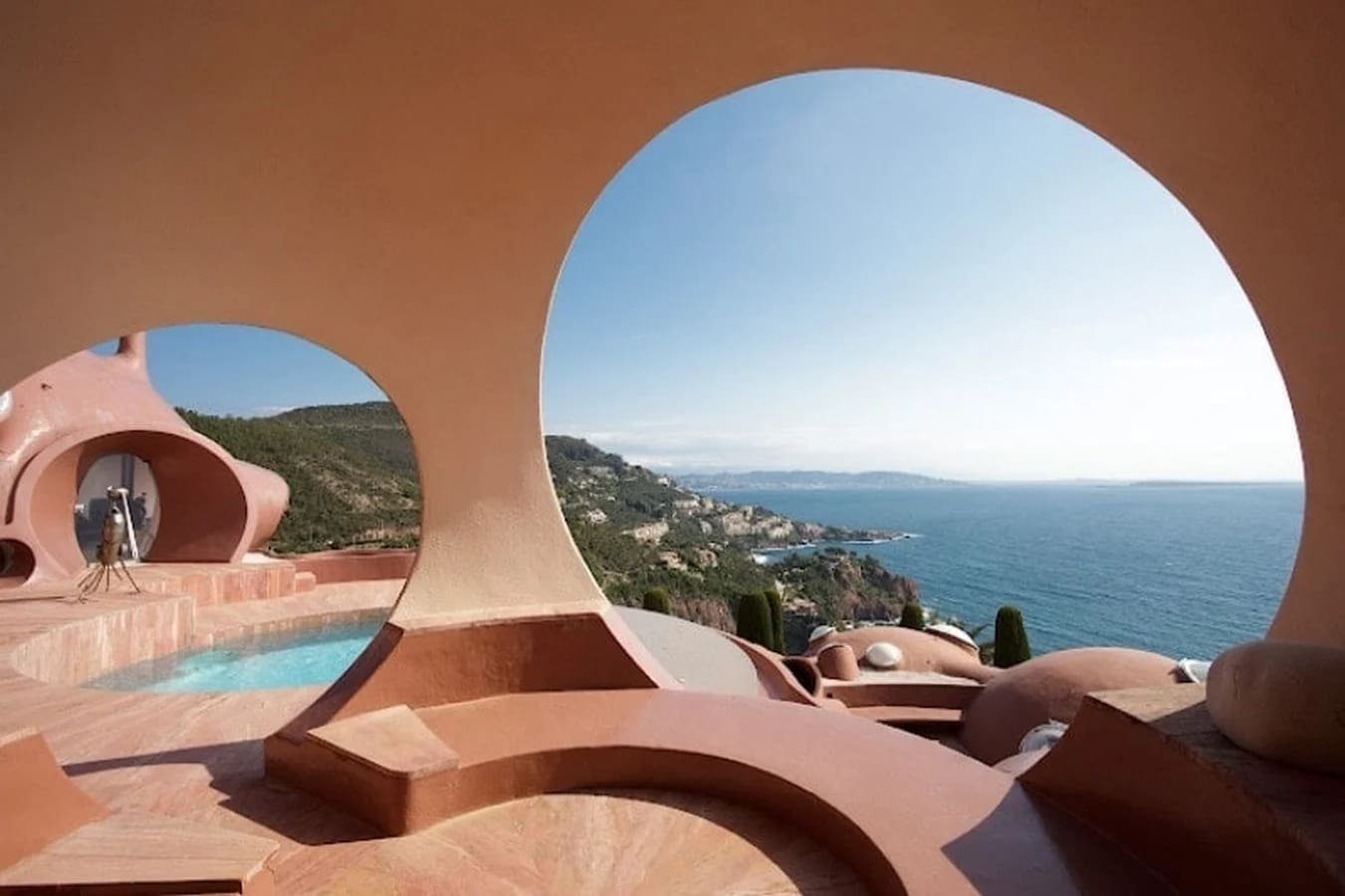
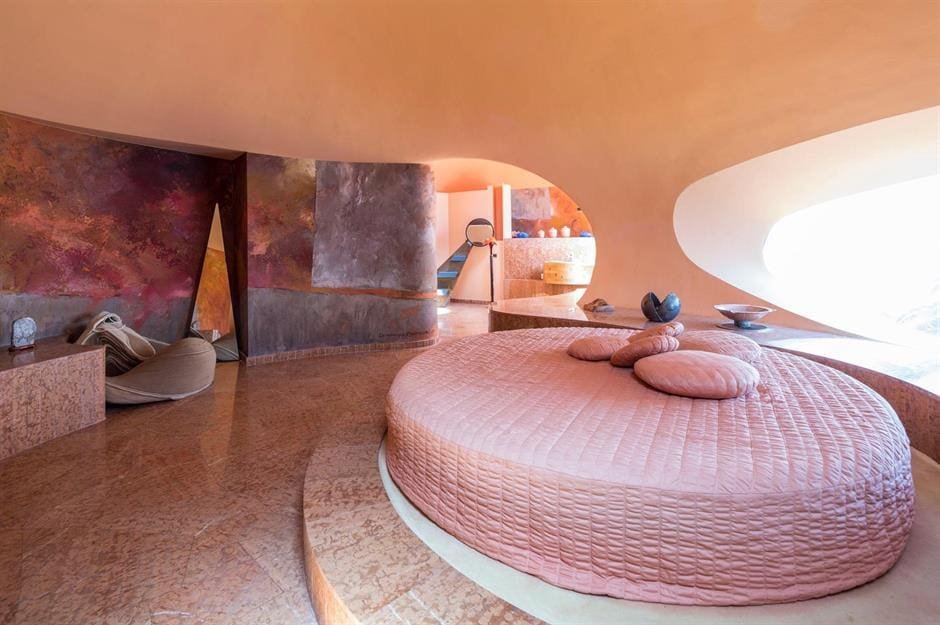
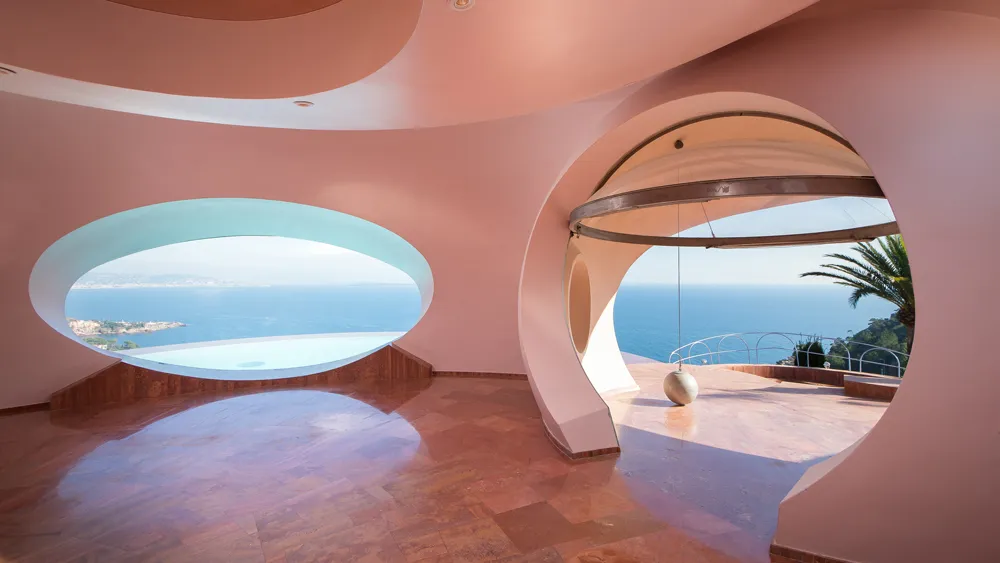
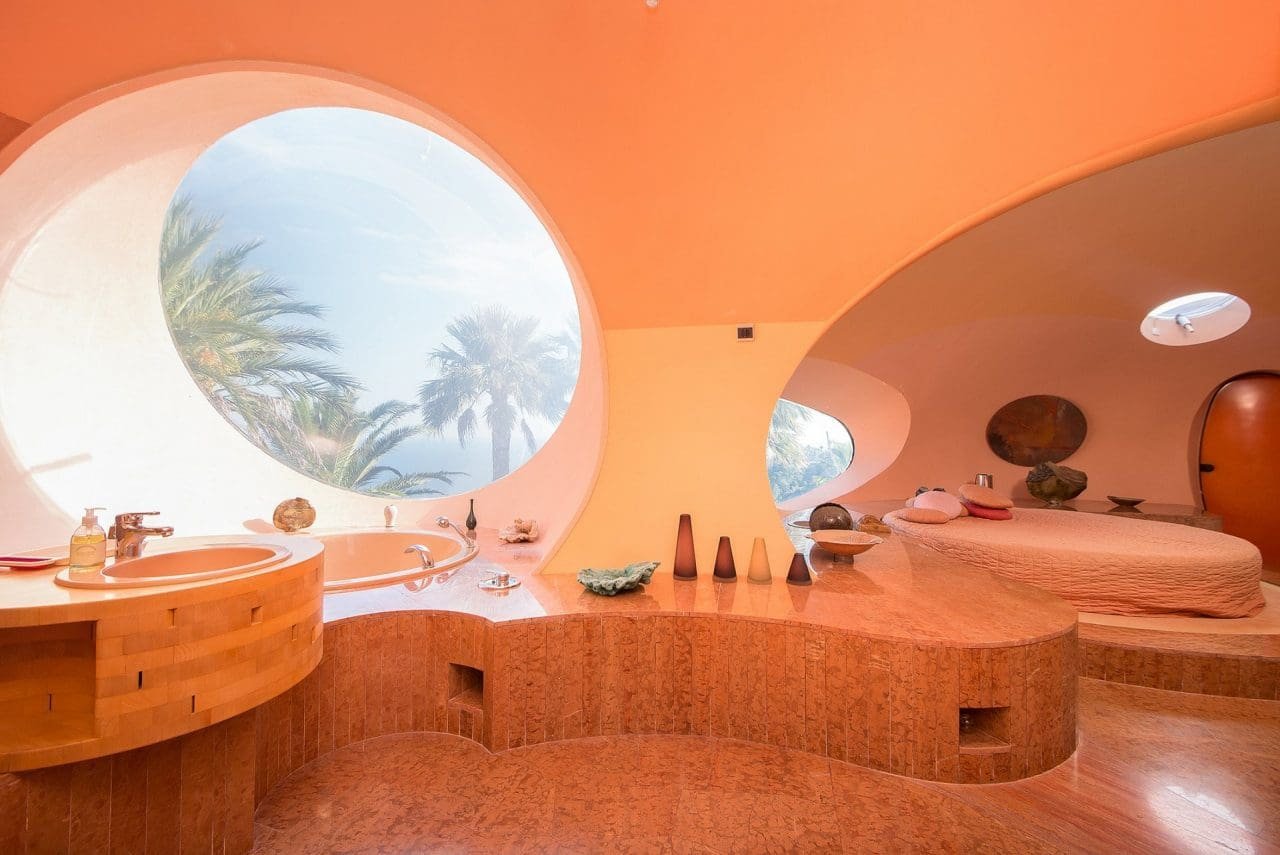
The house demonstrates both the strengths and limitations of biomorphic design. Its internal circulation feels intuitive and immersive, while the changing quality of light across curved surfaces creates unusual spatial depth. Yet the structure required years of specialist construction and extensive custom detailing. Furniture, glazing and maintenance all demanded bespoke solutions.
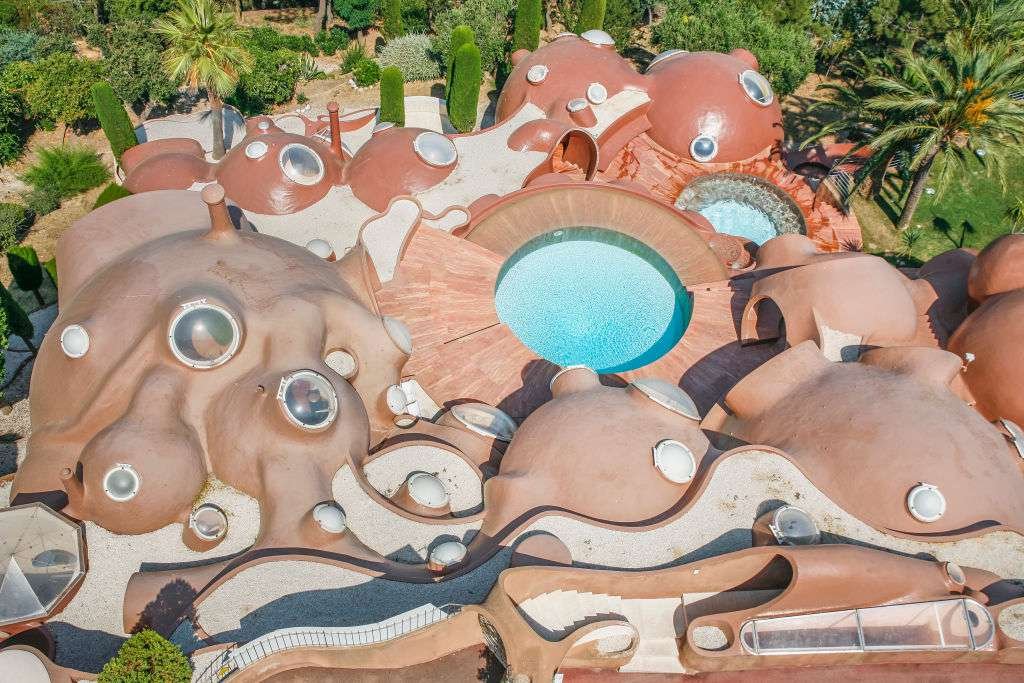
Palais Bulles survives not as a replicable housing prototype but as a singular luxury object — closer to inhabitable sculpture than scalable architecture.
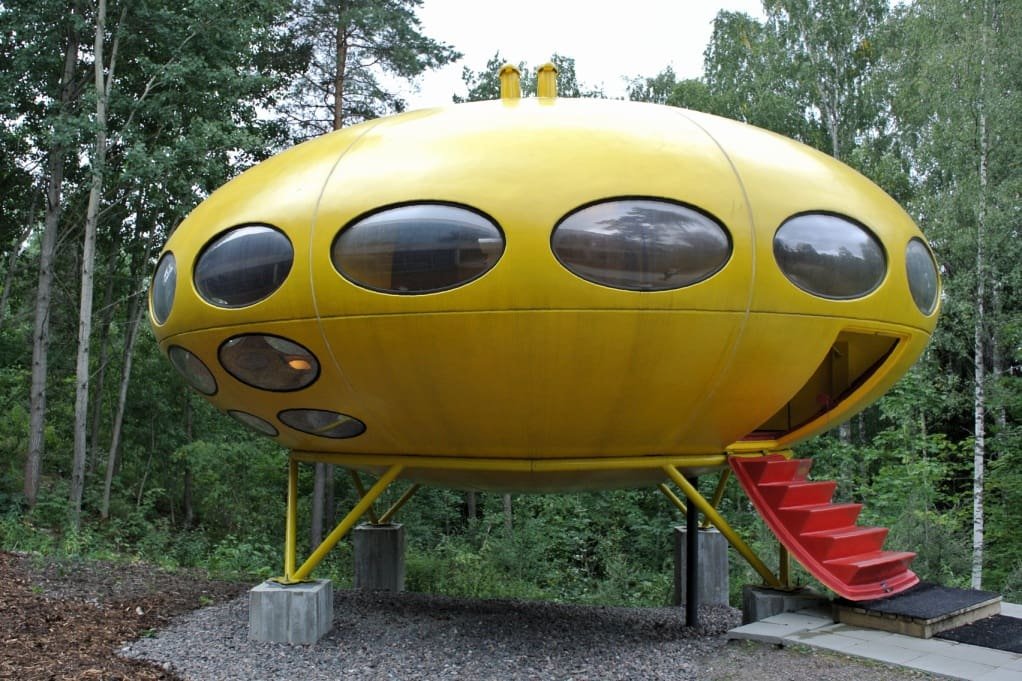
Futuro House
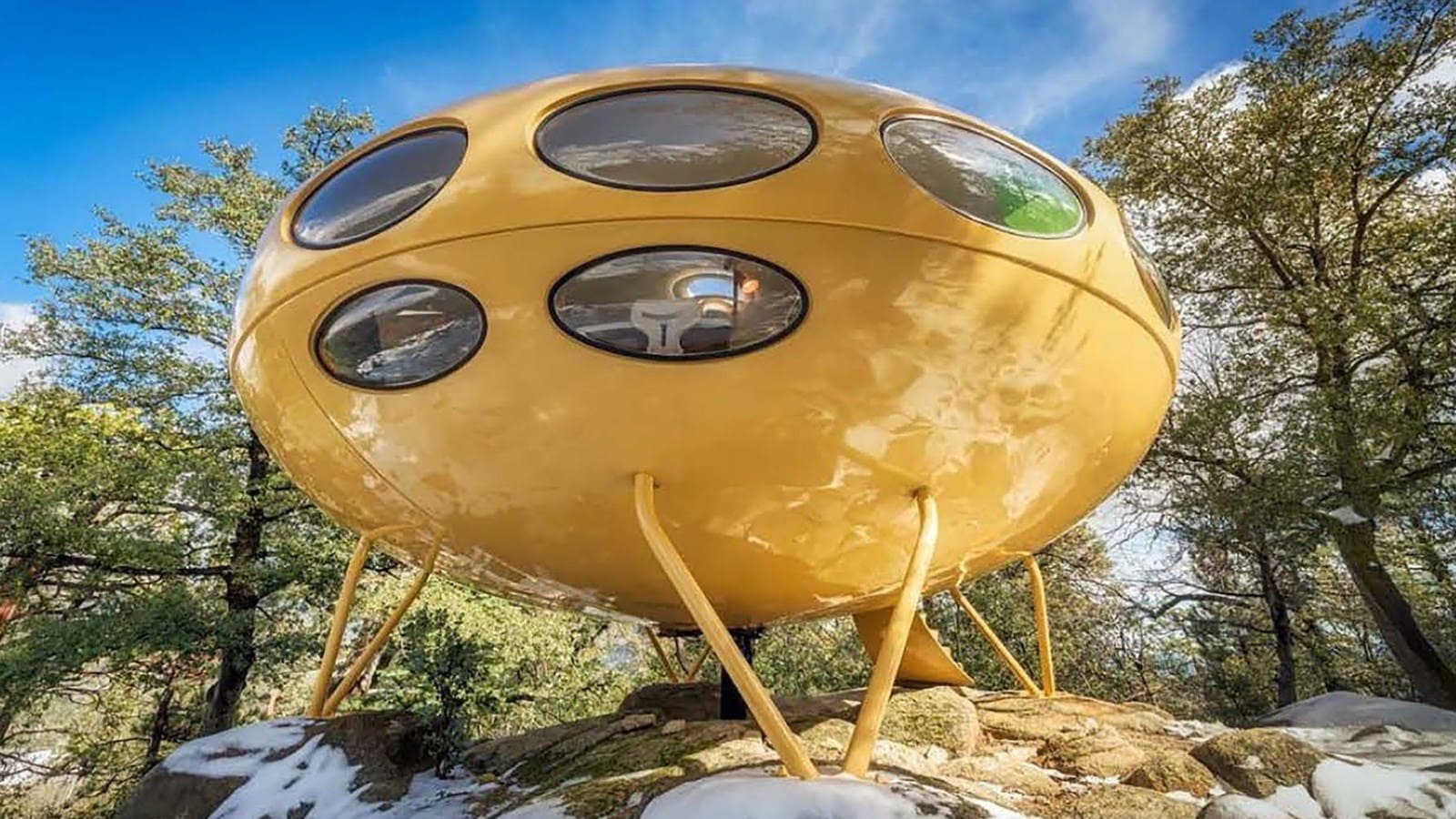
Designed in 1968 by Finnish architect Matti Suuronen, the Futuro House distilled the space-age optimism of late modernism into a transportable elliptical pod. Constructed from reinforced polyester plastic, the structure resembled a flying saucer elevated on metal legs, complete with oval windows and a retractable stairway. Originally intended as a portable ski chalet, Futuro embodied the belief that industrial manufacturing would revolutionise domestic architecture. (Architectural Digest)
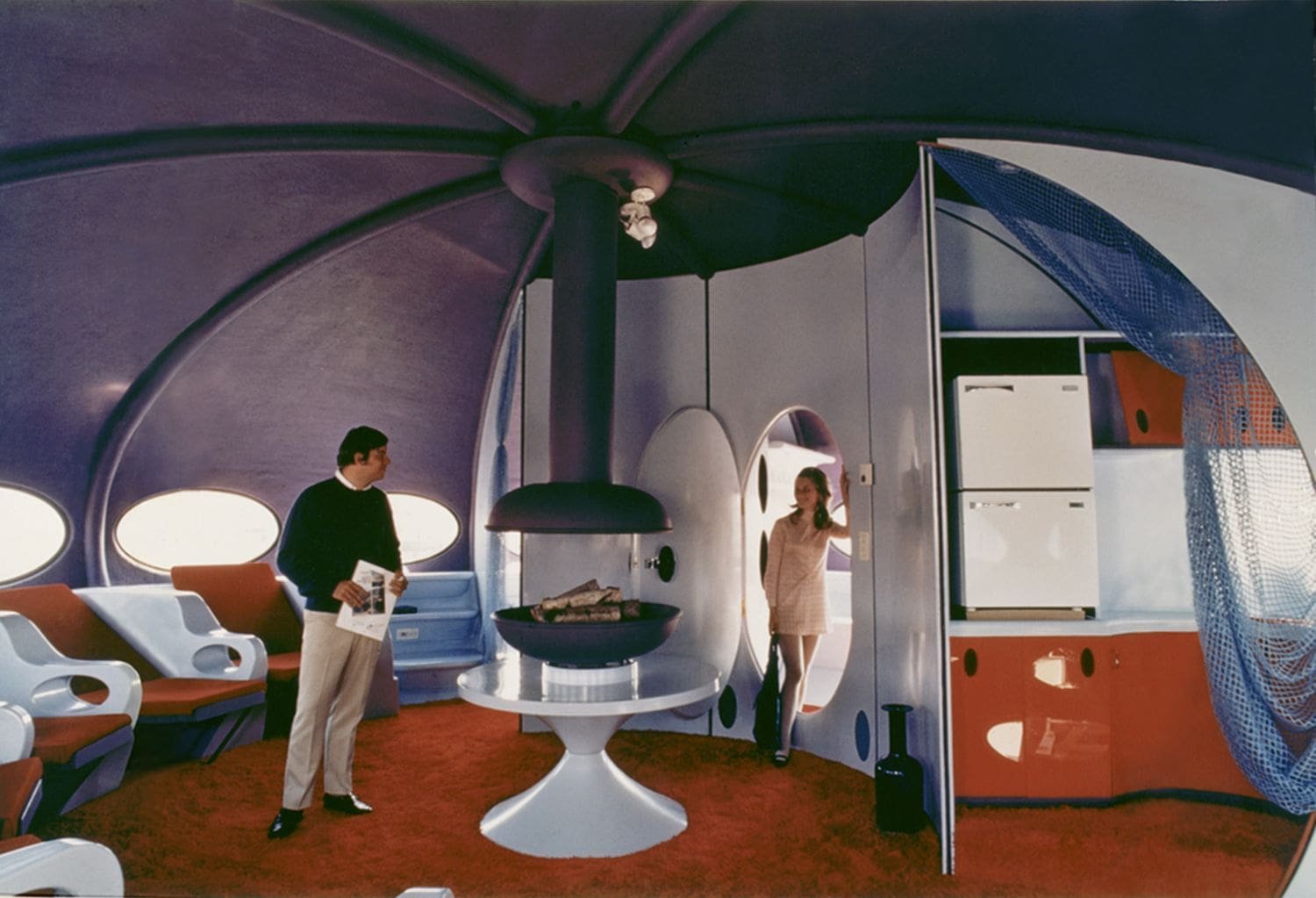
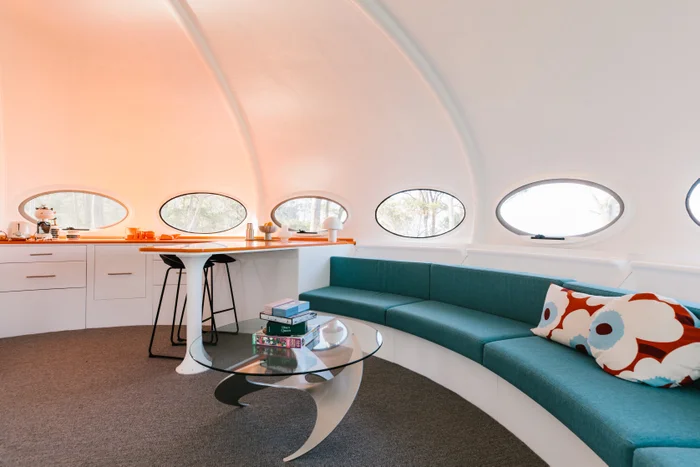
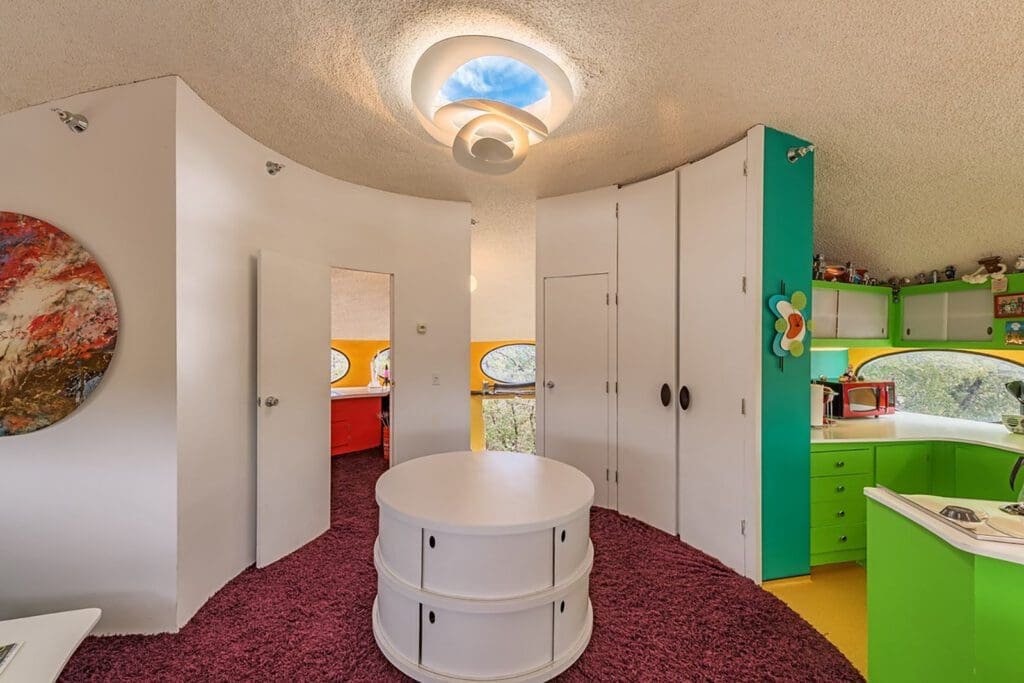
Its compact interior demonstrated how biomorphic design could produce highly immersive environments. Every element was integrated into the curved shell, from seating to lighting, creating a seamless futuristic aesthetic. Yet the project quickly encountered practical and economic obstacles. Oil-price shocks during the 1970s made plastic-intensive construction prohibitively expensive, while transport logistics proved cumbersome.
Many Futuro houses deteriorated due to material ageing and maintenance difficulties. Today surviving examples are treated as collectible design icons rather than viable housing solutions. Their continuing appeal lies in their ability to visualise a future that never arrived — an era when domestic architecture briefly imagined itself as aerospace engineering.
Bolwoningen
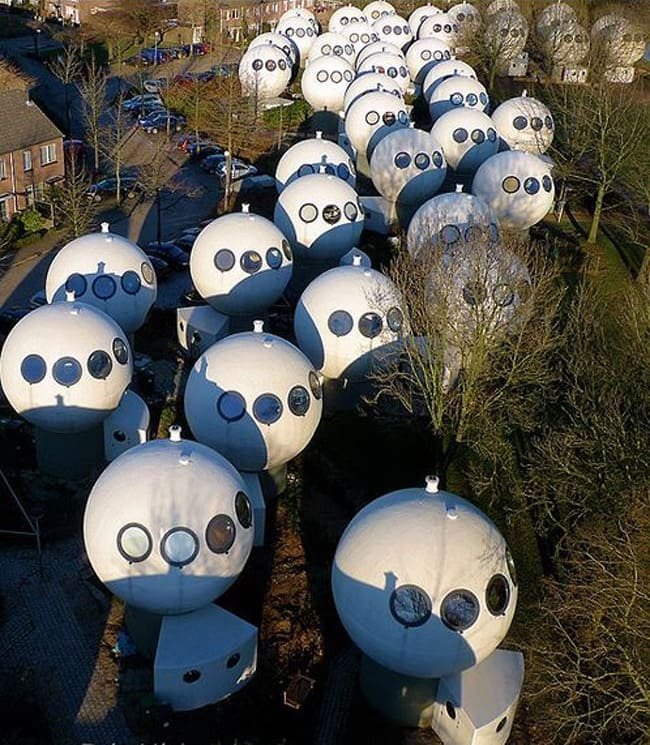
The Bolwoningen development in Den Bosch, designed by Dutch artist and architect Dries Kreijkamp in the 1980s, represents one of the rare attempts to apply bubble architecture to social housing. The project consists of spherical concrete dwellings elevated on cylindrical stems, each functioning as a compact self-contained residence. Kreijkamp believed that conventional housing ignored humanity’s instinctive preference for rounded forms and sought to create spaces that felt biologically natural. (The Spruce)
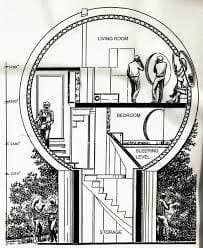
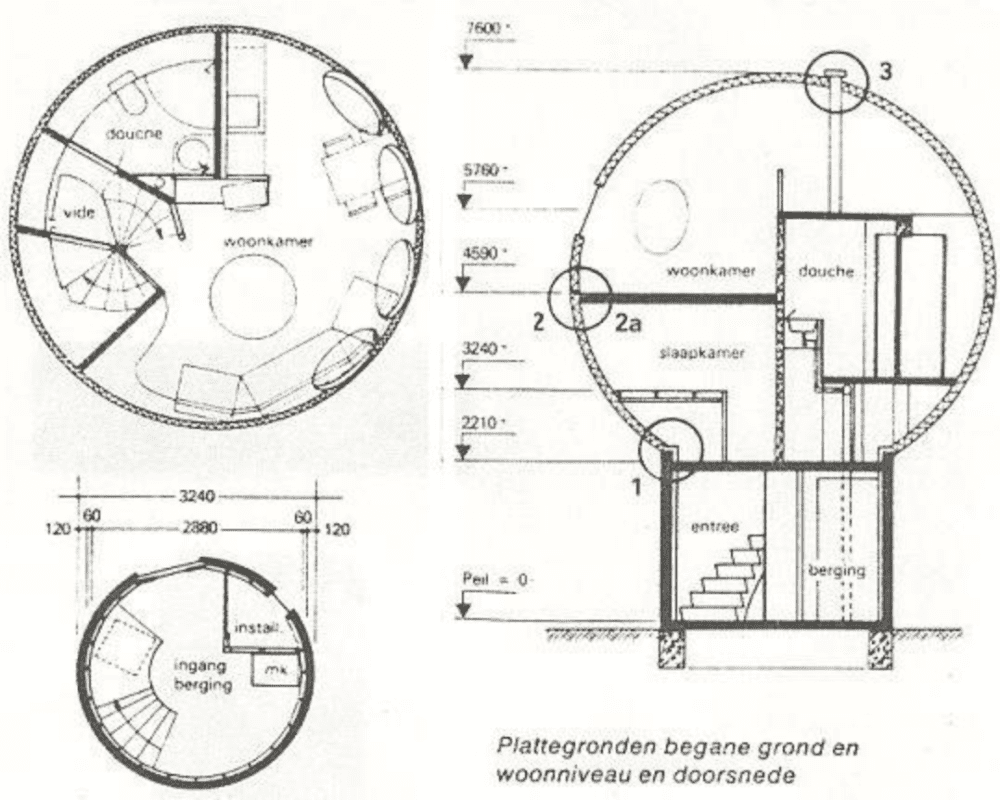
Internally, the houses are highly efficient, organised vertically around a central stair. Circular windows and curved walls create unusual acoustics and lighting conditions, producing interiors that feel simultaneously futuristic and cave-like.
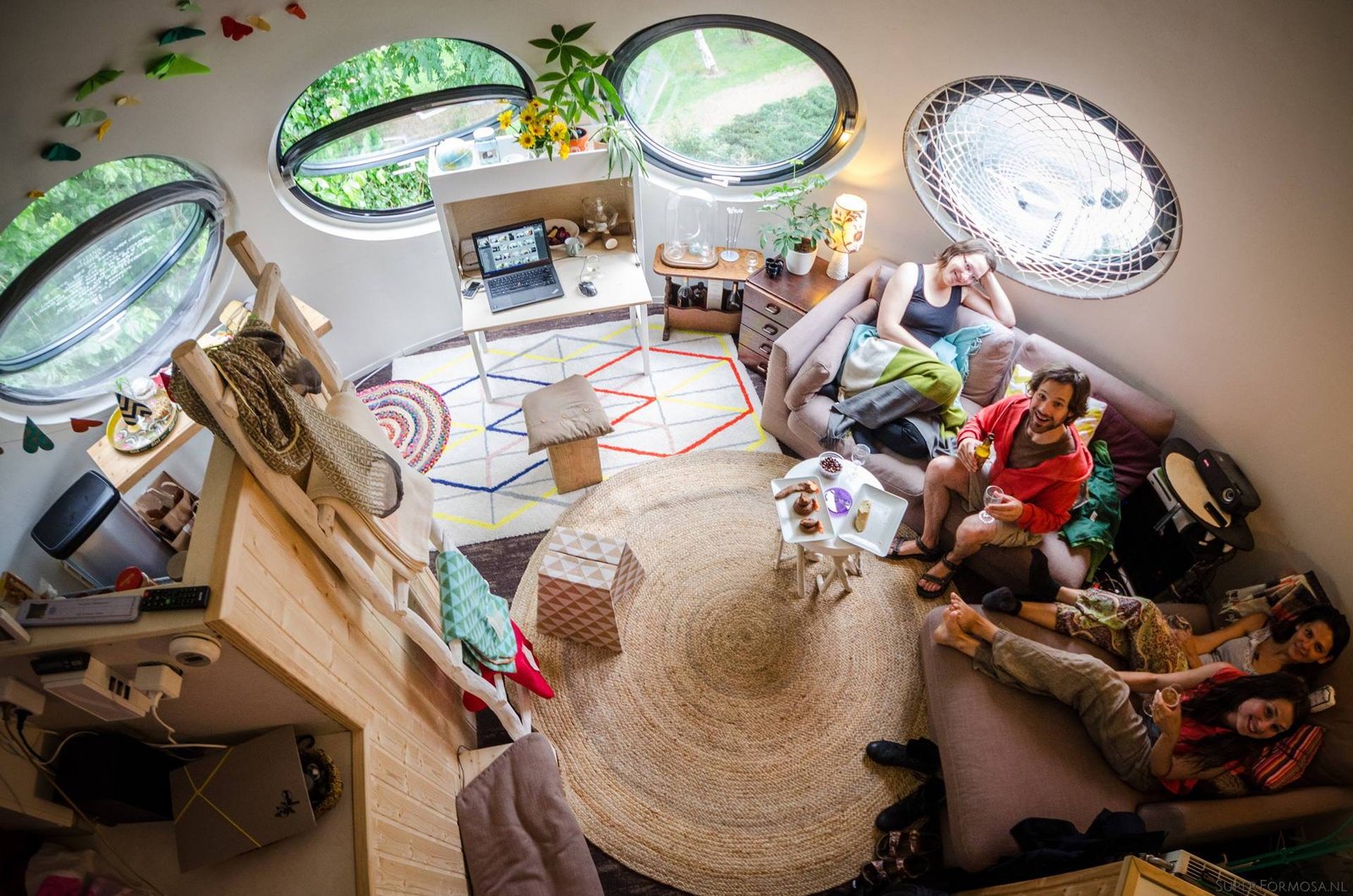
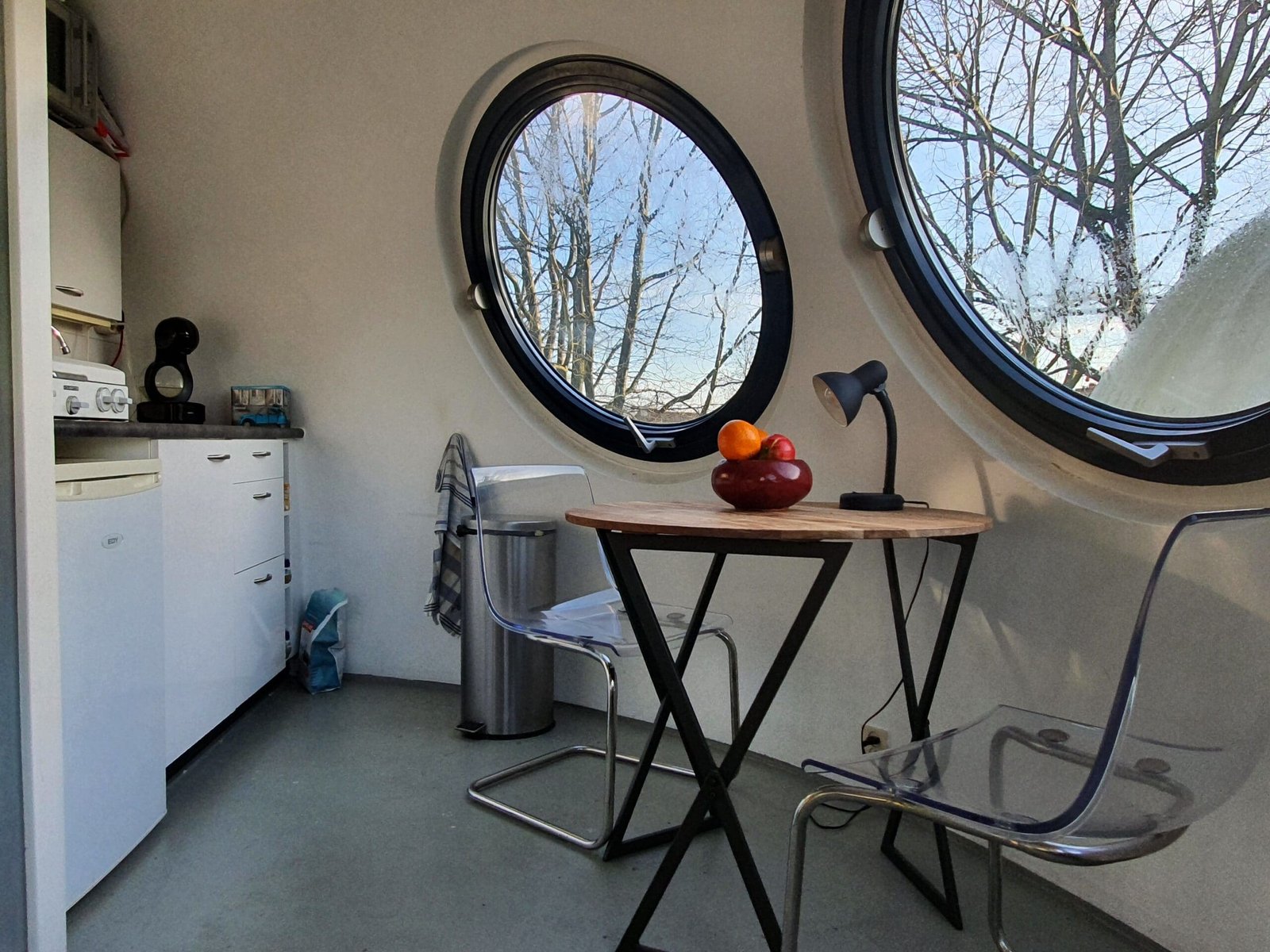
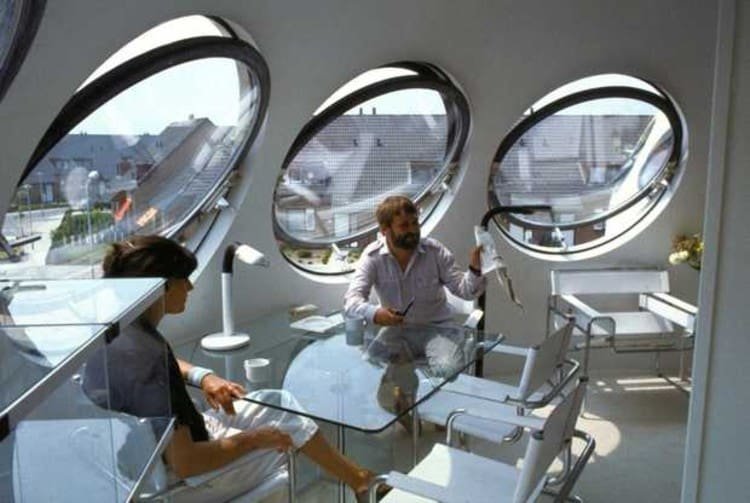
Despite the project’s conceptual ambition, however, the units revealed many of the recurring problems associated with biomorphic housing. Furnishing proved awkward, storage limited, and maintenance expensive relative to conventional housing stock. The development nevertheless remains occupied and widely admired. As an experiment in alternative domestic form, Bolwoningen demonstrates that bubble housing can function at small scale, though only with significant compromises in flexibility and cost efficiency.
The Flintstone House
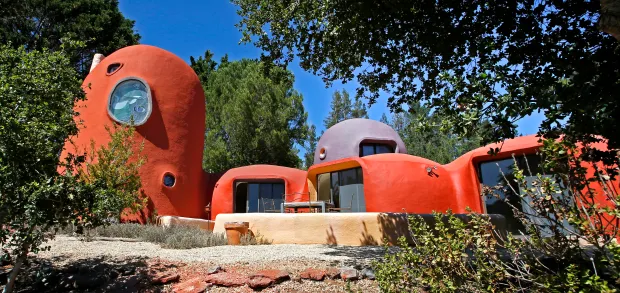
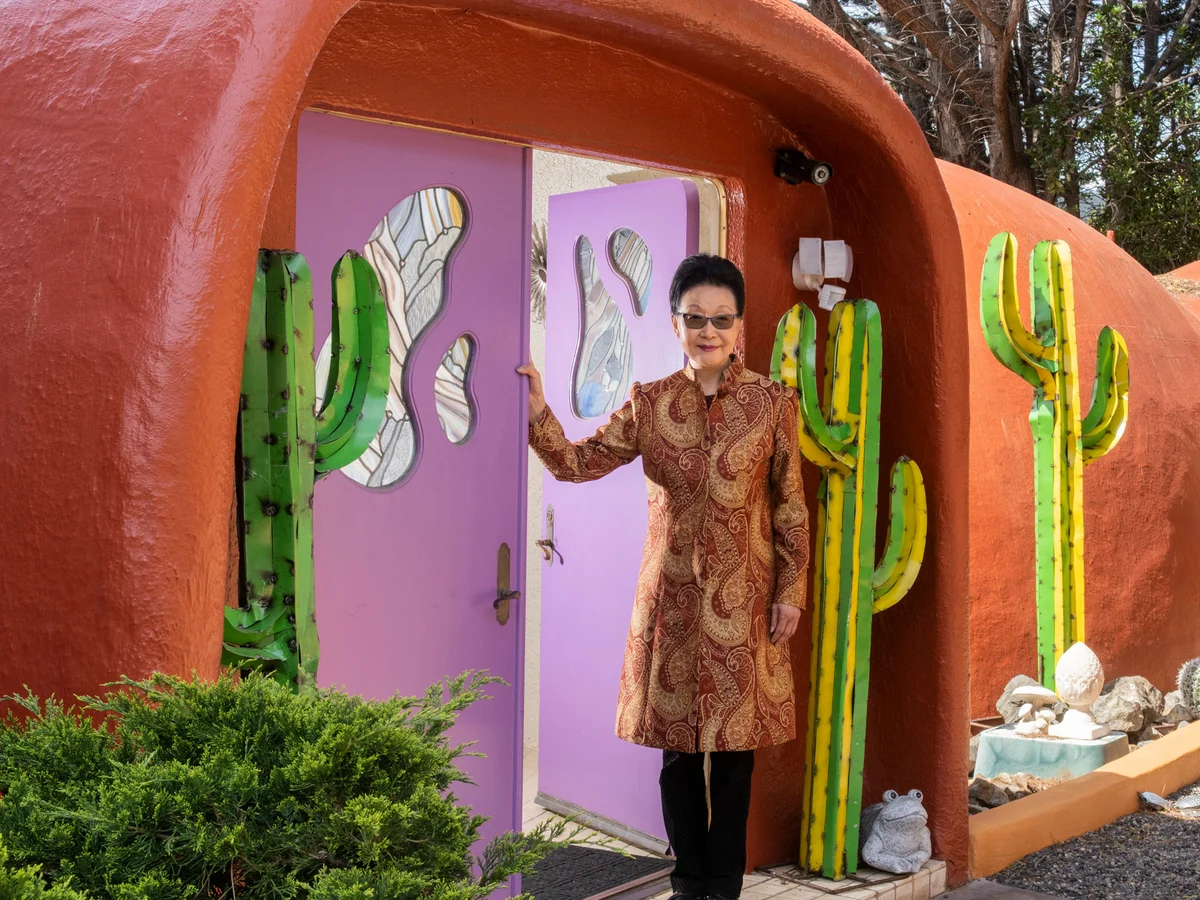
Originally constructed in 1976 by architect William Nicholson, the Flintstone House became one of the most recognisable examples of American organic residential design. Built using sprayed concrete over inflated balloon forms, the house embraced exaggerated curves and irregular surfaces that deliberately rejected suburban orthodoxy.

Its brightly coloured surfaces and cave-like interiors later reinforced comparisons with the cartoon world of The Flintstones, turning the property into a pop-cultural landmark. (The Spruce)
Technically, the house reflected experiments with low-cost shell construction inspired partly by Wallace Neff’s earlier “airform” houses. Yet the practical issues of curved architecture remained evident. Waterproofing, insulation and interior furnishing all presented complications, while local planning disputes reflected broader discomfort with non-standard domestic design.
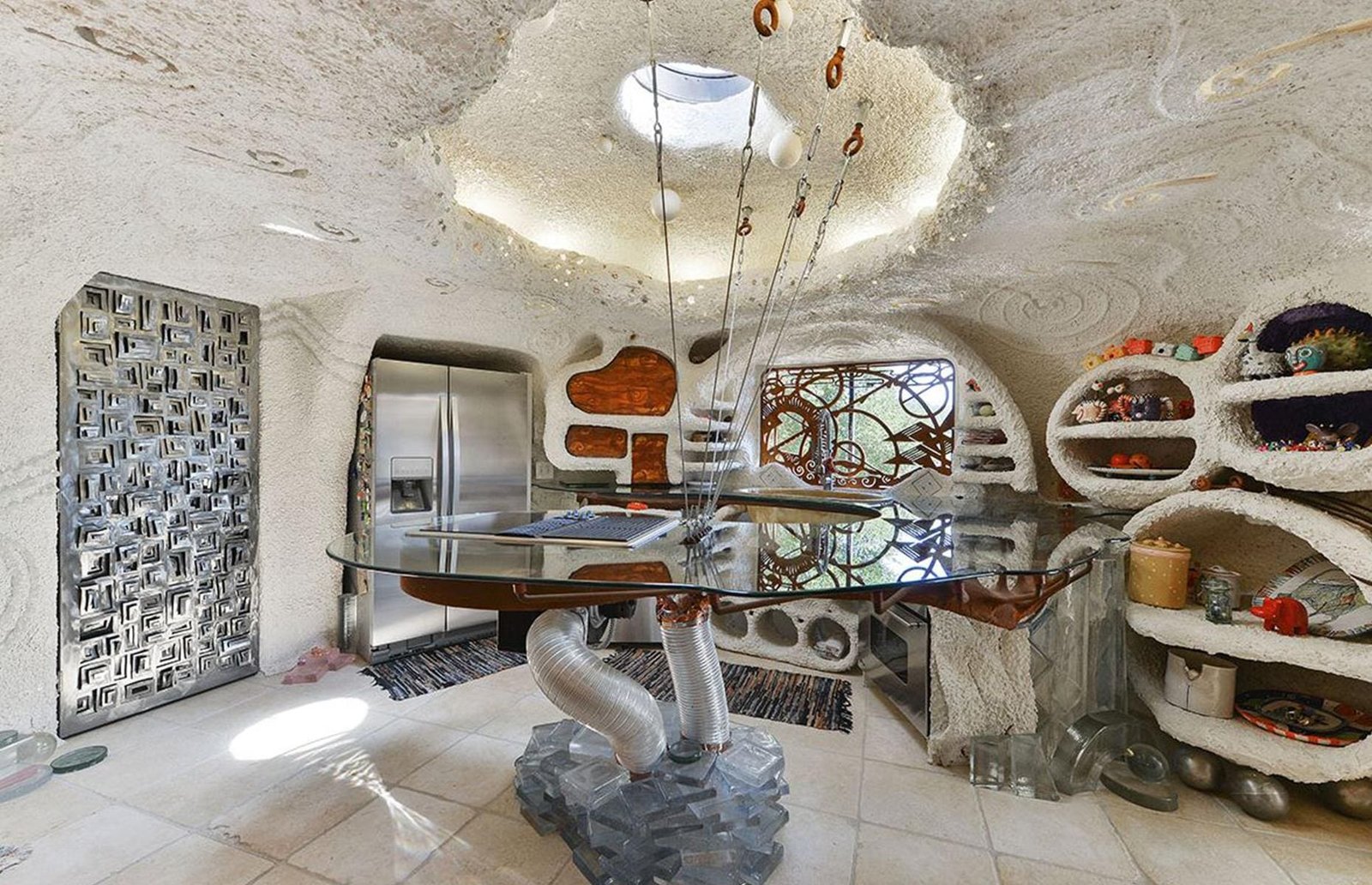
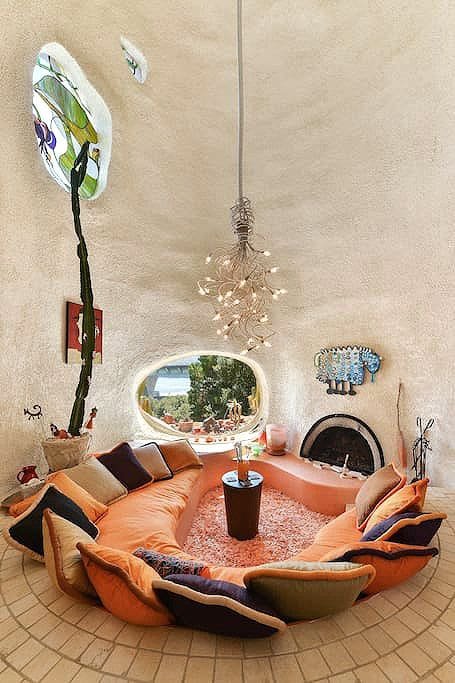
Despite these challenges, the house continues to attract fascination precisely because it appears liberated from architectural convention. More than a functional prototype, it survives as an icon of Californian architectural eccentricity — part futurist experiment, part roadside sculpture.
Casa Orgánica
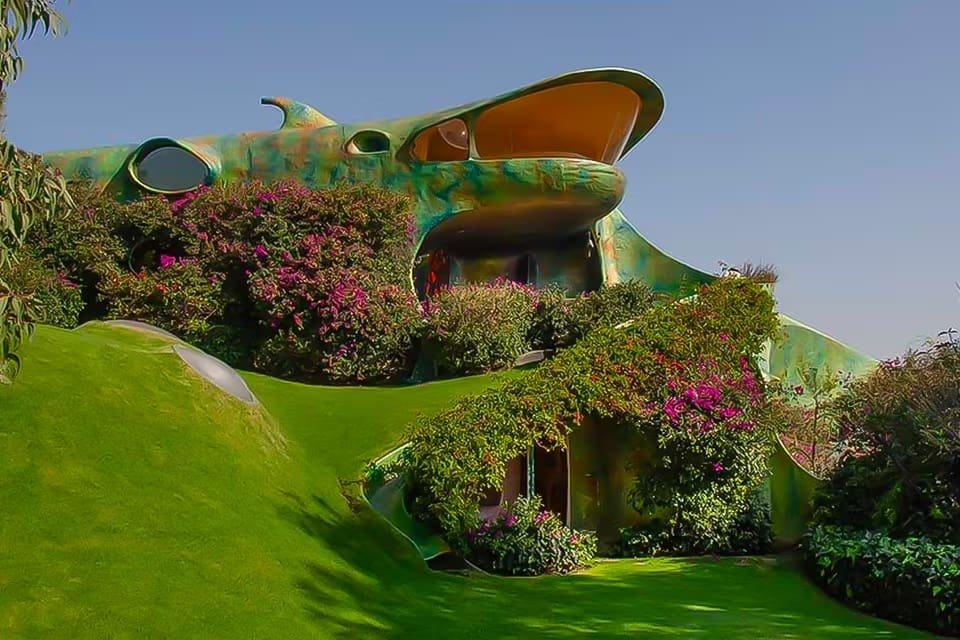
Designed by Mexican architect Javier Senosiain and completed in 1985, Casa Orgánica represents one of the clearest expressions of architecture derived directly from biological form. Buried partially into the landscape and covered with vegetation, the house flows through interconnected cavernous interiors illuminated by circular openings and skylights. Senosiain’s work draws heavily from the theories of organic architecture associated with Frank Lloyd Wright as well as the surrealism of Antoni Gaudí.
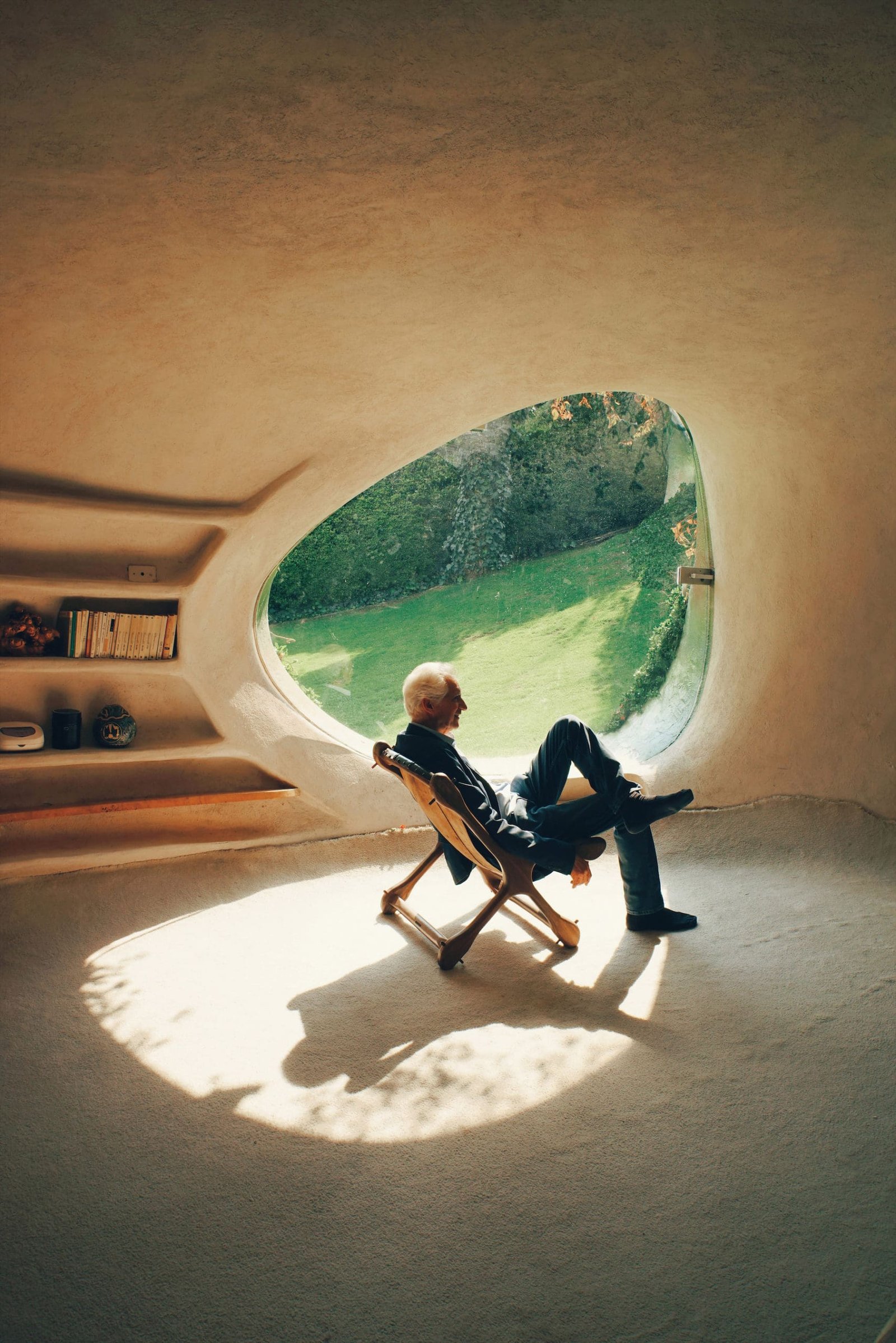
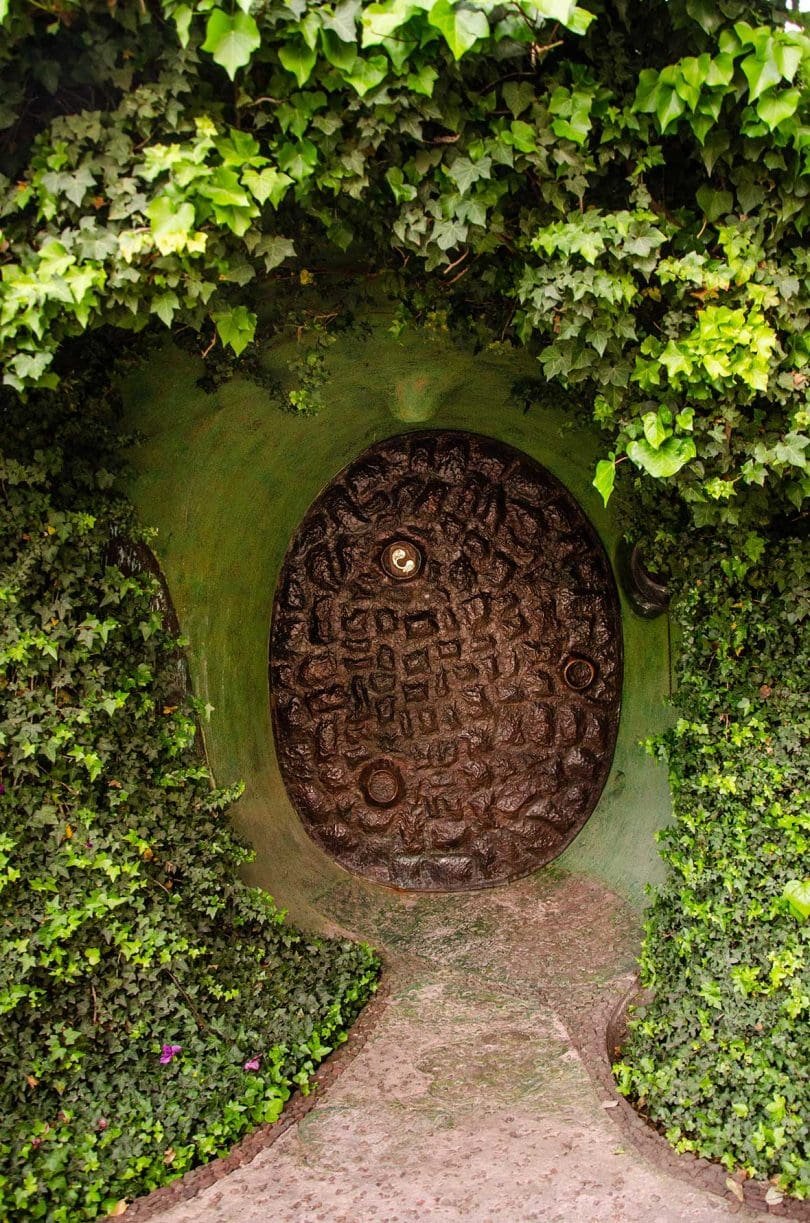
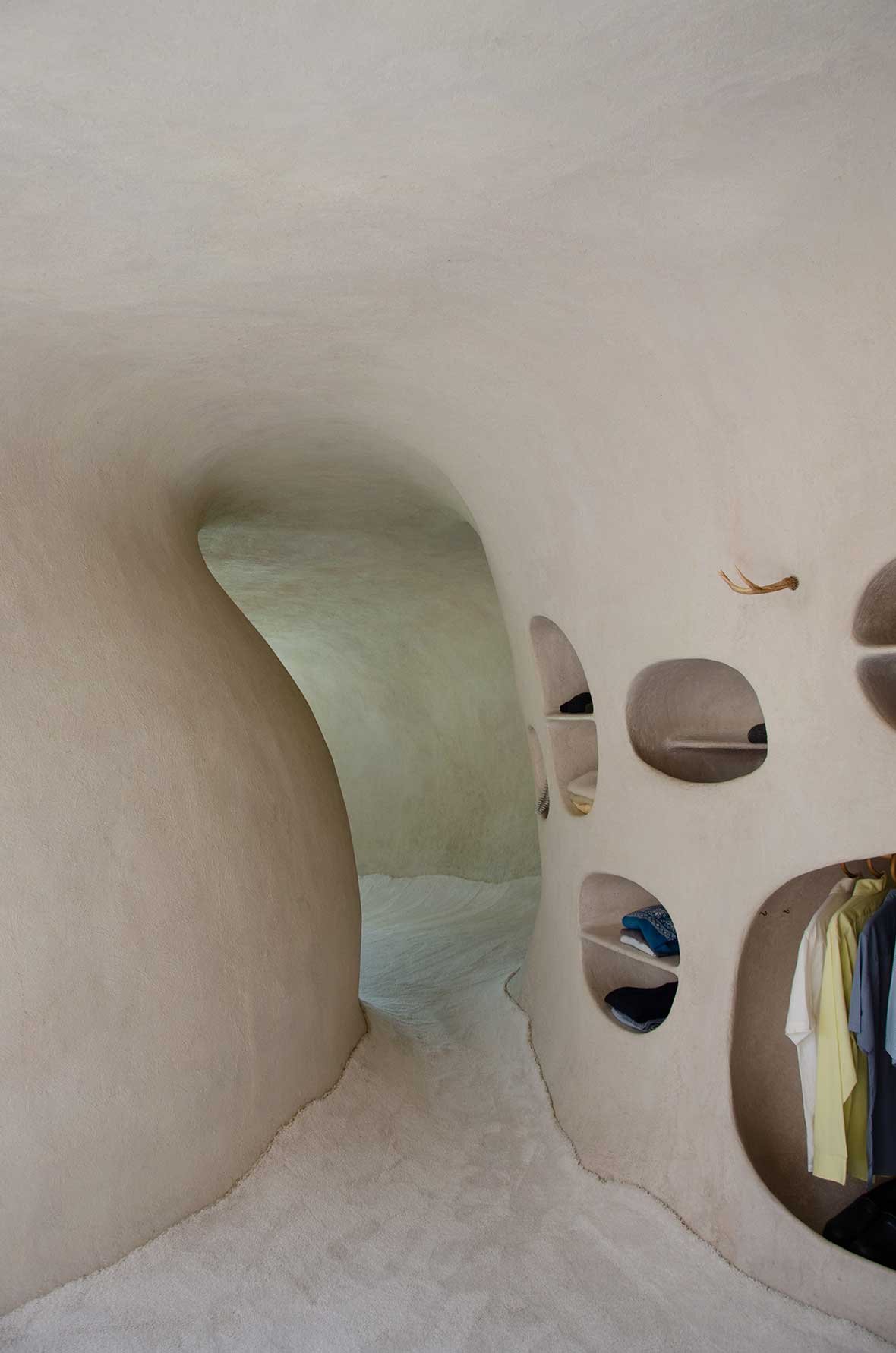
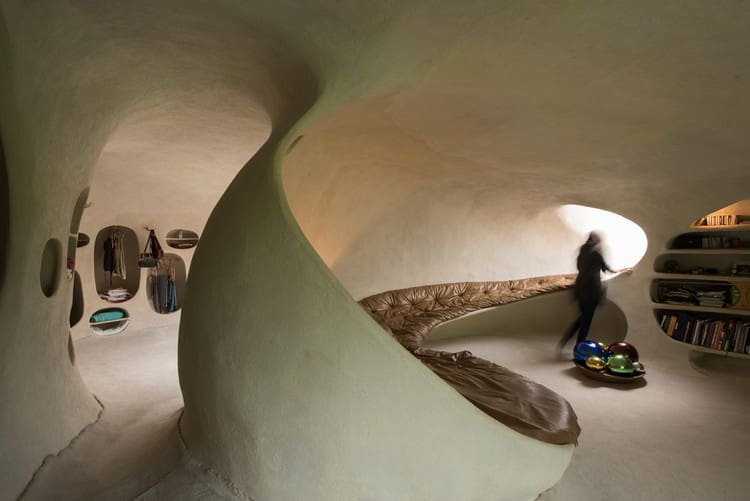
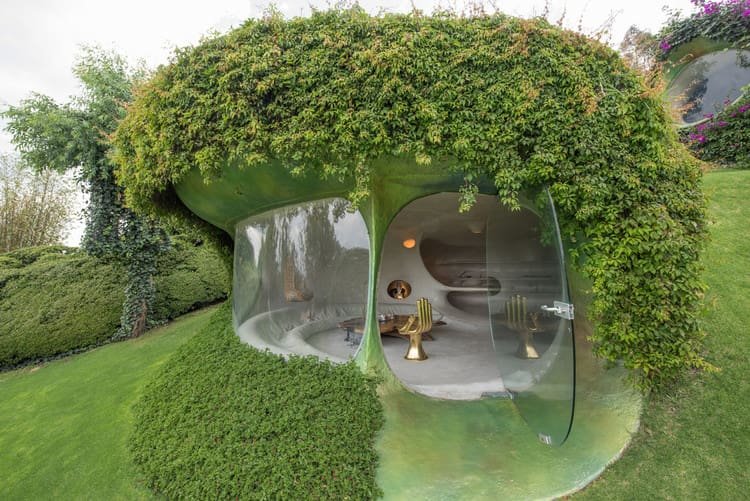
The project was conceived around the psychological idea that curved spaces reduce stress and produce emotional comfort. Rooms unfold organically rather than through rectilinear corridors, encouraging movement through gradual transitions rather than sharp boundaries. Yet the project also reveals the limitations of intensely customised architecture. The house required specialist engineering, bespoke fittings and constant adaptation to moisture and structural movement.
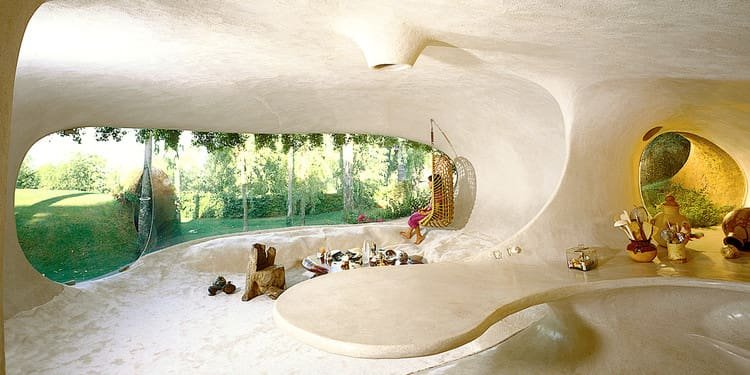
Casa Orgánica remains highly influential within architectural discourse because it demonstrates how biomorphic architecture can create emotionally resonant environments. At the same time, its complexity confirms why such approaches remain largely confined to one-off experimental commissions rather than mainstream urban housing.
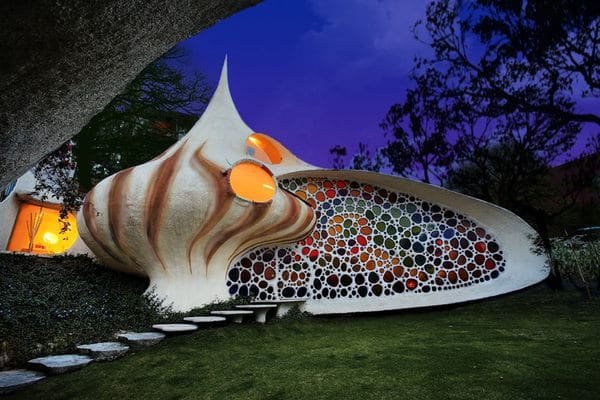
Nautilus House
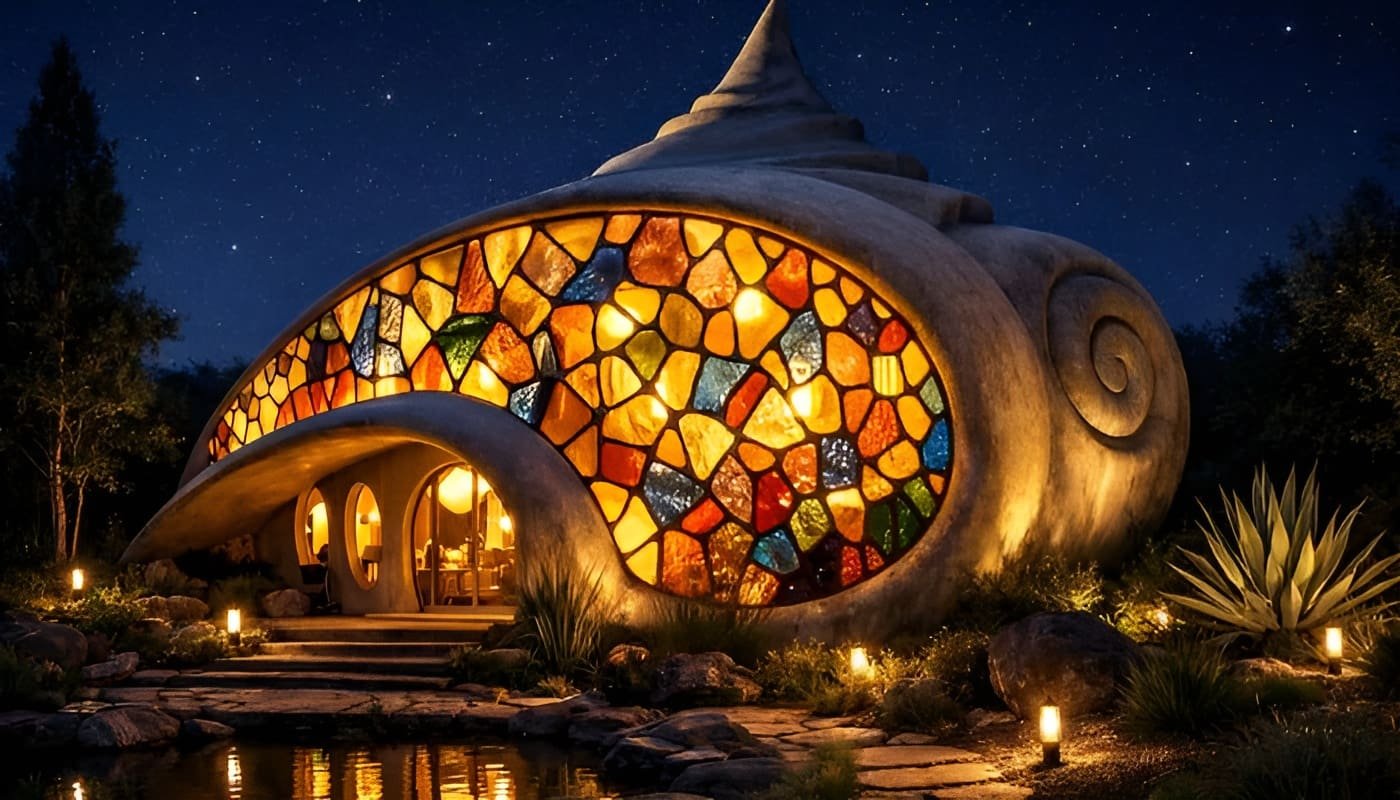
Another celebrated project by Javier Senosiain, the Nautilus House transformed the geometry of a seashell into inhabitable architecture. Completed in 2007, the building spirals around a central circulation space illuminated through stained-glass openings that diffuse coloured light throughout the interior. Externally, the house appears almost zoological, emerging from the landscape like an enormous marine organism.
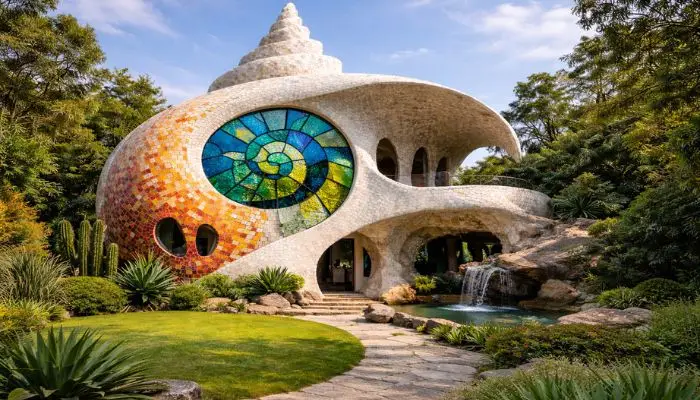
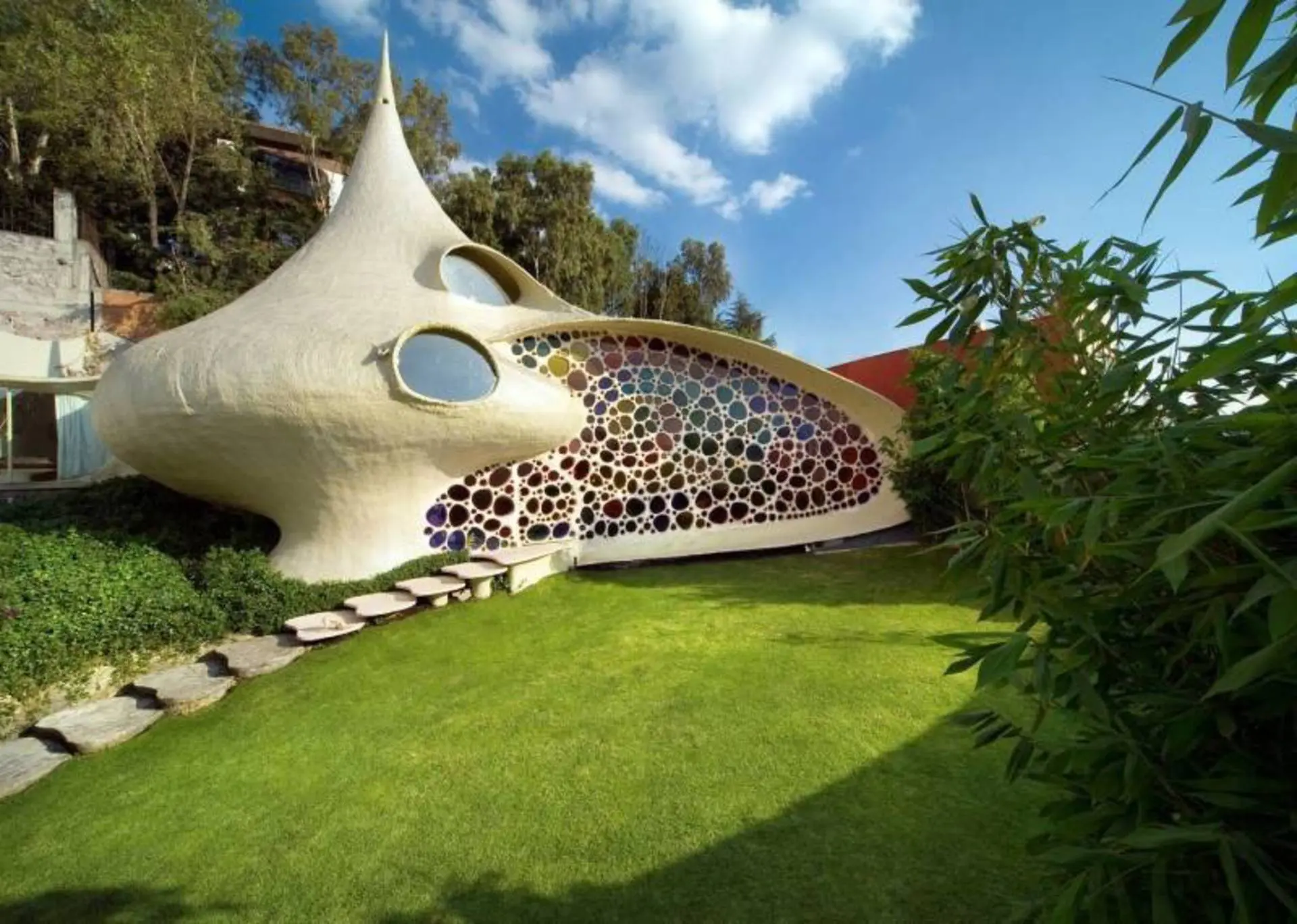
The project reflects the enduring influence of biomimicry within organic architecture. Rather than imposing geometry upon nature, the design attempts to derive structure directly from natural growth patterns. The absence of conventional corners produces fluid interiors that many occupants describe as psychologically calming and immersive.
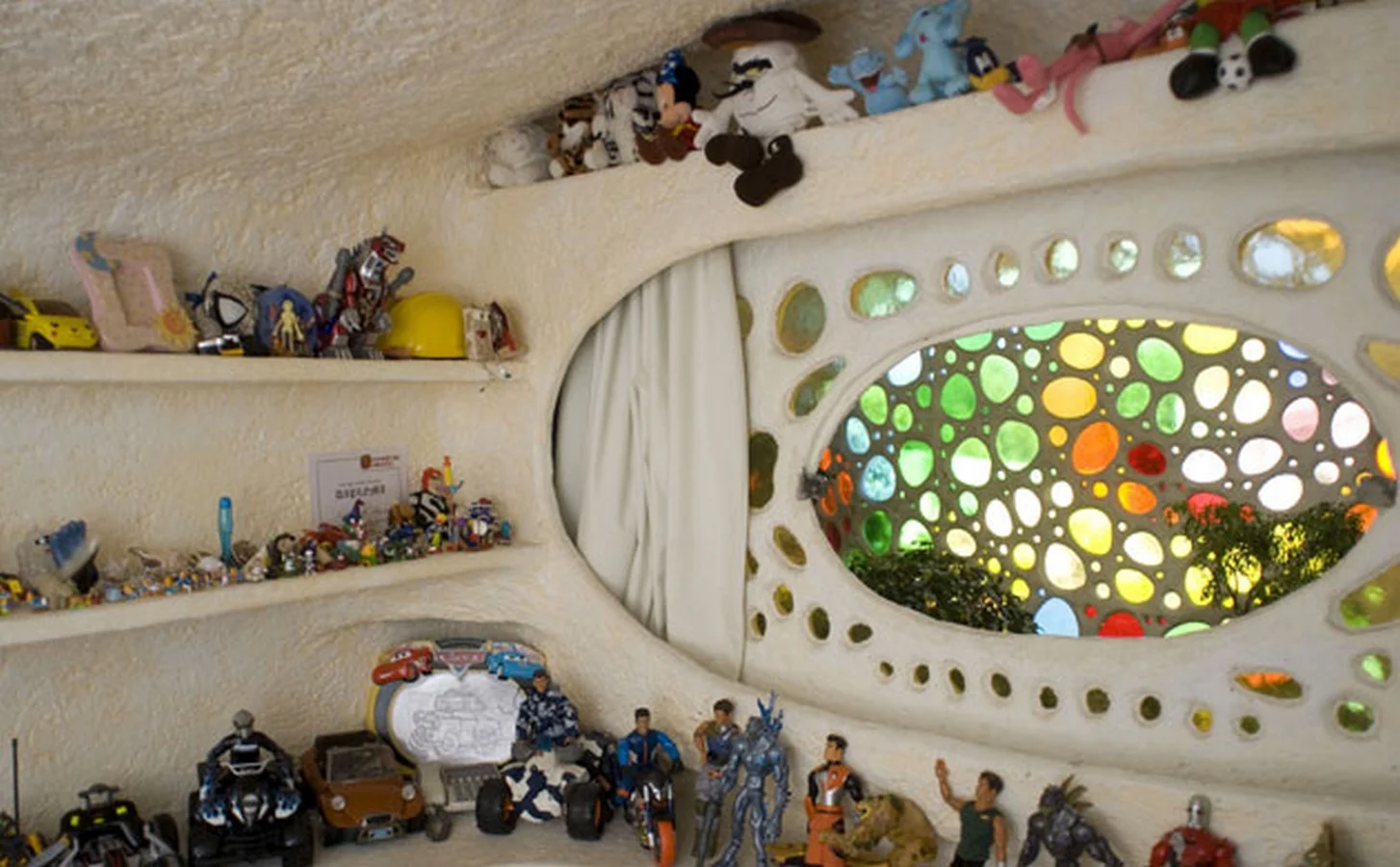
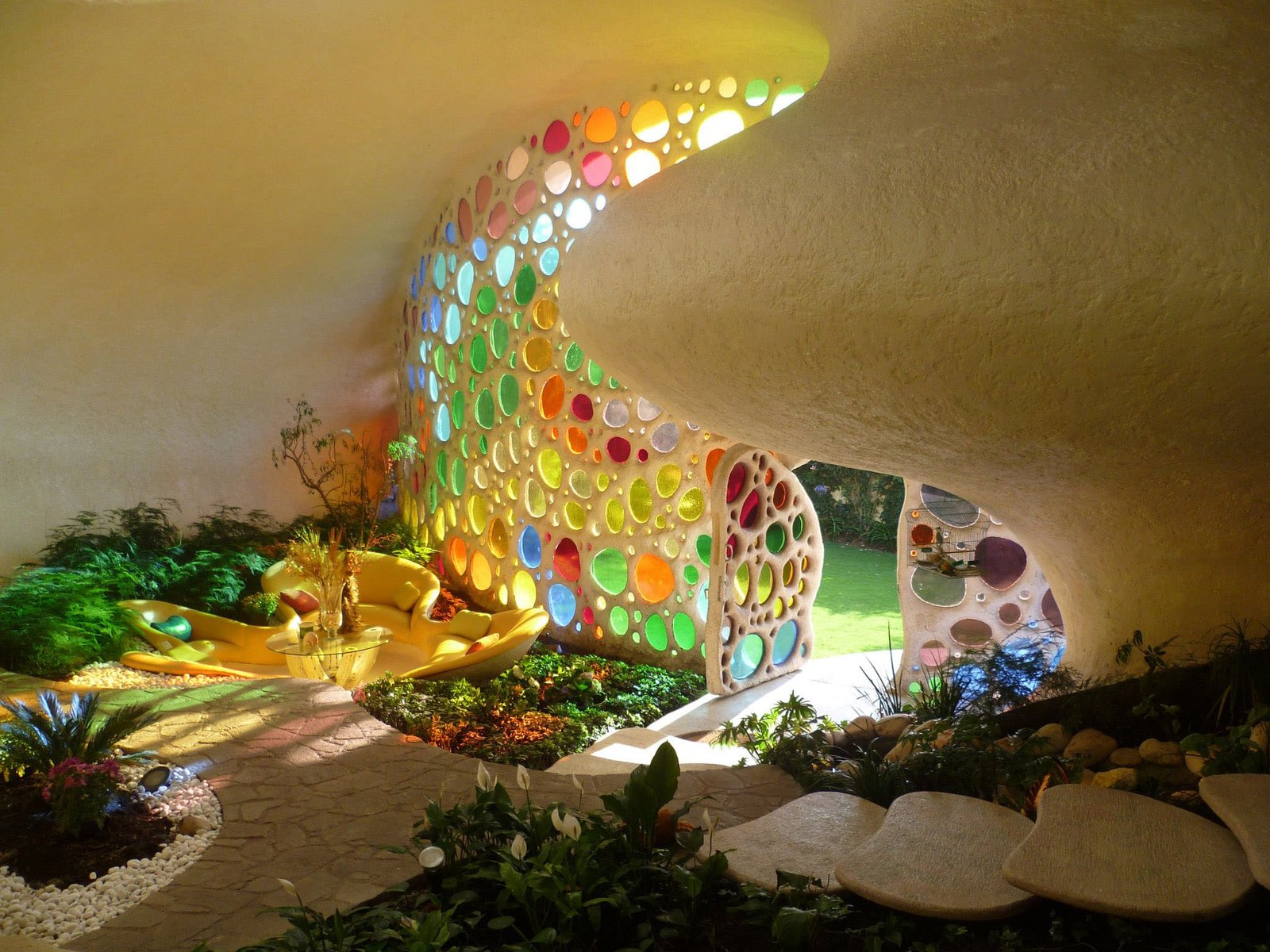
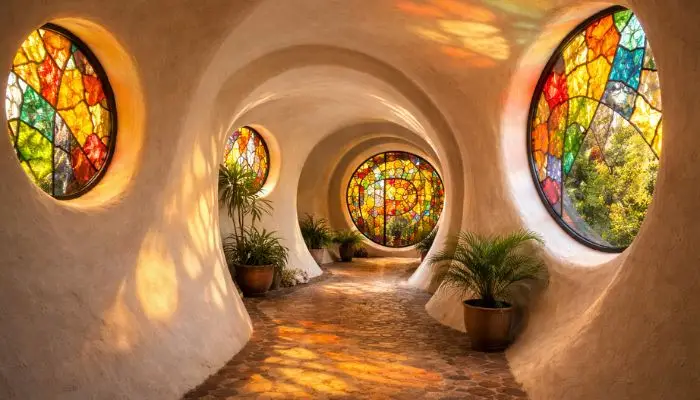
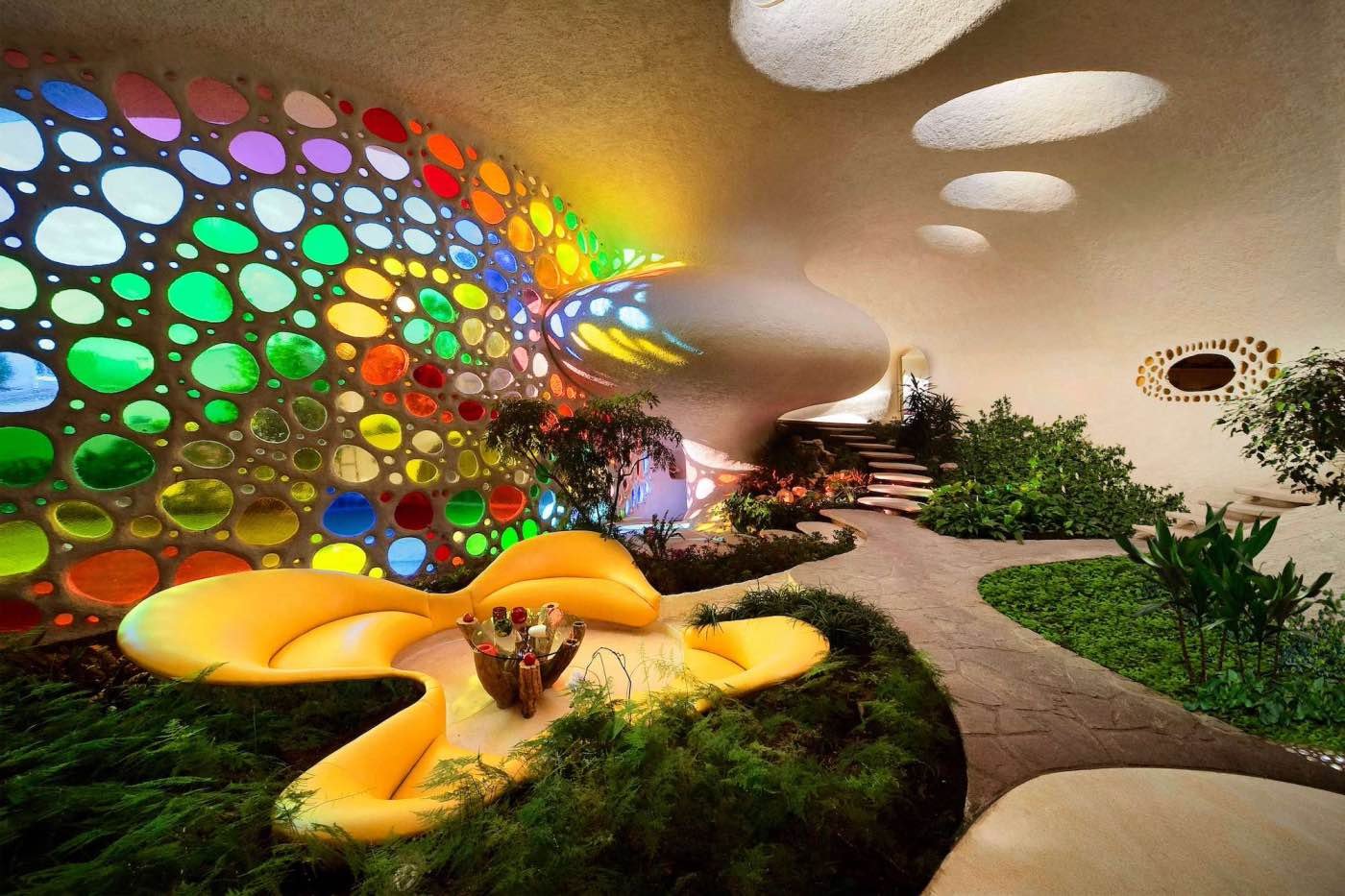
However, the house also highlights the limitations of highly expressive architecture within practical residential life. Custom furniture and irregular room geometries complicate everyday use, while maintenance demands exceed those of standard construction.
As with many biomorphic projects, Nautilus House succeeds most powerfully as experiential architecture — a building designed to provoke emotional and sensory engagement rather than maximise efficiency.
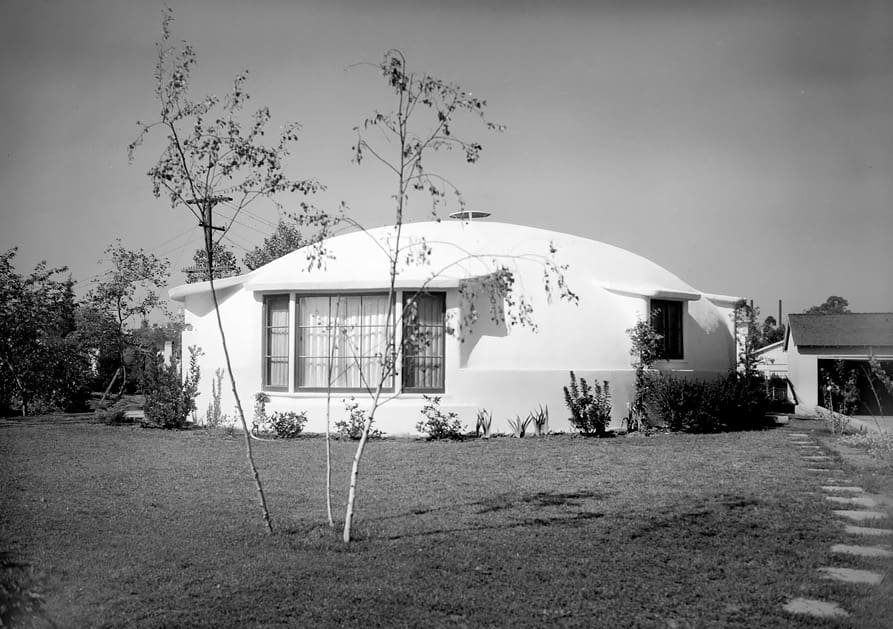
Bubble House
Architect Wallace Neff’s experimental bubble houses of the 1940s occupy a foundational place in the history of organic architecture. Developed during the post-war housing shortage, Neff’s “airform” technique used inflatable balloons as temporary moulds over which concrete could be sprayed rapidly and cheaply. Neff believed the system could provide fast, affordable housing for large populations while also producing structurally efficient dome forms. (Architectural Digest)
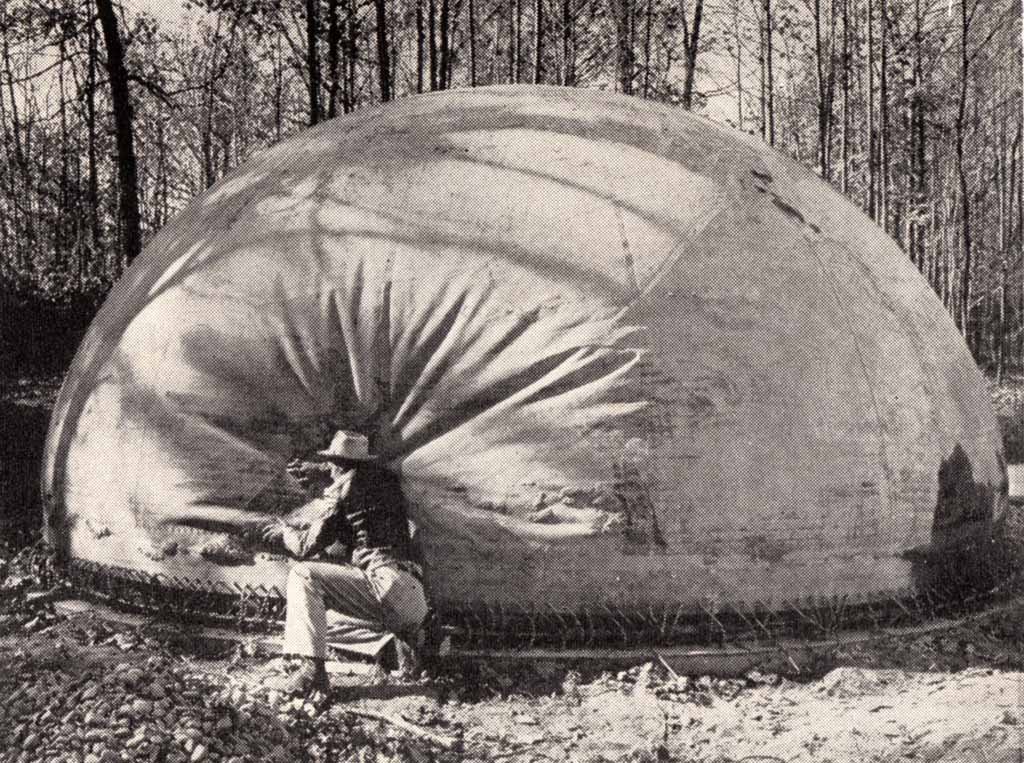
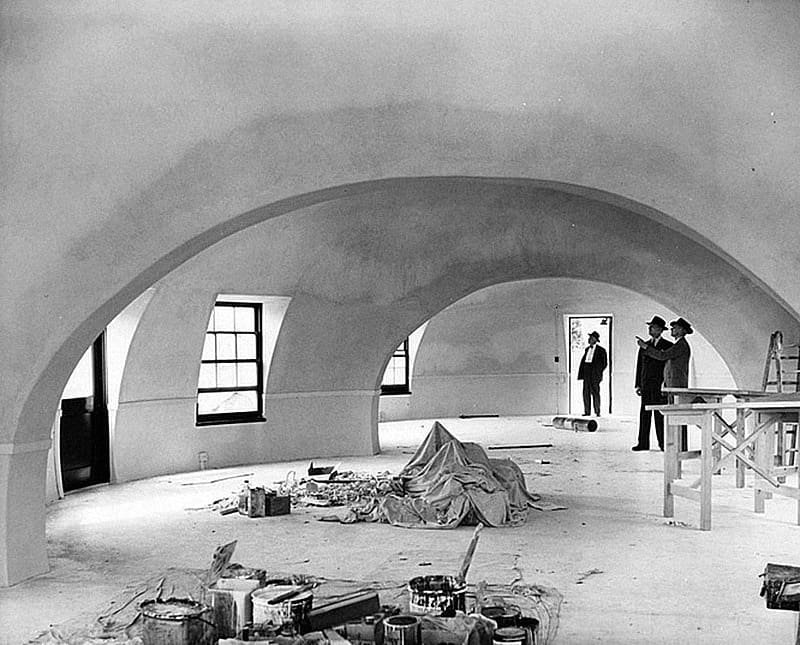
Initially, the concept attracted considerable attention from governments and developers. The rounded structures were durable, weather resistant and relatively quick to construct. Yet the houses ultimately failed to gain widespread adoption.
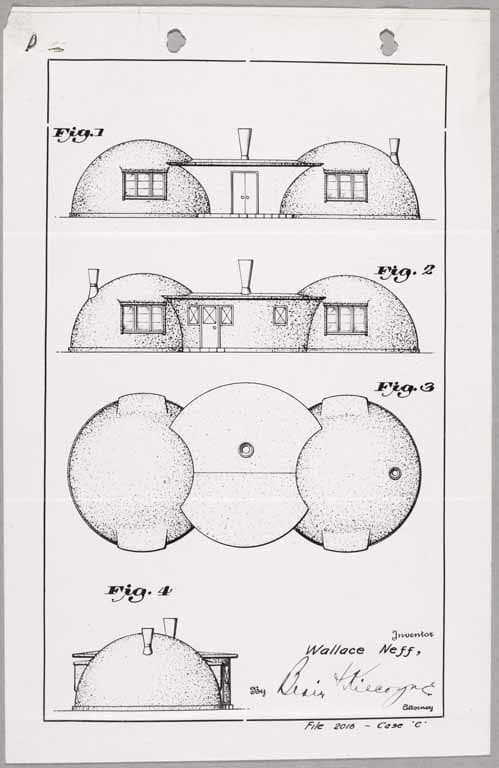
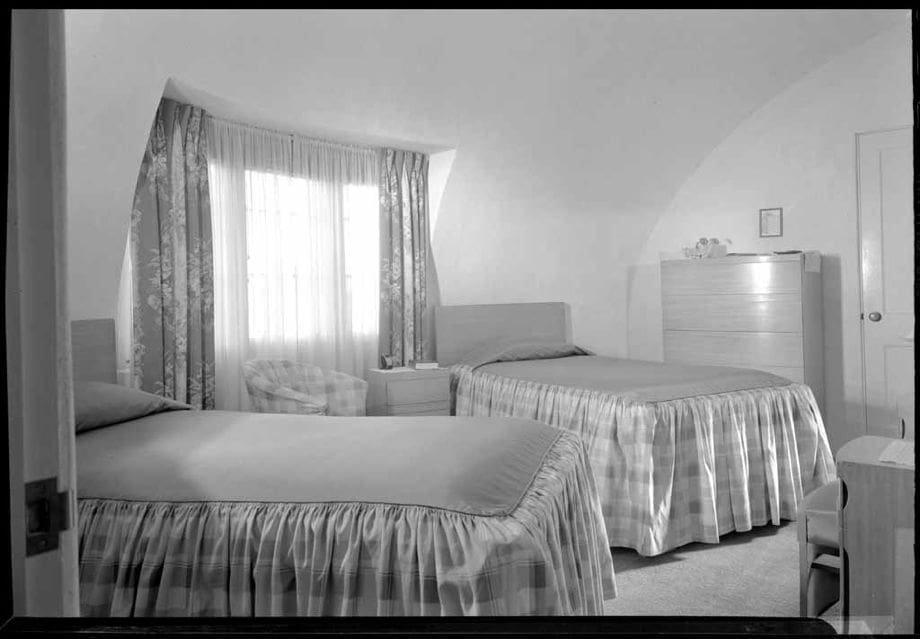
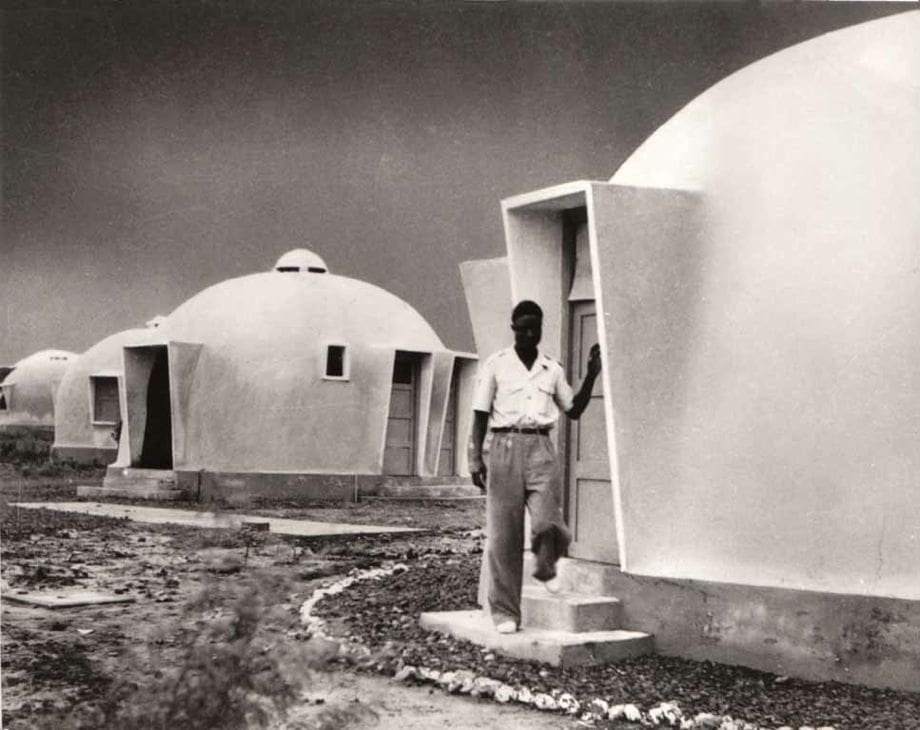
Problems with moisture, ventilation and mould emerged, while consumers remained culturally attached to conventional domestic forms. The interiors also proved difficult to partition and furnish effectively.
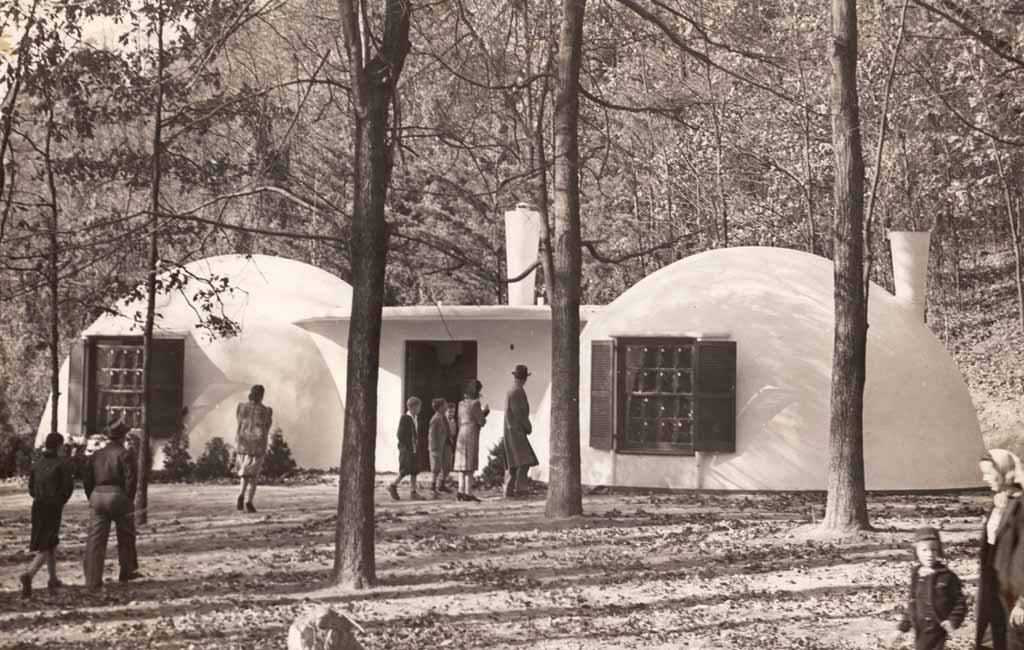
Neff’s surviving bubble house in Pasadena therefore stands less as a practical housing model than as a reminder of modernism’s recurring dream: that radically new construction technologies might reinvent domestic life itself.
Earth House Estate
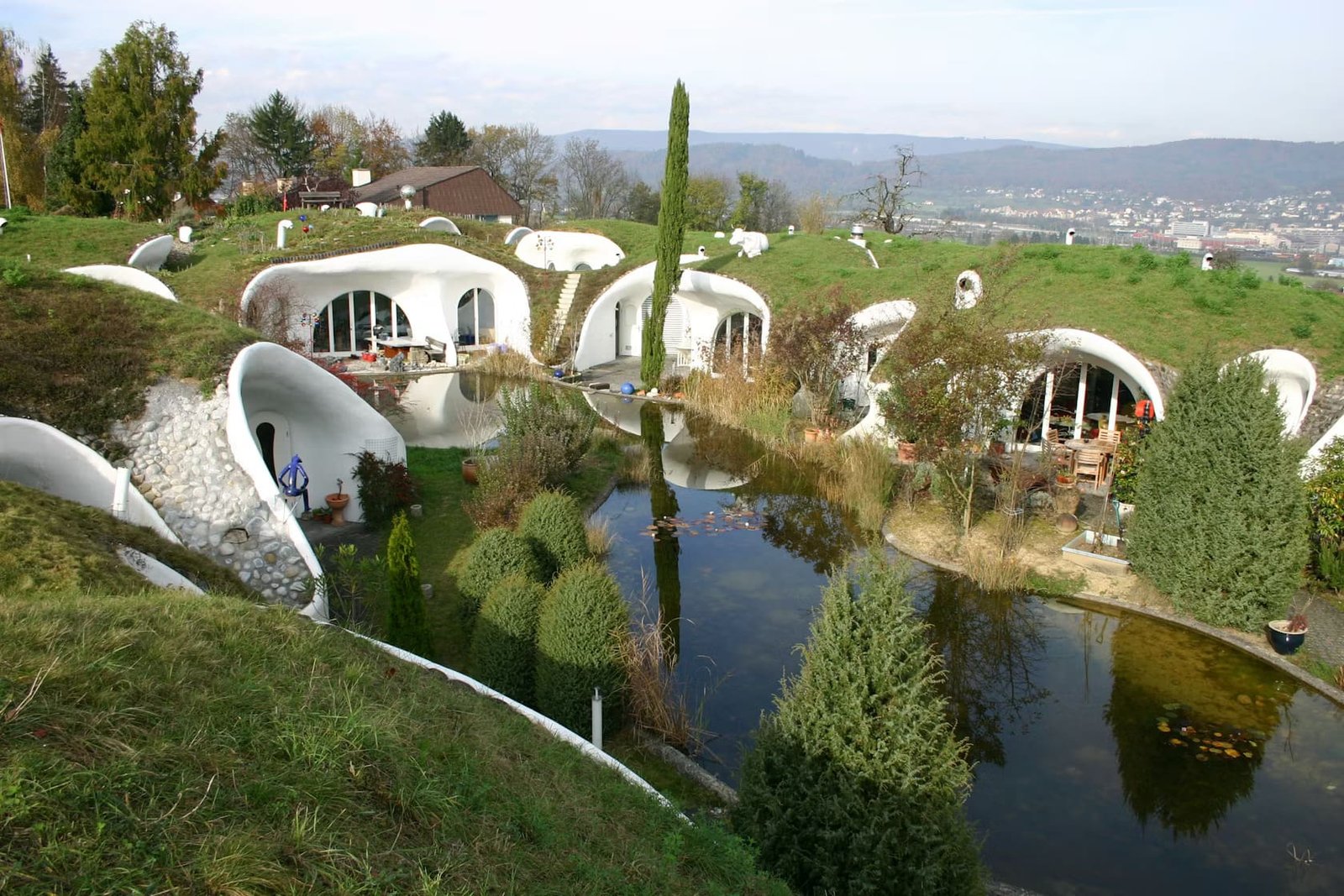
Designed by Swiss architect Peter Vetsch, the Earth House Estate in Dietikon represents a more environmentally integrated interpretation of biomorphic architecture.
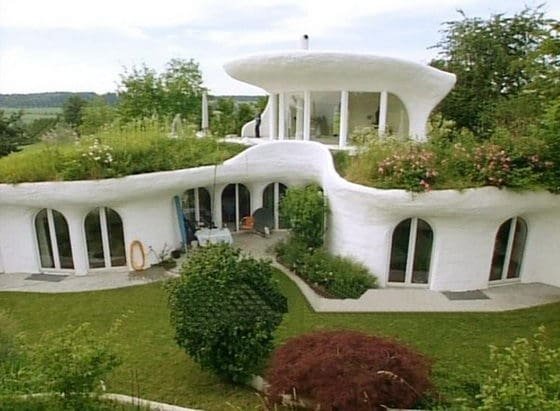
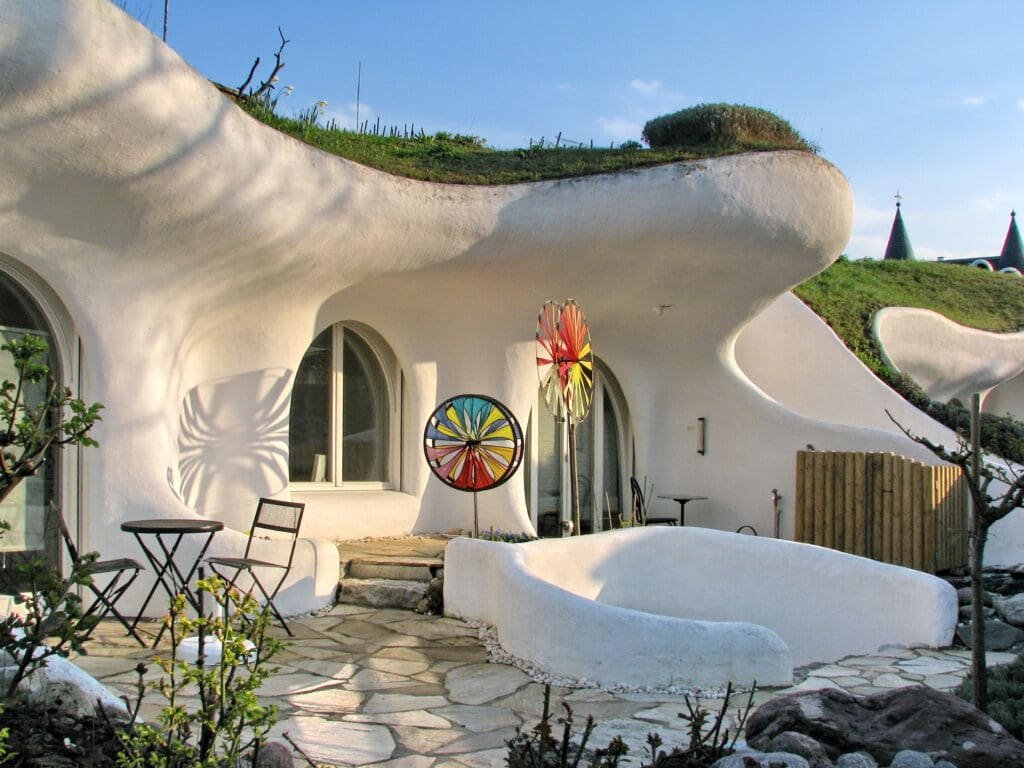
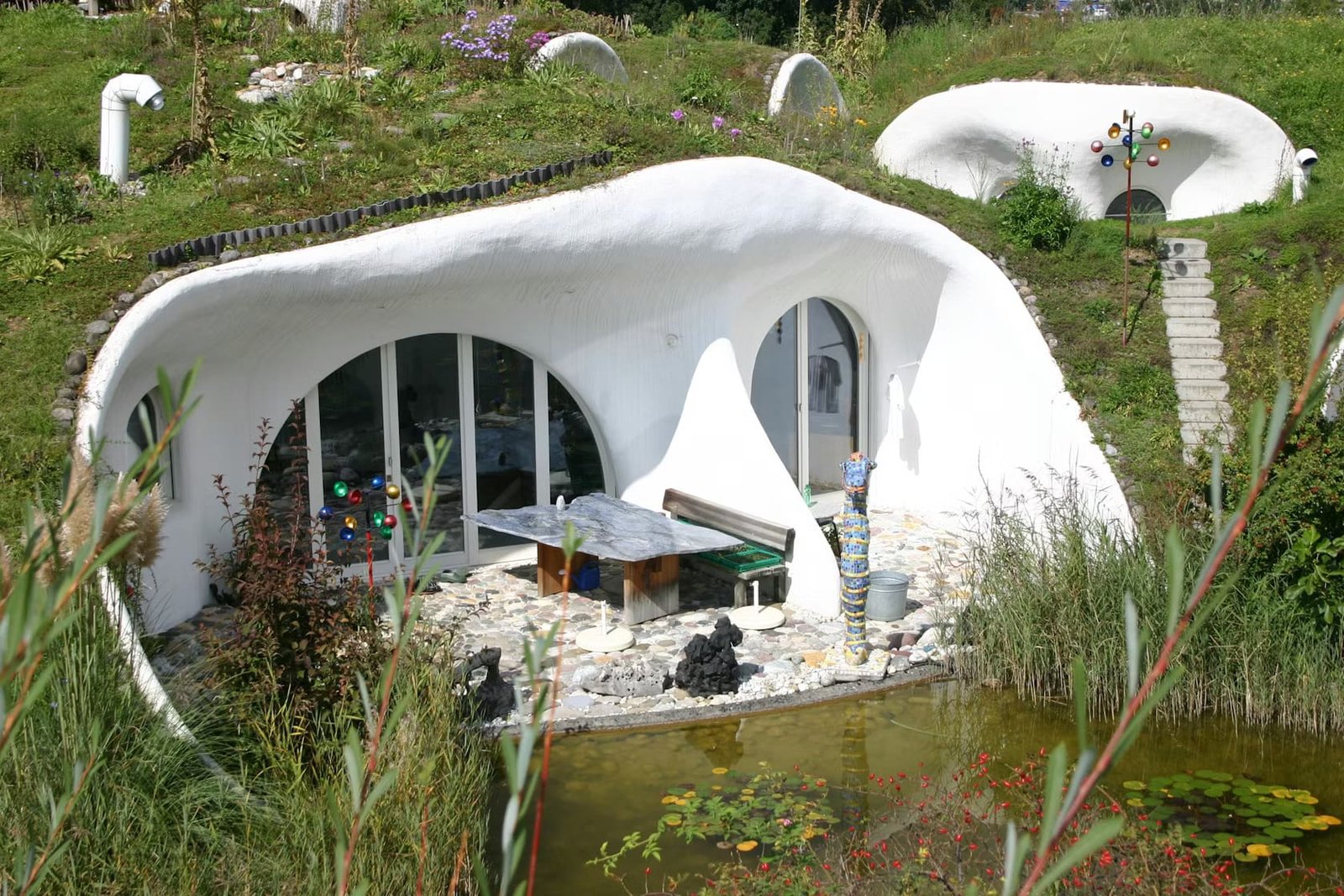
Built partially underground and covered with earth and vegetation, the clustered dwellings use curved concrete shells to create highly insulated living environments. Rather than appearing imposed upon the landscape, the structures seem absorbed into it.
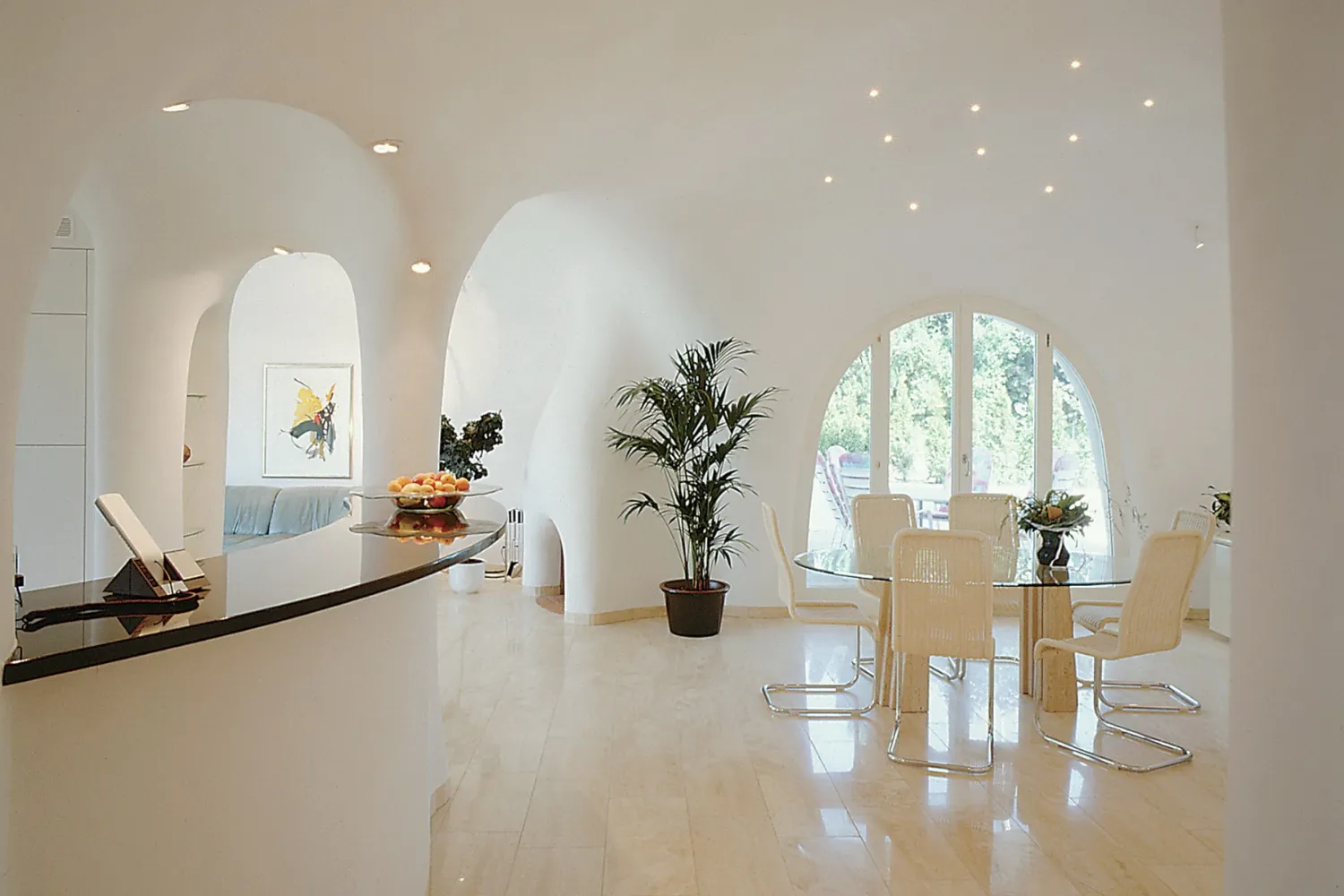
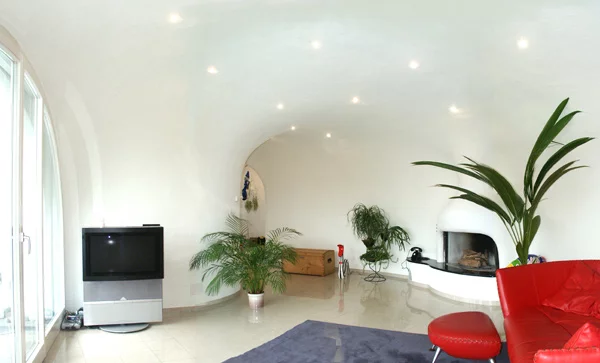
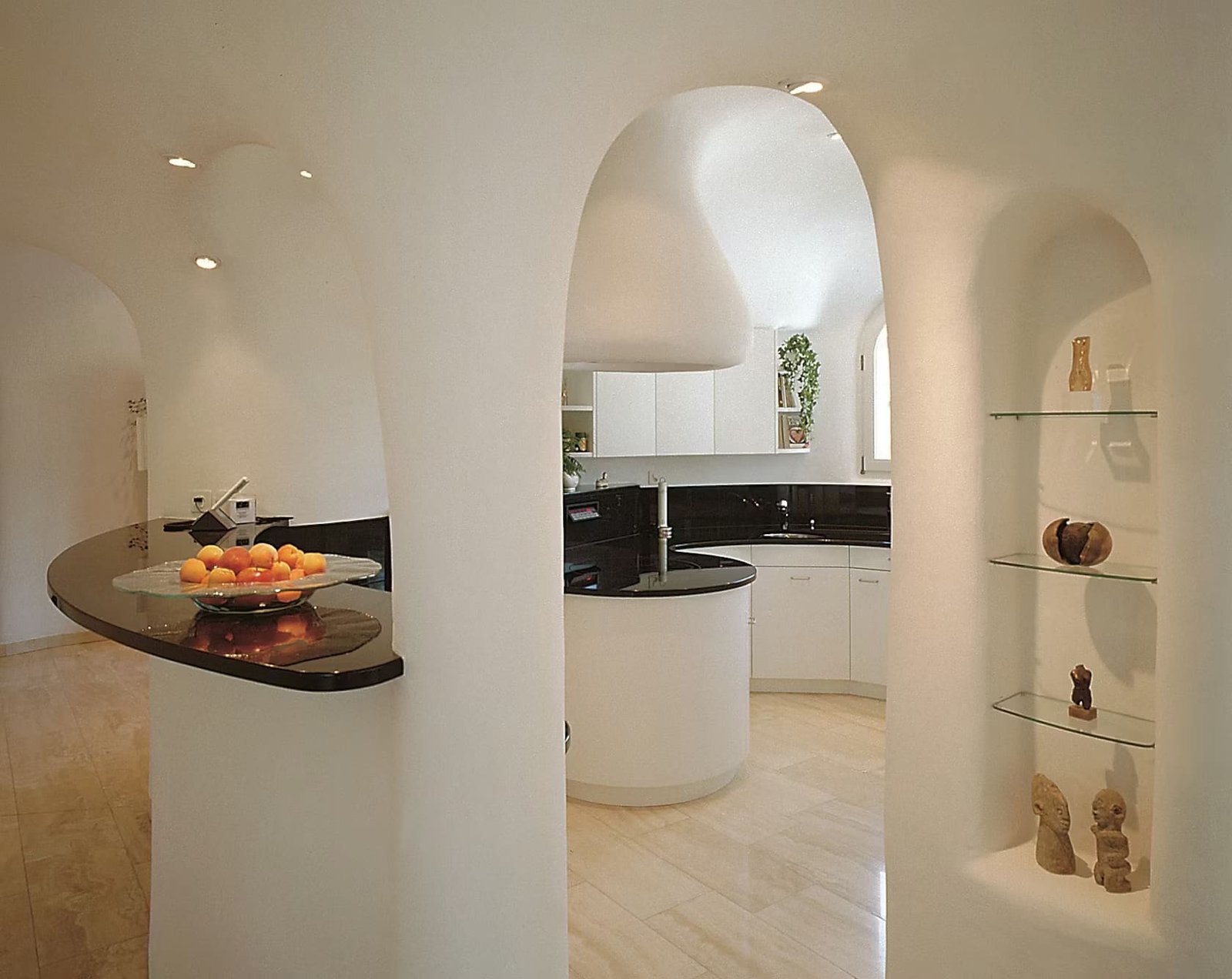
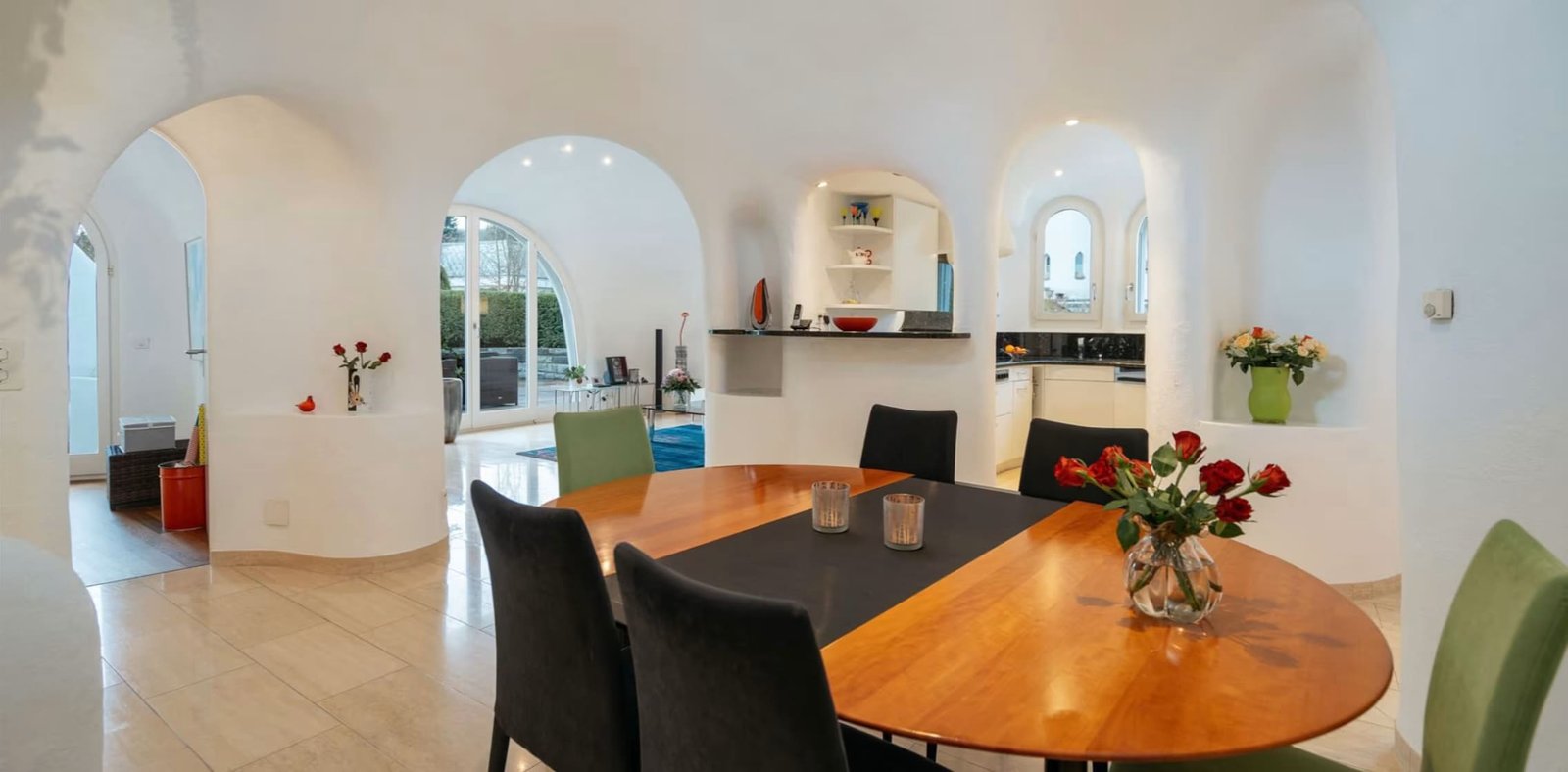
Vetsch’s architecture emphasises sustainability as much as aesthetics. The earth-covered forms provide natural thermal regulation, reducing energy consumption while softening the visual impact of the development. Internally, the rounded spaces produce a sense of enclosure and continuity uncommon in conventional housing.
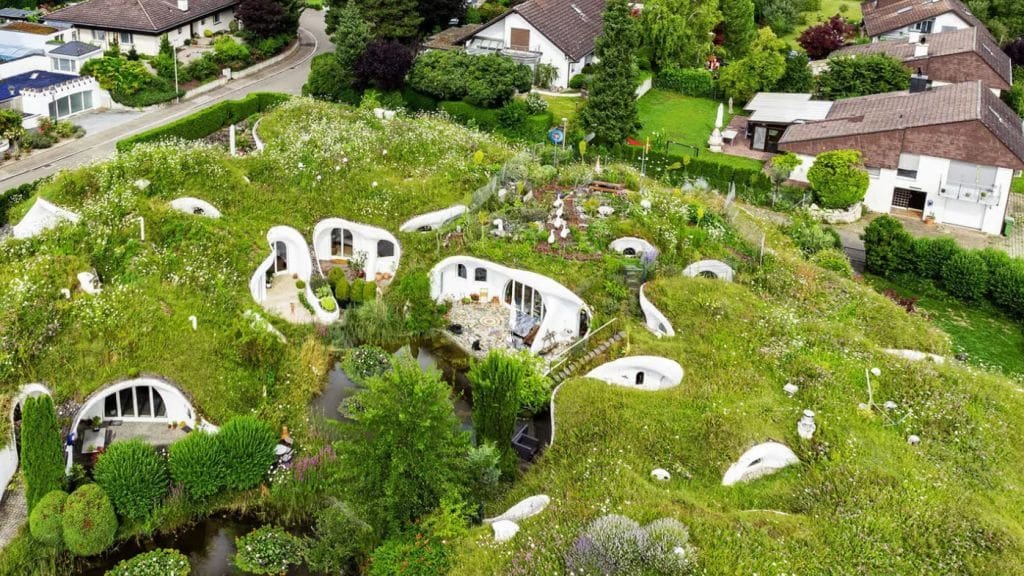
However, the scheme also demonstrates why earth-integrated biomorphic housing remains niche. Construction costs are high, waterproofing requirements are technically demanding, and expansion or alteration is difficult. The estate nevertheless remains influential within ecological architecture, illustrating how organic form can contribute to environmental performance rather than functioning purely as visual spectacle.
Xanadu Houses
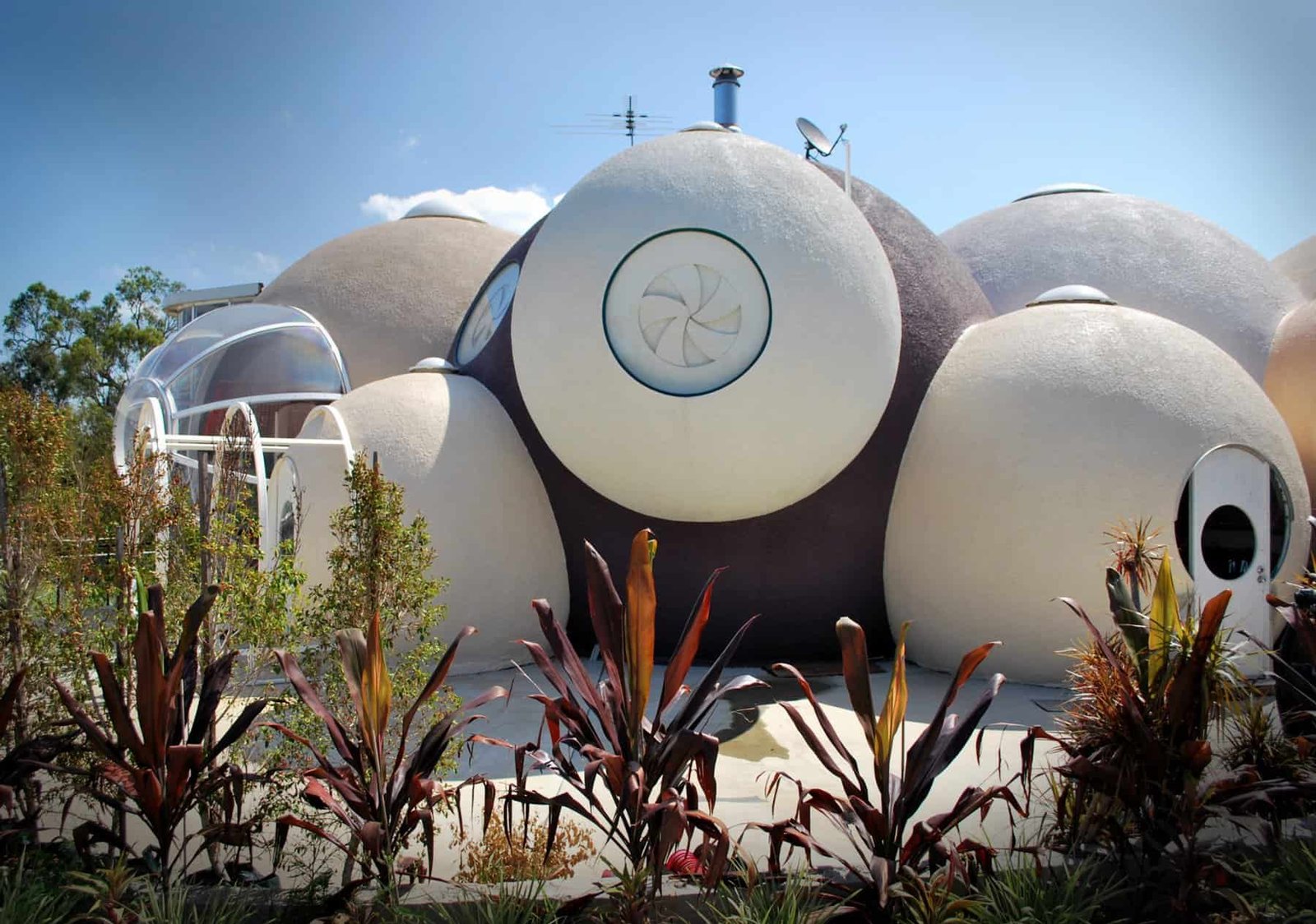
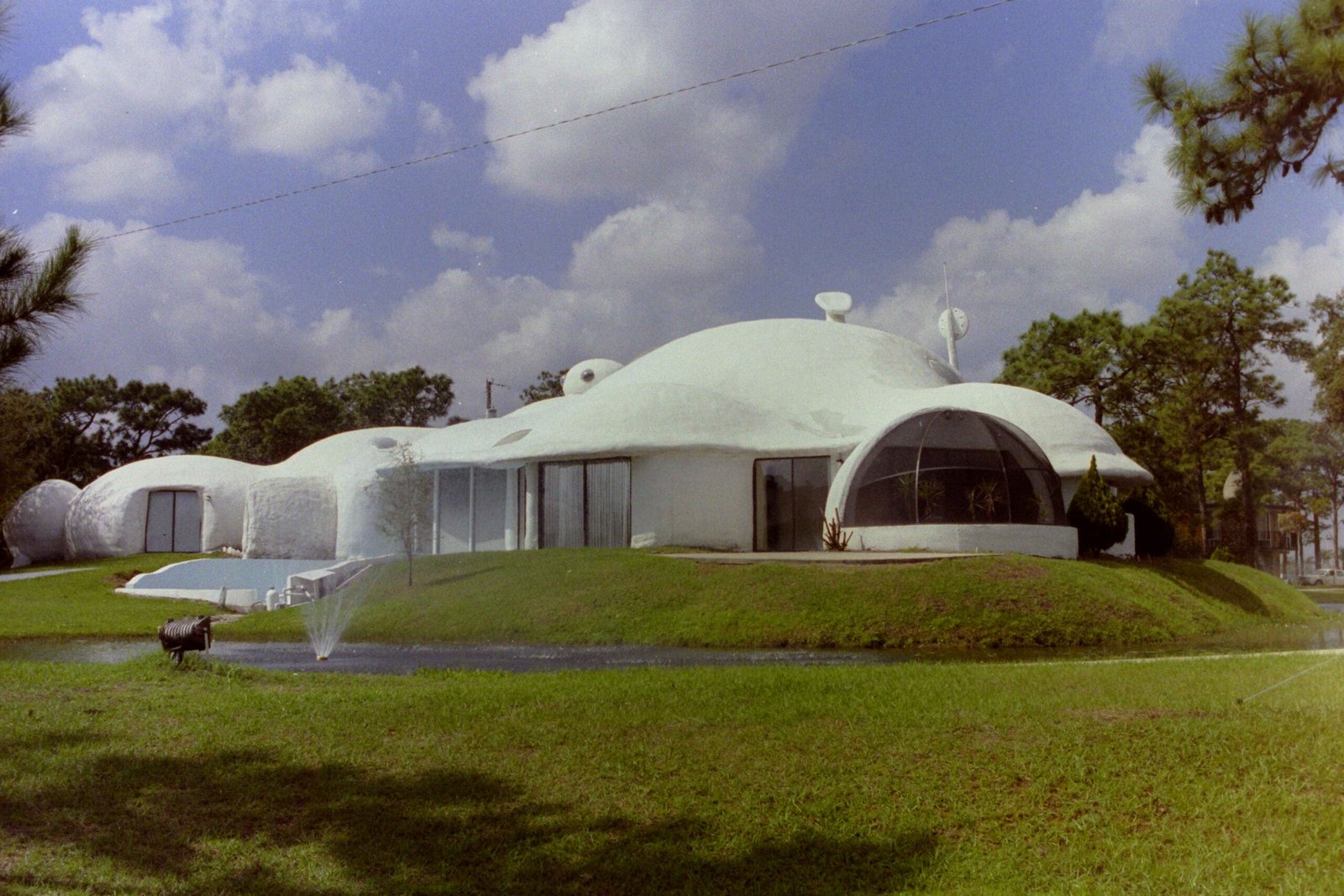
The Xanadu Houses, built during the late 1970s and early 1980s, translated the bubble-house aesthetic into commercial futurism. Constructed using sprayed polyurethane foam over steel frameworks, the structures attempted to imagine how ordinary Americans might live in the computerised future. Interiors incorporated integrated electronics, unconventional lighting and flowing spaces that resembled cinematic science fiction environments.
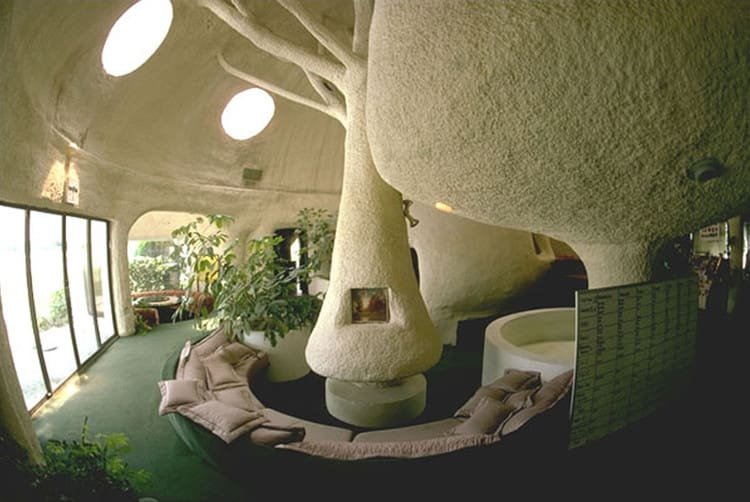
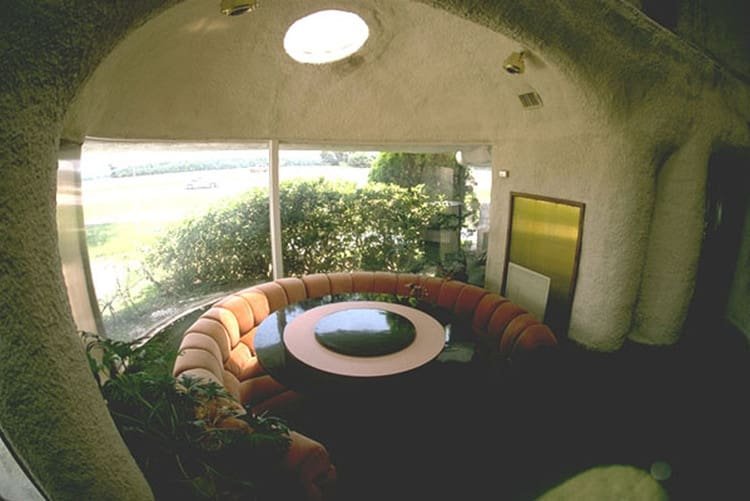
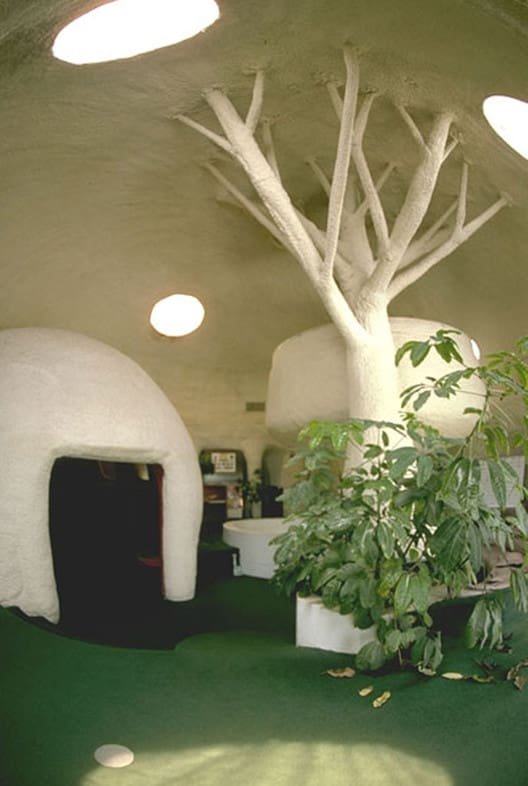
The most famous example, located in Kissimmee near Disney World, became a major tourist attraction. Visitors were drawn less by the practicality of the architecture than by its theatrical optimism. Yet the buildings rapidly demonstrated the vulnerability of experimental domestic construction. Foam materials deteriorated, maintenance costs escalated and the novelty faded quickly. Most Xanadu Houses were eventually demolished.
Their importance today lies largely in cultural symbolism: they captured a brief historical moment when biomorphic architecture became intertwined with visions of technological utopia and consumer futurism.
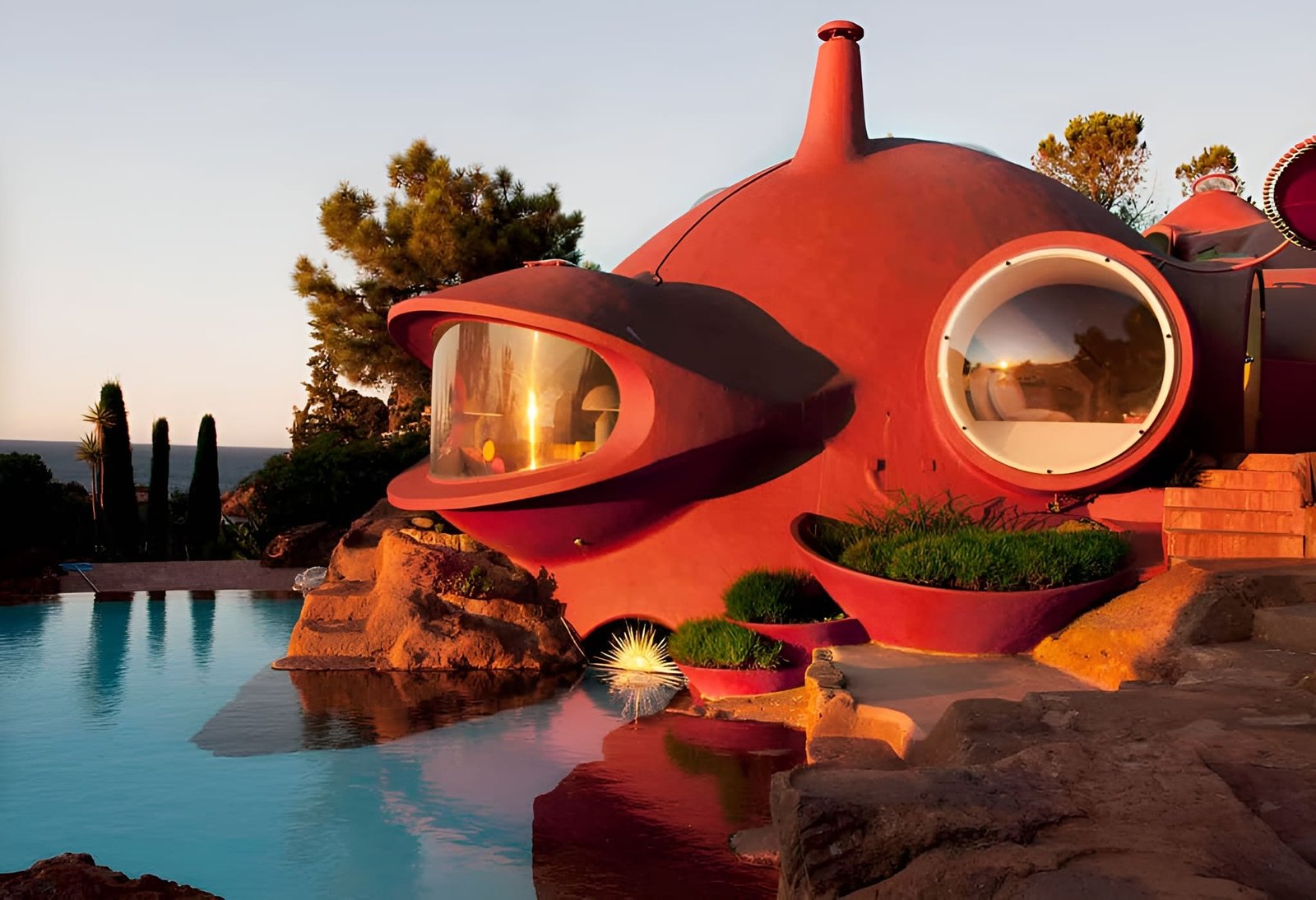
Maison Bernard
Often overshadowed by Palais Bulles, Maison Bernard was another major project by Antti Lovag and among the earliest fully realised examples of European bubble architecture.
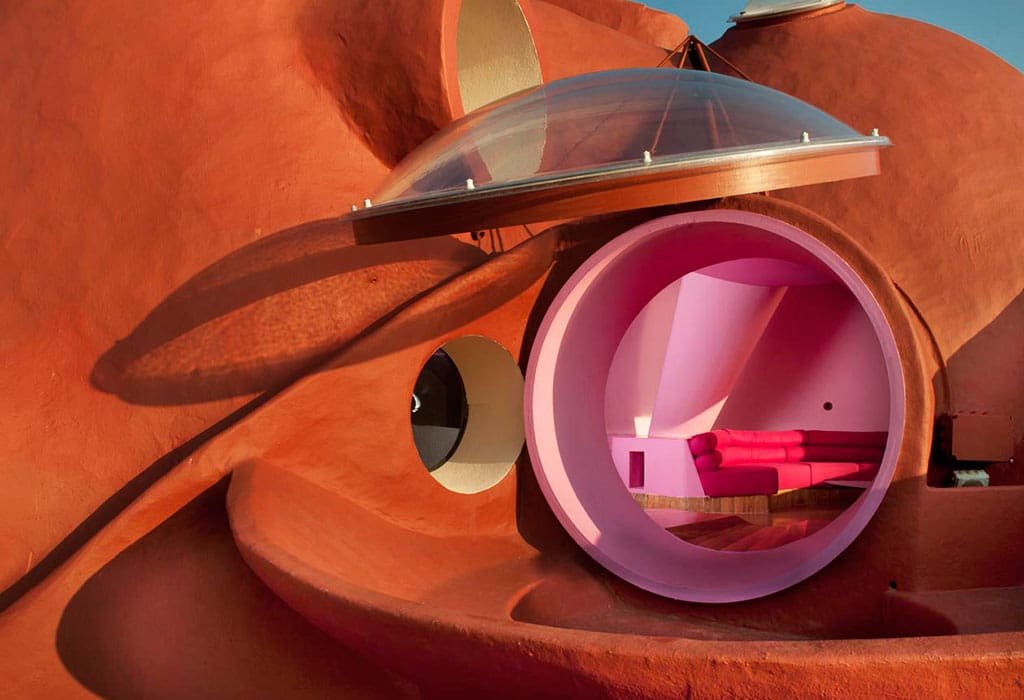
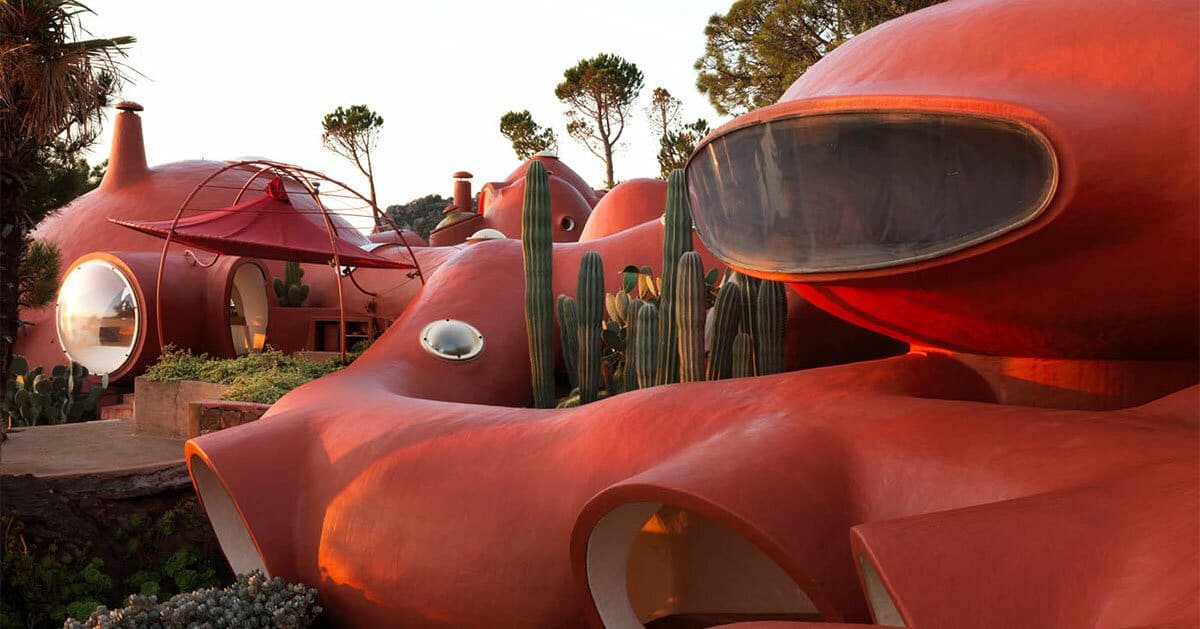
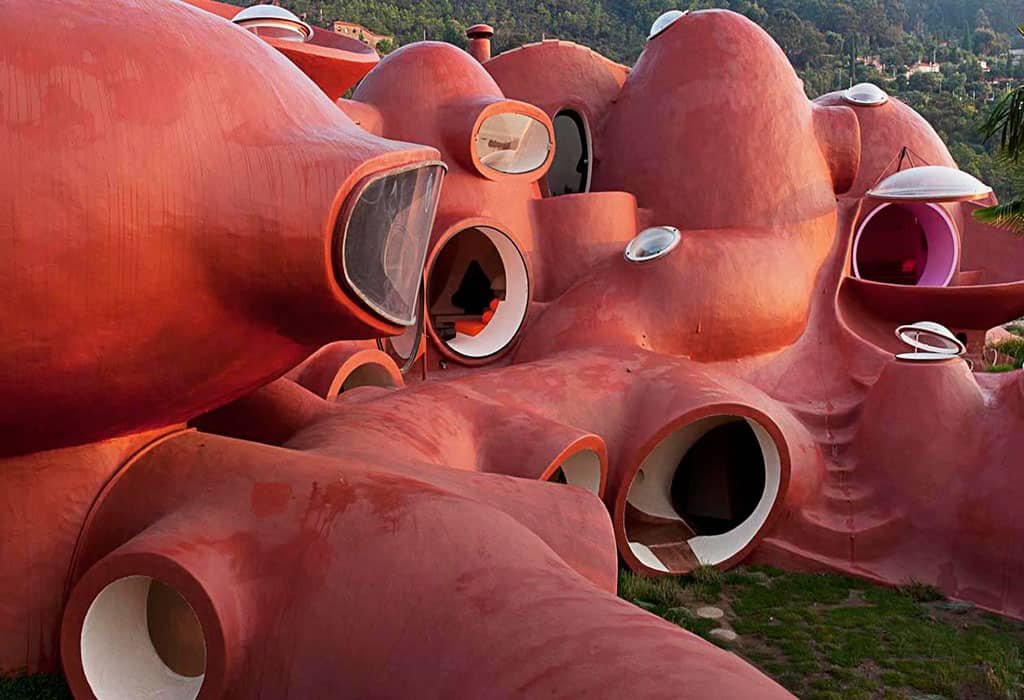
Designed for industrialist Pierre Bernard during the 1970s, the house explored Lovag’s theories of “habitology” — the idea that architecture should adapt to human movement and psychology rather than force inhabitants into rigid geometric systems.
The structure consists of interconnected spherical volumes embedded into the rocky landscape above the Mediterranean. Openings frame carefully composed views while maintaining continuous spatial flow between rooms. The building demonstrates extraordinary formal coherence, with furniture, circulation and structure integrated into a unified organic system.
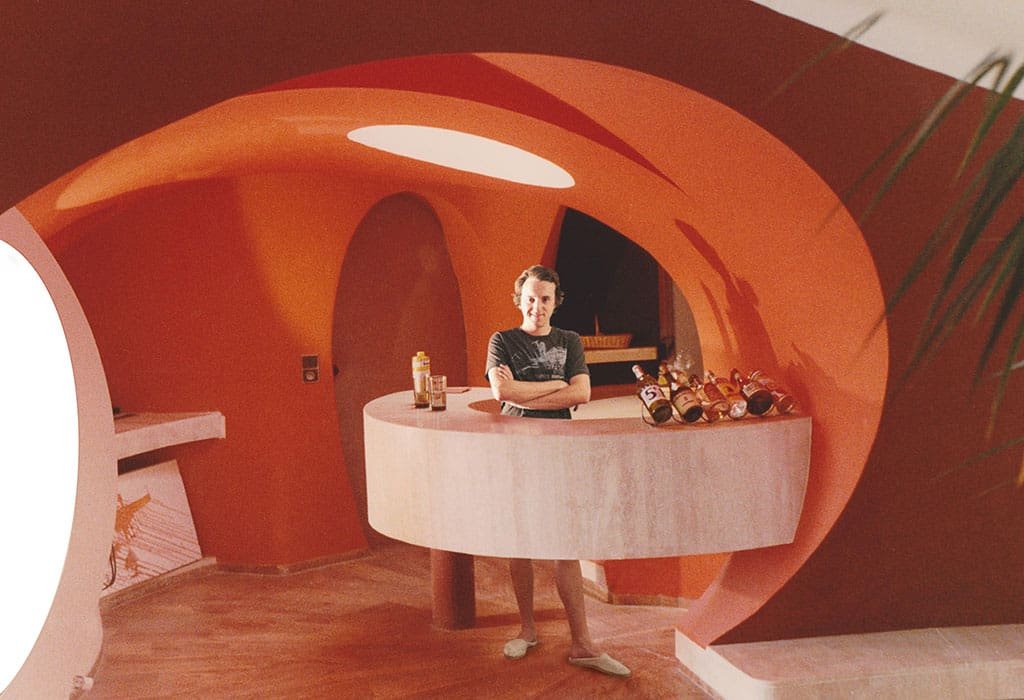
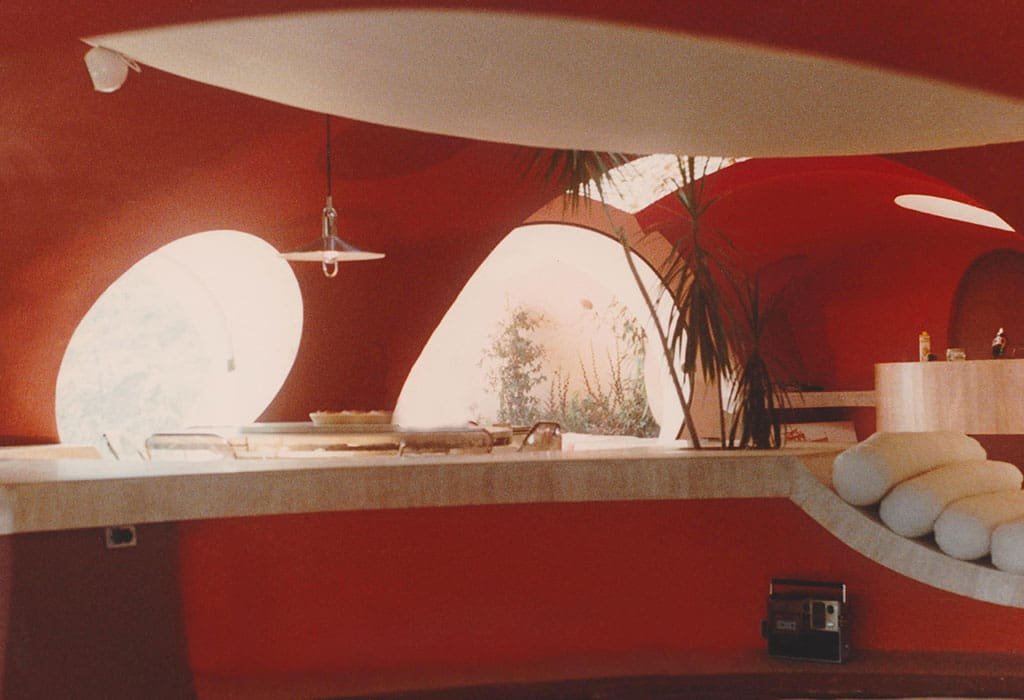
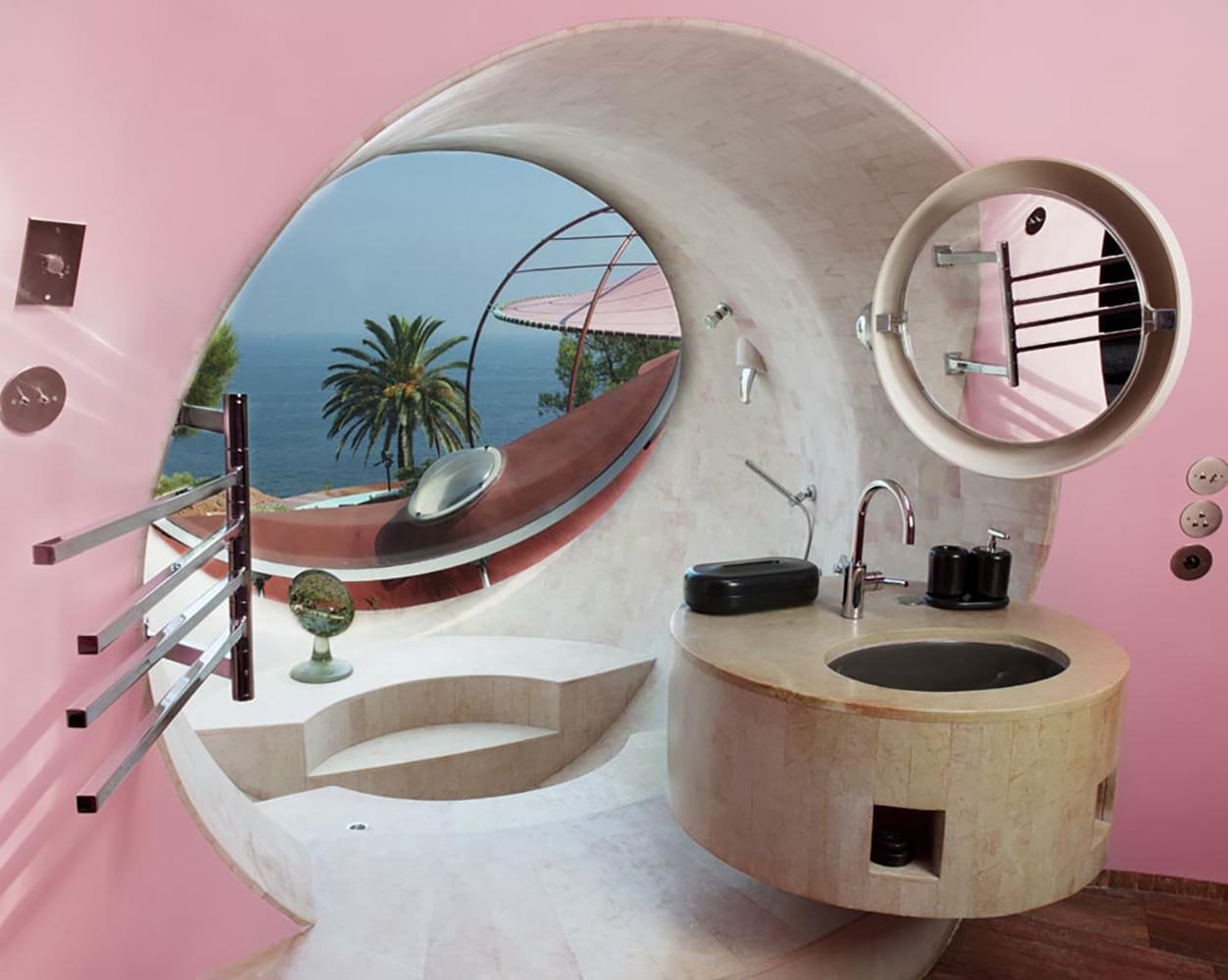
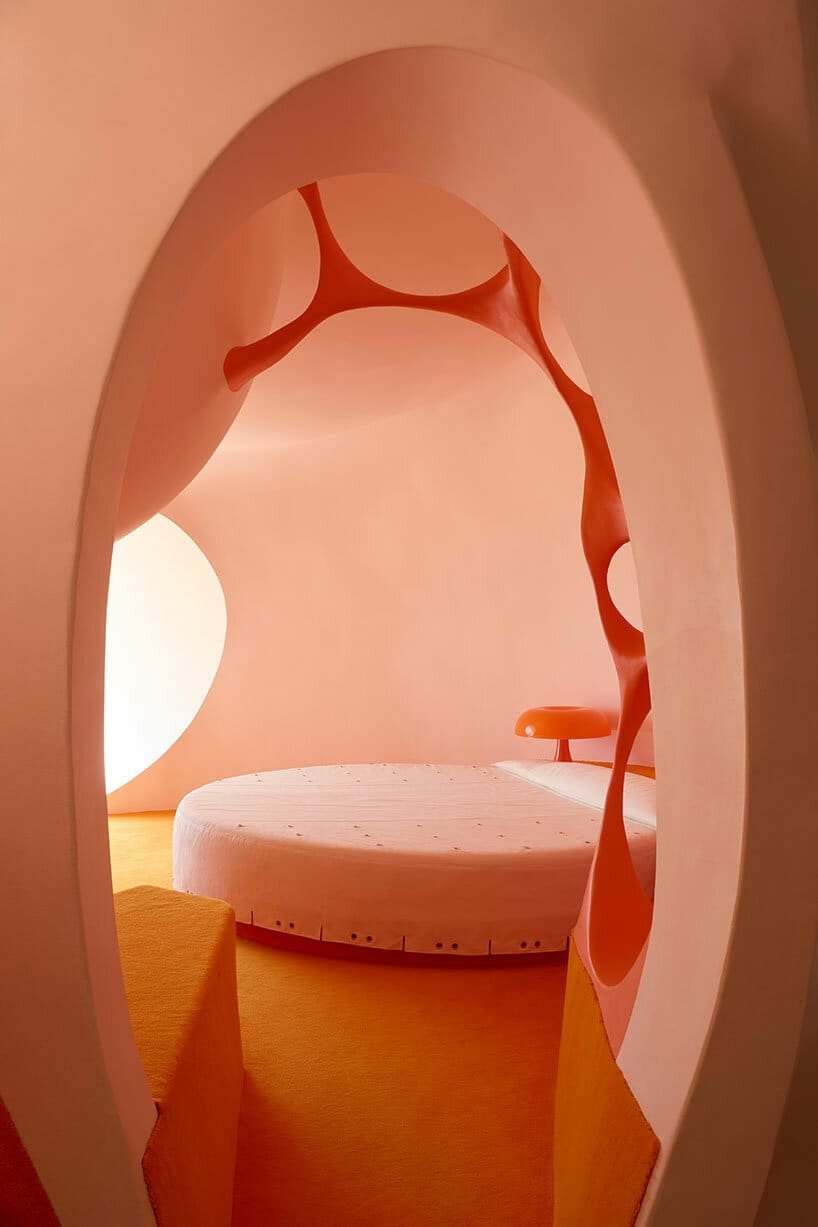
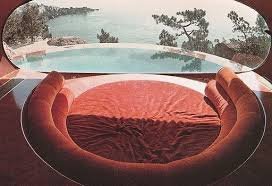
Yet Maison Bernard also illustrates the financial and technical intensity of handcrafted biomorphic construction. Every detail required custom fabrication, and the building’s complexity limited reproducibility. Like many iconic organic houses, it ultimately functions more convincingly as architectural philosophy than as a scalable housing model.
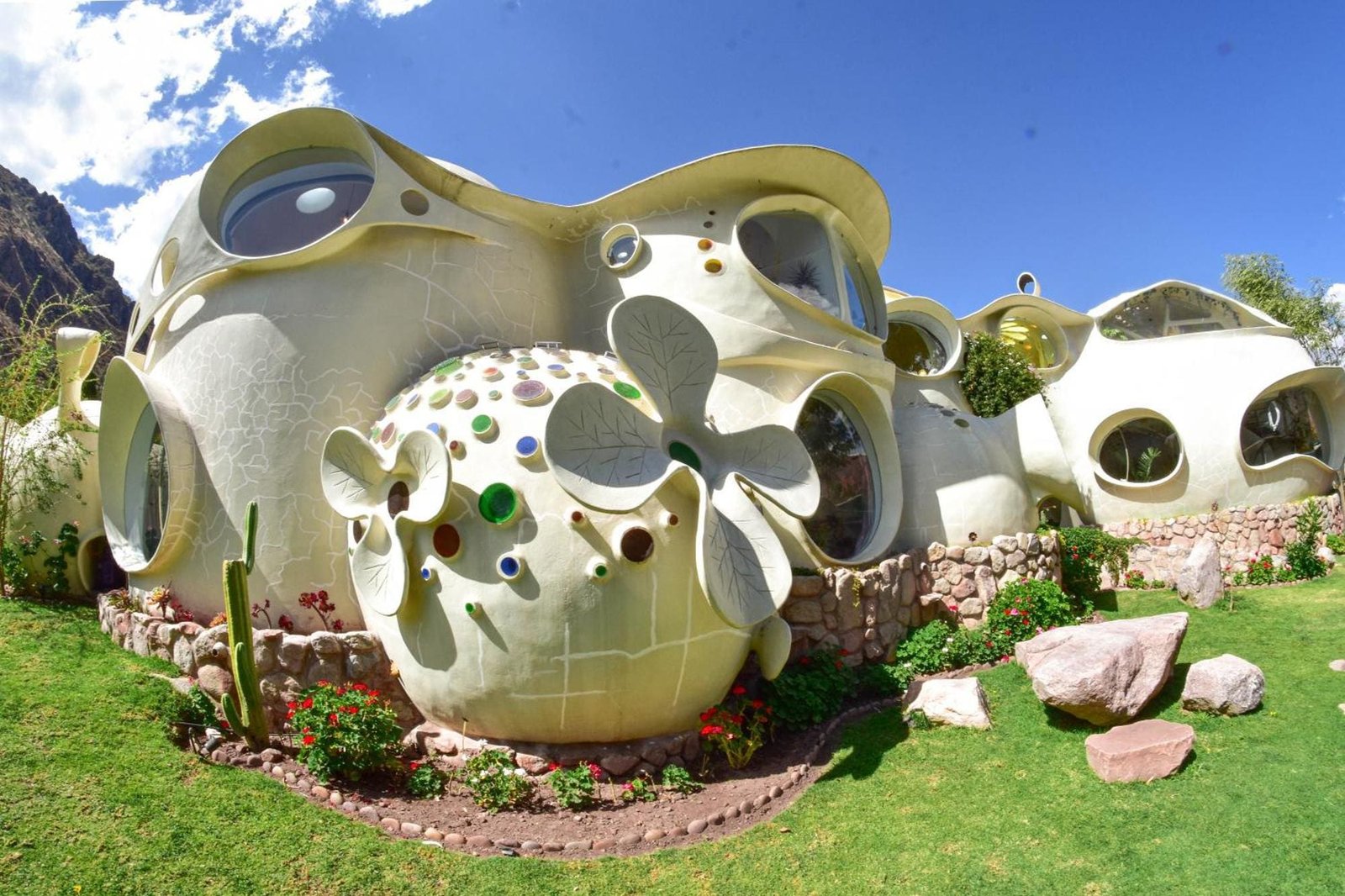
Wifala Harmony Hotel
Set within Peru’s Sacred Valley near Urubamba, Wifala Harmony Hotel represents one of the most ambitious recent examples of organic hospitality architecture in South America. Conceived by engineer Ernesto Sánchez and completed after several years of design and construction, the hotel adopts a fully biomorphic language of curved walls, domed roofs, circular openings and flowing circulation spaces. The project draws partly upon the legacy of Antoni Gaudí and broader traditions of organic architecture, while integrating local Andean symbolism and materials into the design process. (Peru en Videos)
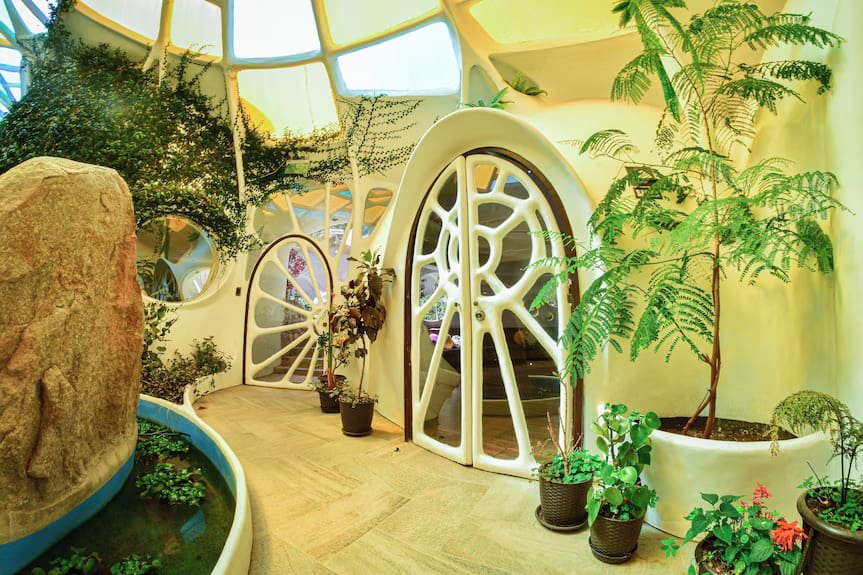
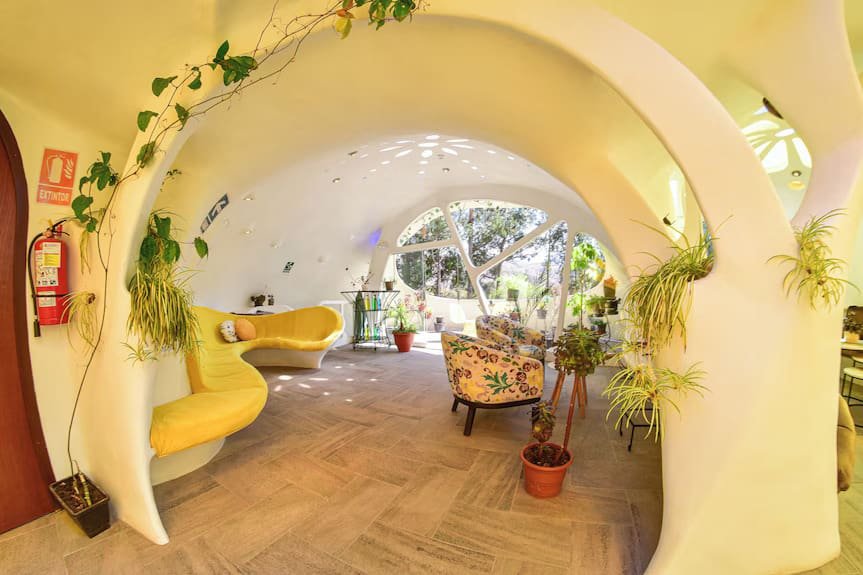
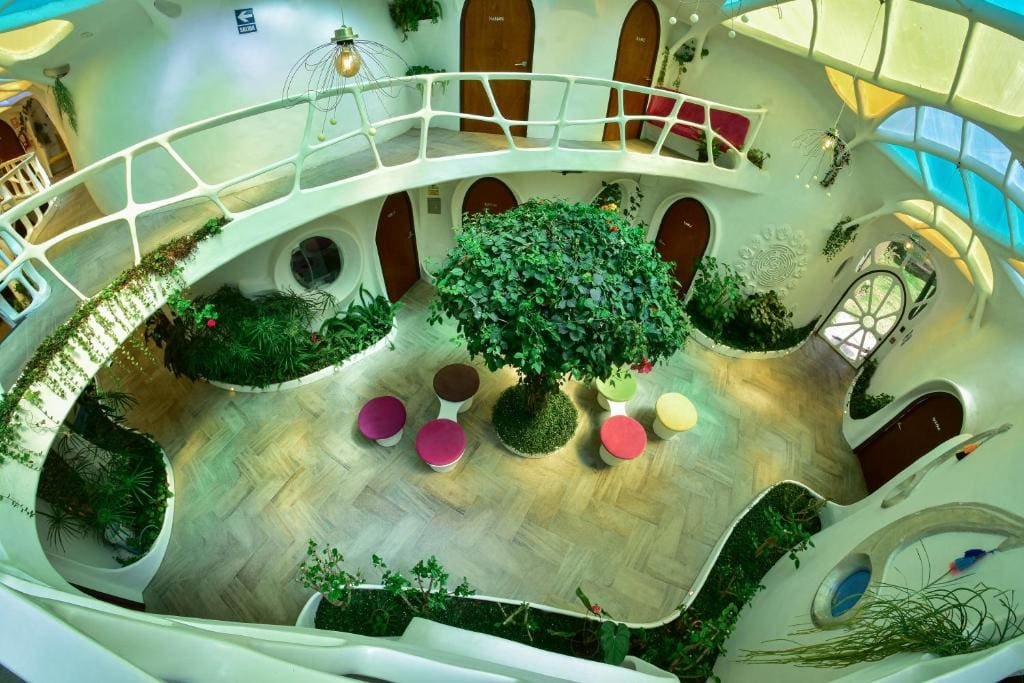
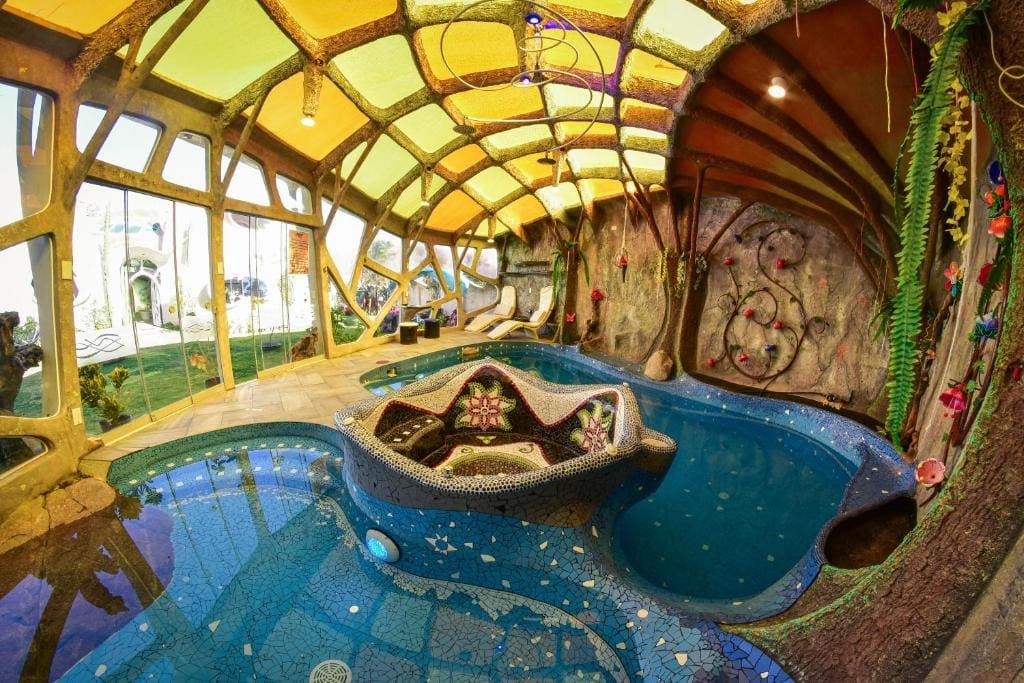
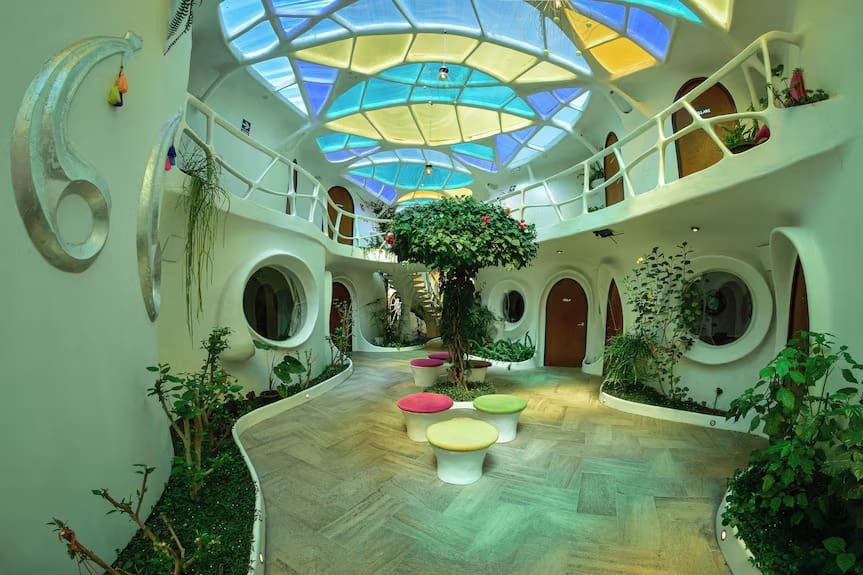
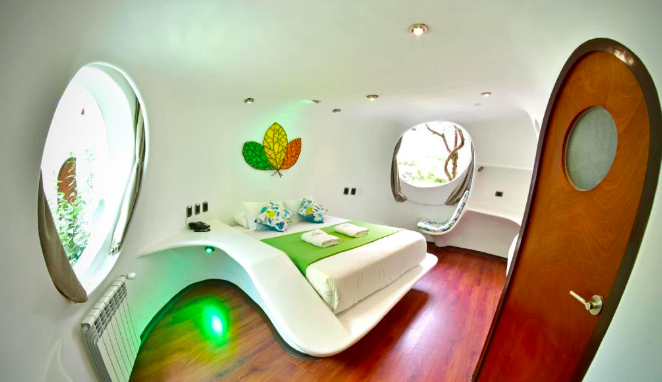
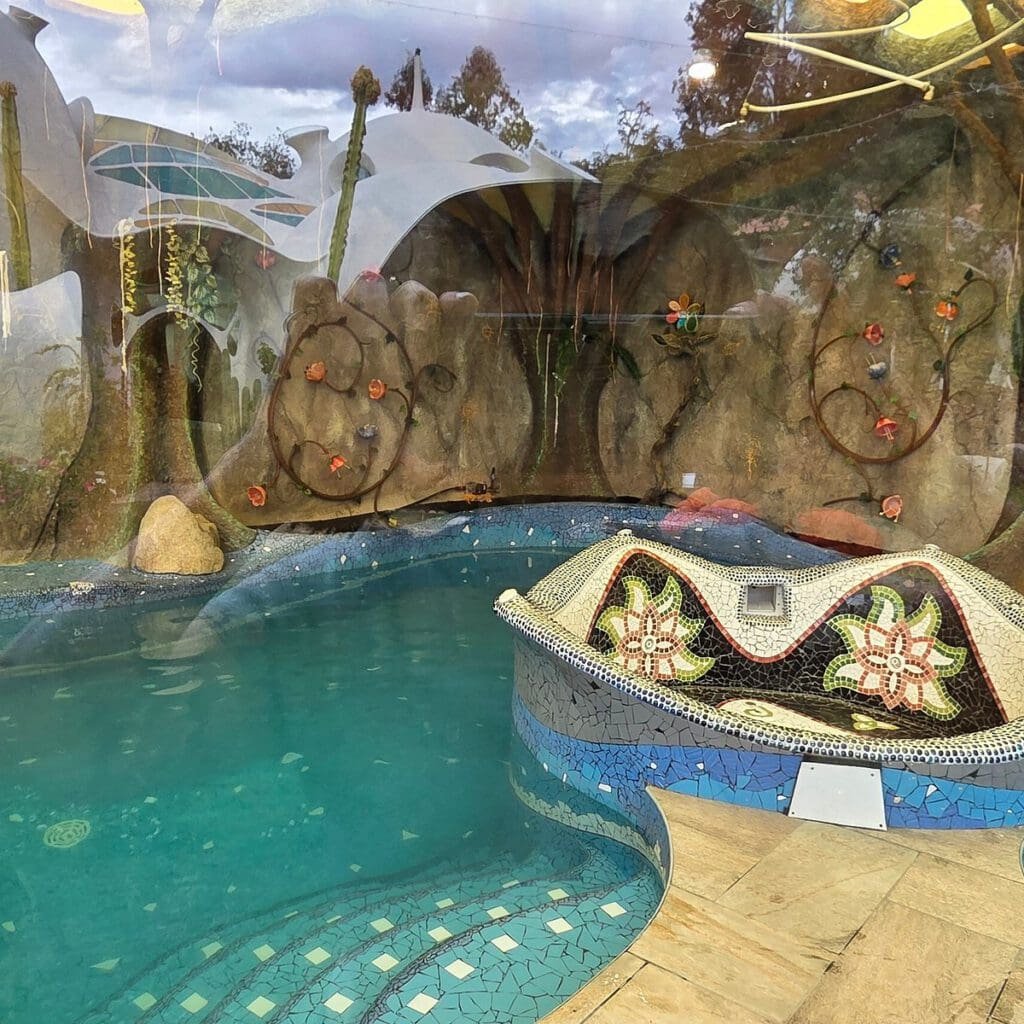
Unlike many speculative “bubble house” concepts, Wifala Harmony functions as a commercially viable hospitality project rather than an isolated architectural experiment. Its interiors incorporate built-in furniture, coloured natural light effects and spatial layouts intended to promote psychological calm and immersion within the surrounding landscape. Existing vegetation and rock formations were retained during construction, reinforcing the project’s emphasis on environmental integration. (Peru en Videos)
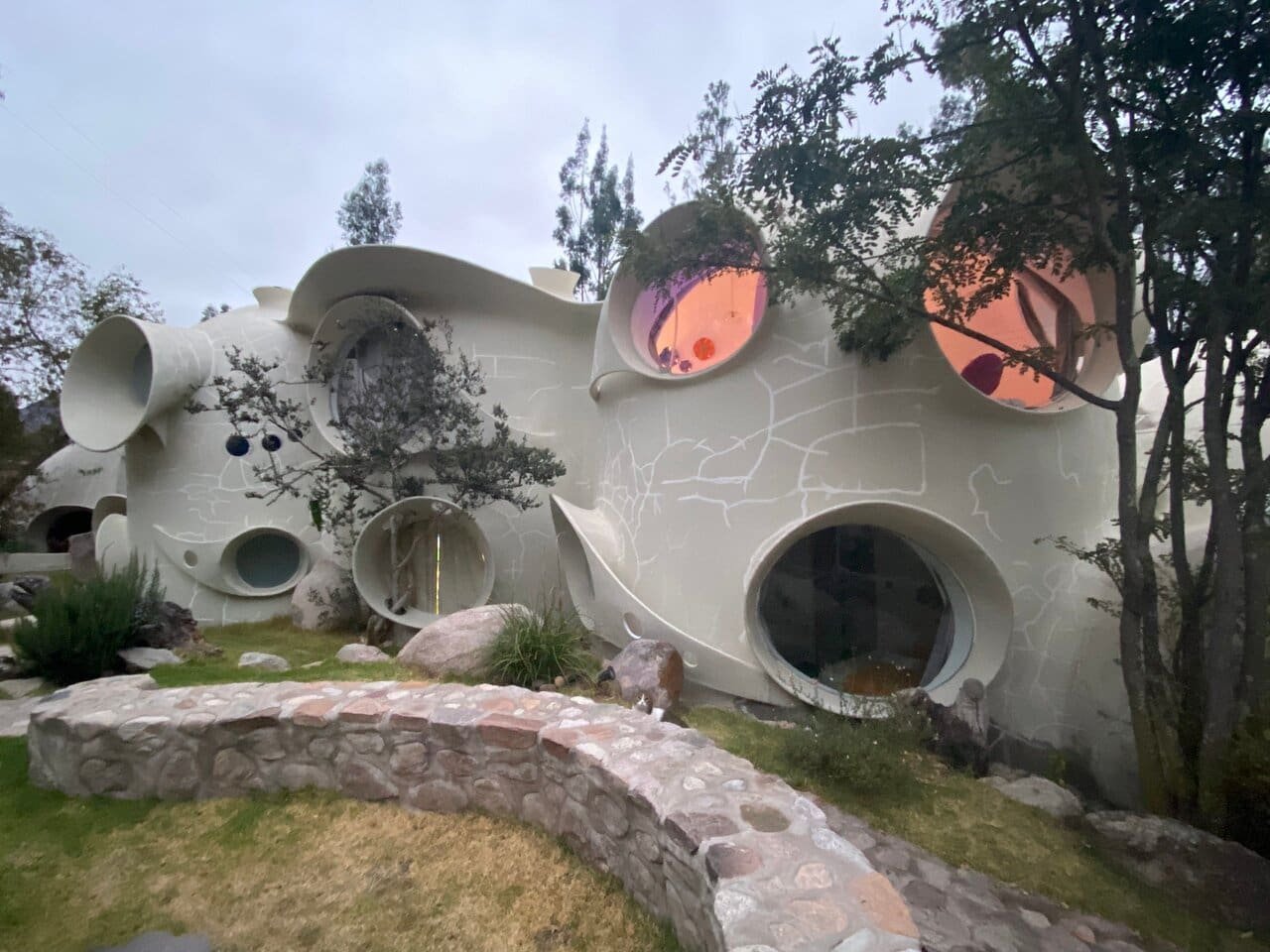
The hotel also demonstrates how biomorphic architecture has increasingly shifted from utopian mass-housing theory toward experiential tourism. Guests are drawn as much by the emotional and visual qualities of the architecture as by the accommodation itself. In this respect, Wifala Harmony succeeds where many earlier organic housing projects struggled: it transforms architectural irregularity into a marketable luxury experience.
Yet the same challenges remain evident beneath the aesthetic success. Construction relied heavily on bespoke ferrocement techniques, custom detailing and labour-intensive craftsmanship, factors that would be difficult to scale economically for mainstream residential development. (stylourbano.com.br)
Maison Unal
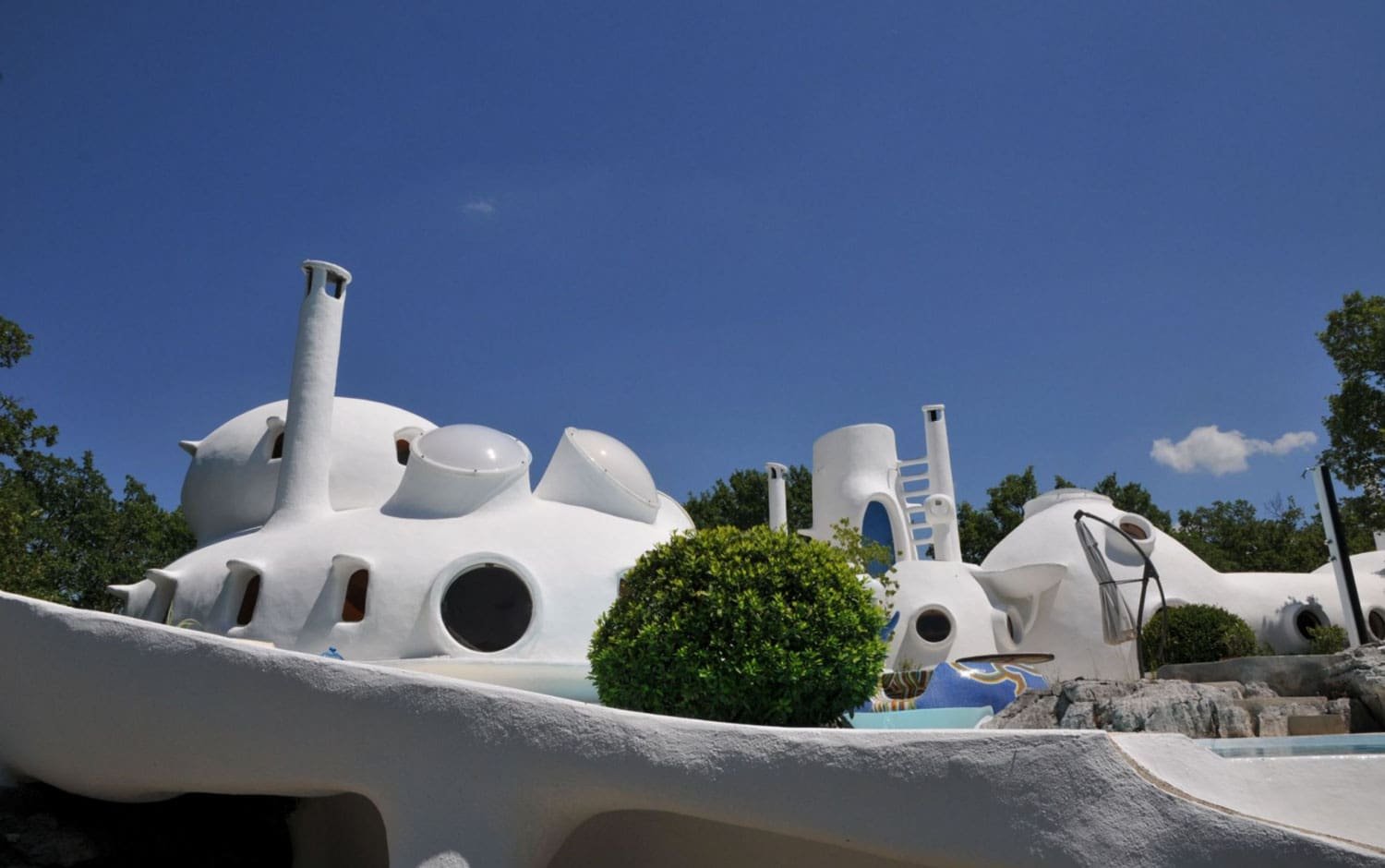
Hidden among the limestone landscapes of the Ardèche region in southern France, Maison Unal stands as one of the purest expressions of European “architecture-sculpture.”
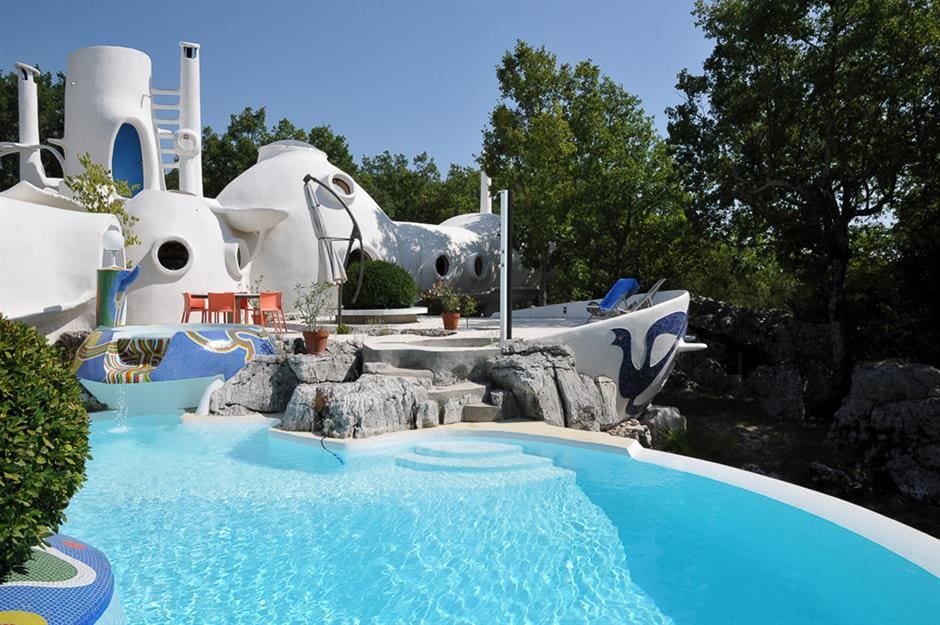
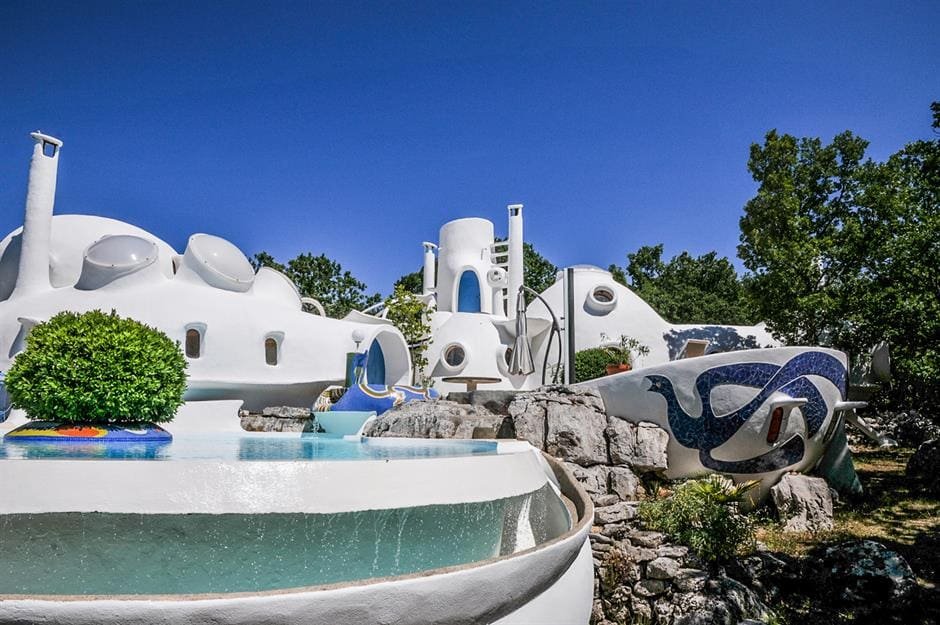
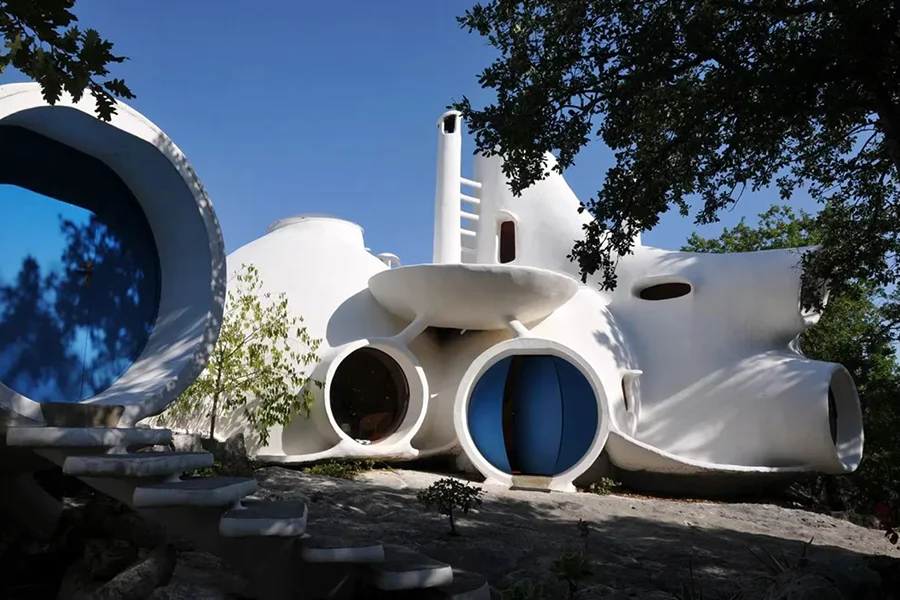
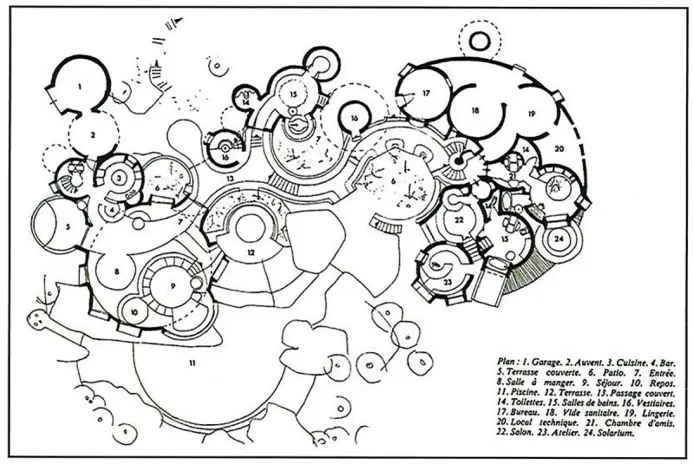
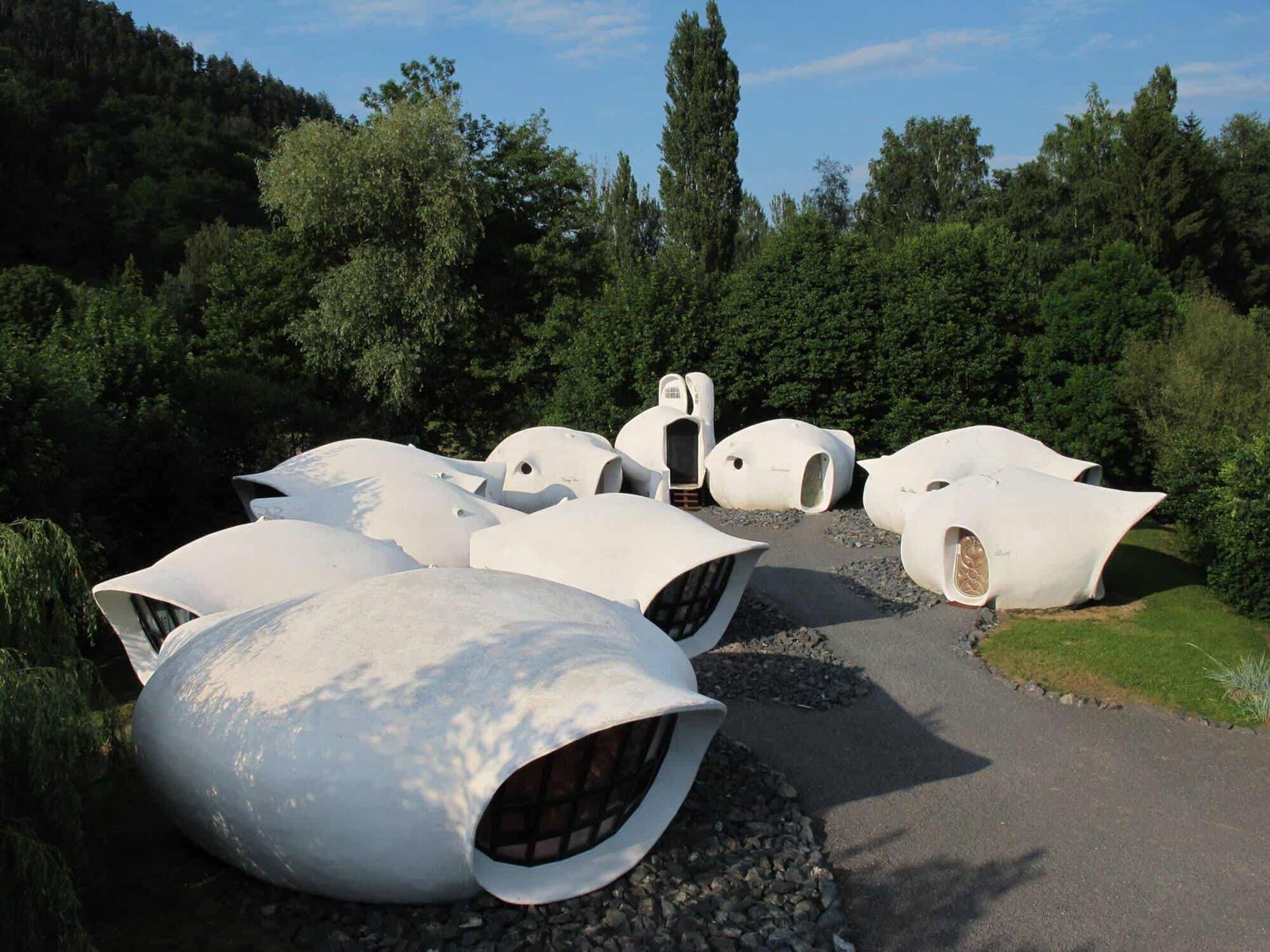
Designed by Swiss-French architect Claude Häusermann-Costy and constructed over more than three decades by Joël Unal between 1972 and 2008, the house rejects almost every convention of domestic architecture. Its clustered domes and bulbous volumes rise directly from the rocky terrain without traditional foundations, forming a labyrinth of interconnected organic chambers without a single right angle. (Wikipedia)
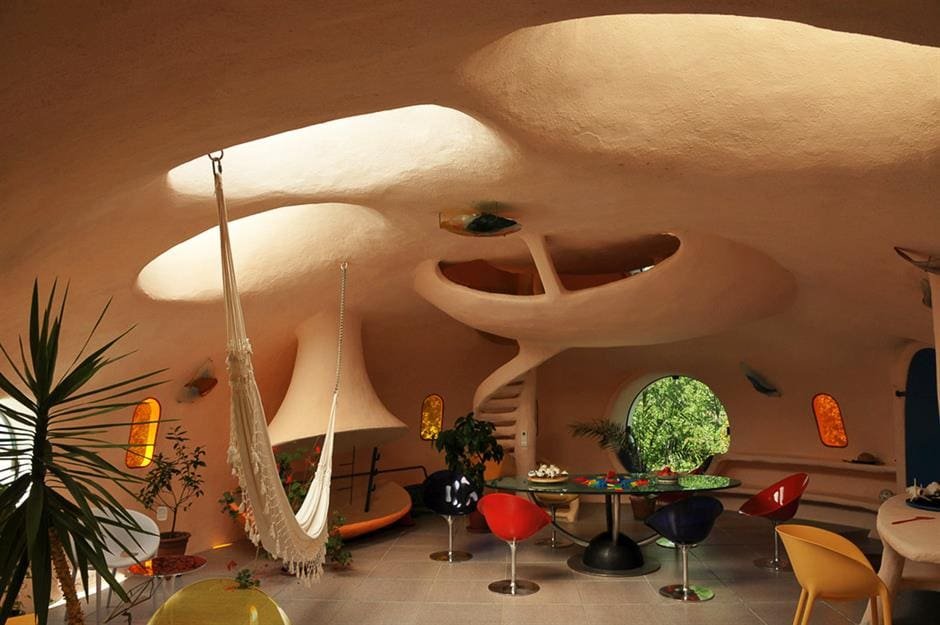
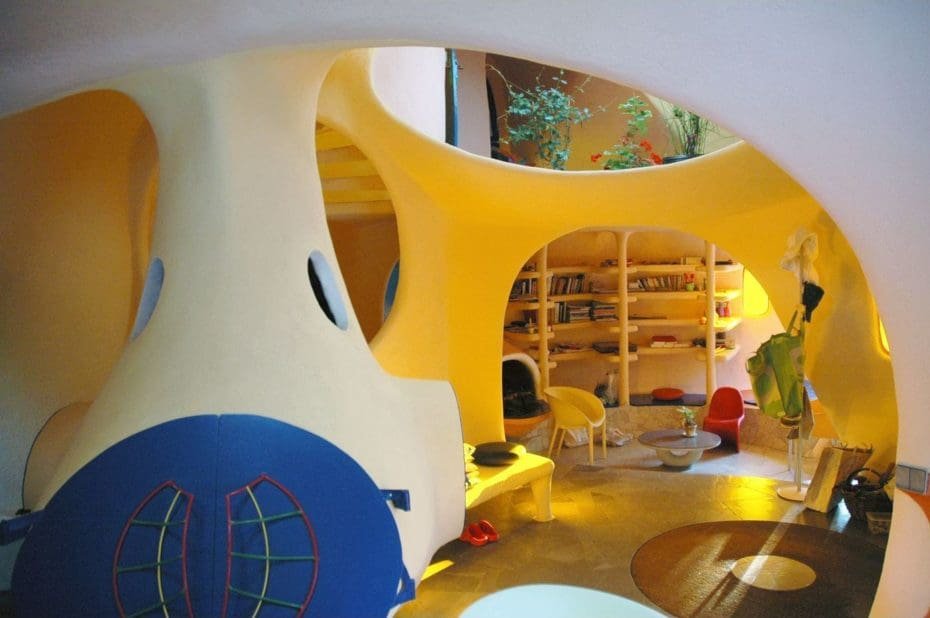
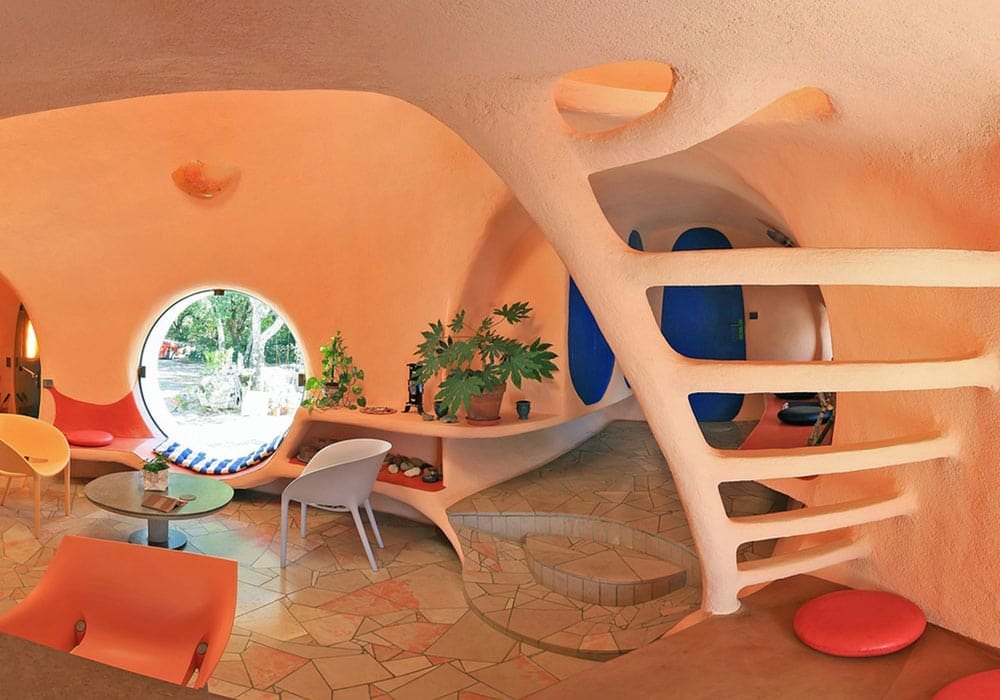
Built using sprayed concrete over metal mesh — the “voile de béton” technique associated with French bubble architecture — the house belongs to the experimental movement known as architecture-sculpture. Interiors flow continuously between spaces, producing an environment intended to feel instinctive rather than geometric. (Museum TV)
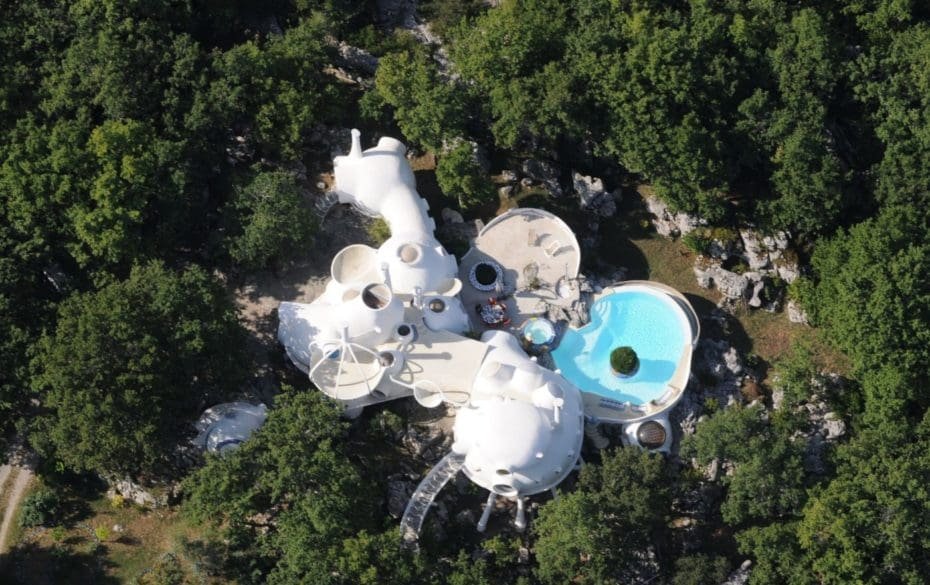
Maison Unal remains architecturally influential because it demonstrates both the poetic potential and practical limitations of biomorphic living. Every surface, opening and structural element required bespoke craftsmanship, making the building economically impossible to standardise. Yet precisely because of this uncompromising individuality, the house has become one of France’s most celebrated organic dwellings, receiving protected historic status in 2010. (vallontourisme.com)
Leave a Reply