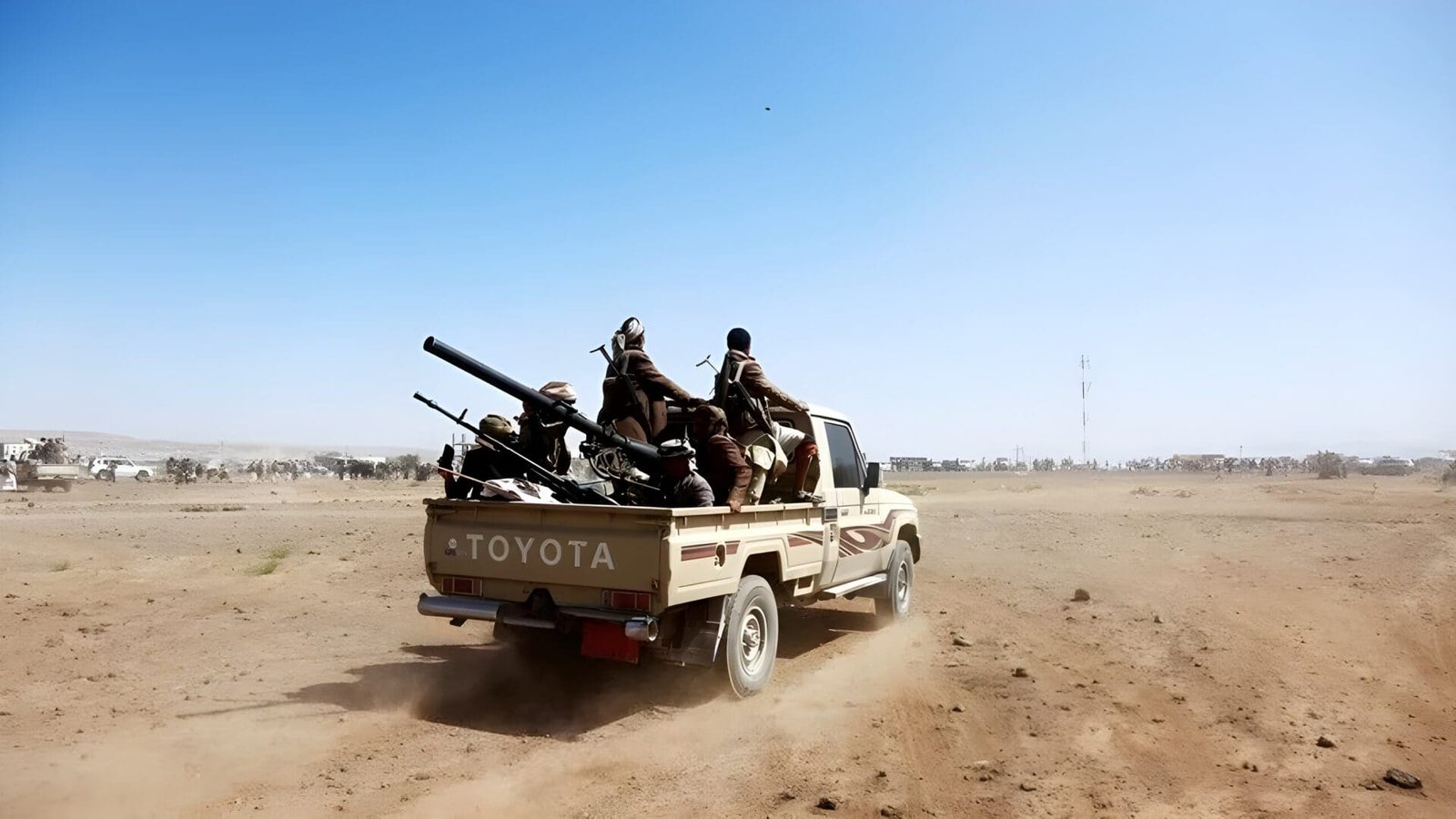

Its transformation from commercial workhorse to battlefield legend reflects changing military tactics in the late twentieth century, particularly the rise of highly mobile guerrilla forces capable of challenging conventional armies.
The concept of mounting weapons on civilian vehicles is almost as old as the motor car itself. During the First World War, troops often improvised armoured cars and machine-gun carriers from commercial chassis. However, the modern ‘technical’ emerged in Africa during the latter half of the twentieth century.
The origins of the technical
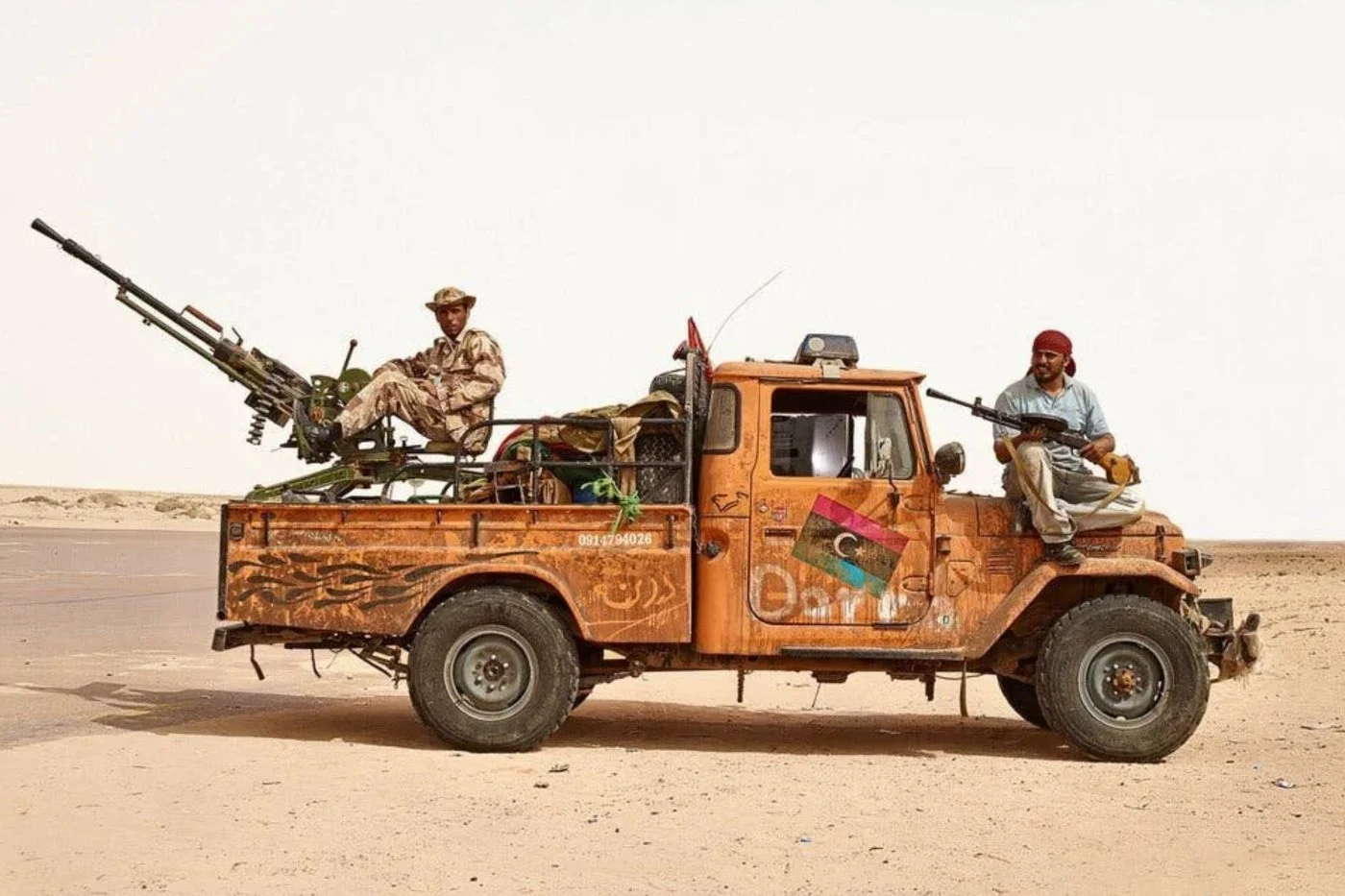
The term ‘technical’ is widely believed to have originated in Somalia during the early 1990s. Humanitarian organisations reportedly allocated funds for armed security escorts under budget headings described as ‘technical assistance’ or ‘technical expenses.’ The gun-mounted pickup trucks employed by these guards soon became known simply as ‘technicals.’
Although the name was relatively new, the practice was not. Across Africa and the Middle East, lightly armed forces had long recognised the value of civilian four-wheel-drive vehicles. These trucks offered a combination of speed, range and affordability that conventional military vehicles could not match.
Why the Hilux was ideal
Toyota’s Hilux was particularly suited to military adaptation. Introduced in 1968, it earned a global reputation for reliability under extreme conditions. The vehicle’s ladder-frame chassis was exceptionally robust, while its simple mechanical systems allowed repairs to be carried out with minimal equipment.
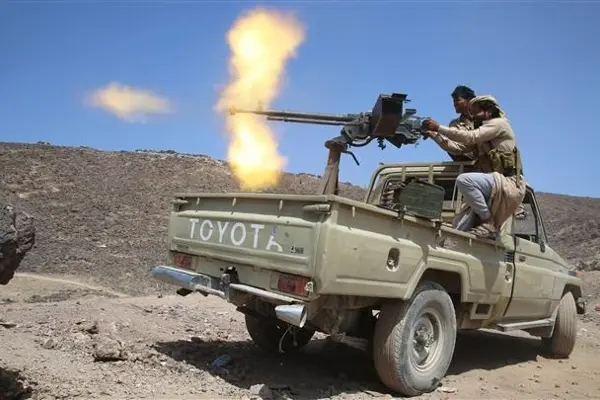
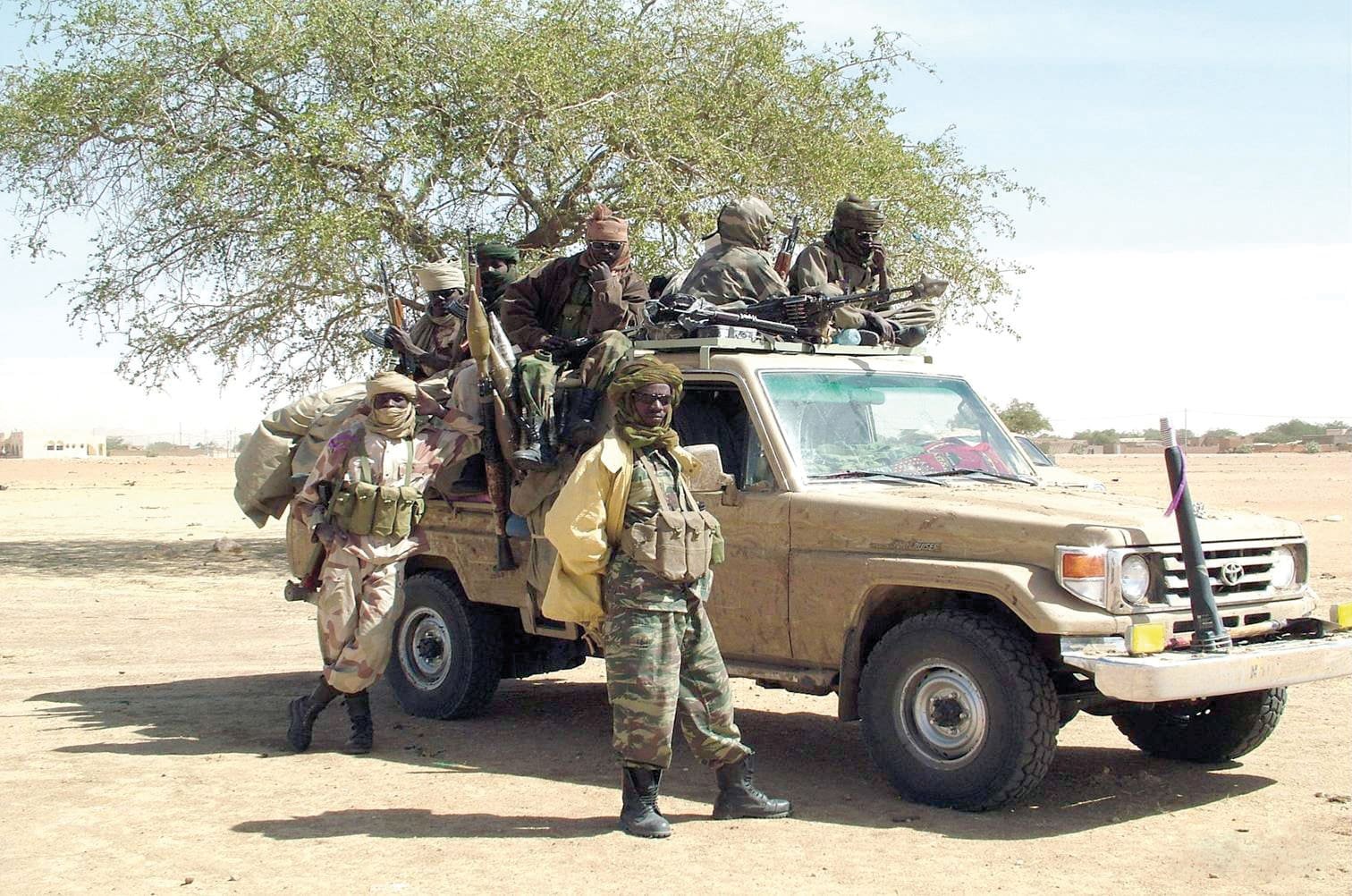
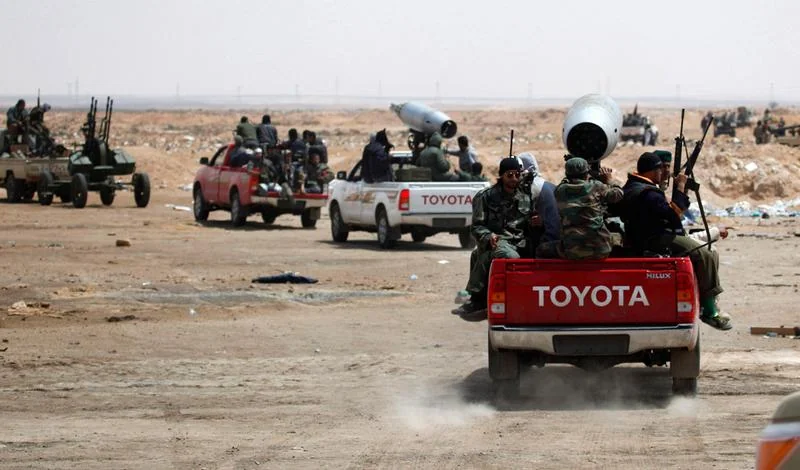
In regions where logistics networks were weak and spare parts scarce, the Hilux offered significant advantages. Parts could often be sourced locally, mechanics were familiar with the design, and the trucks could operate for long periods with limited maintenance.
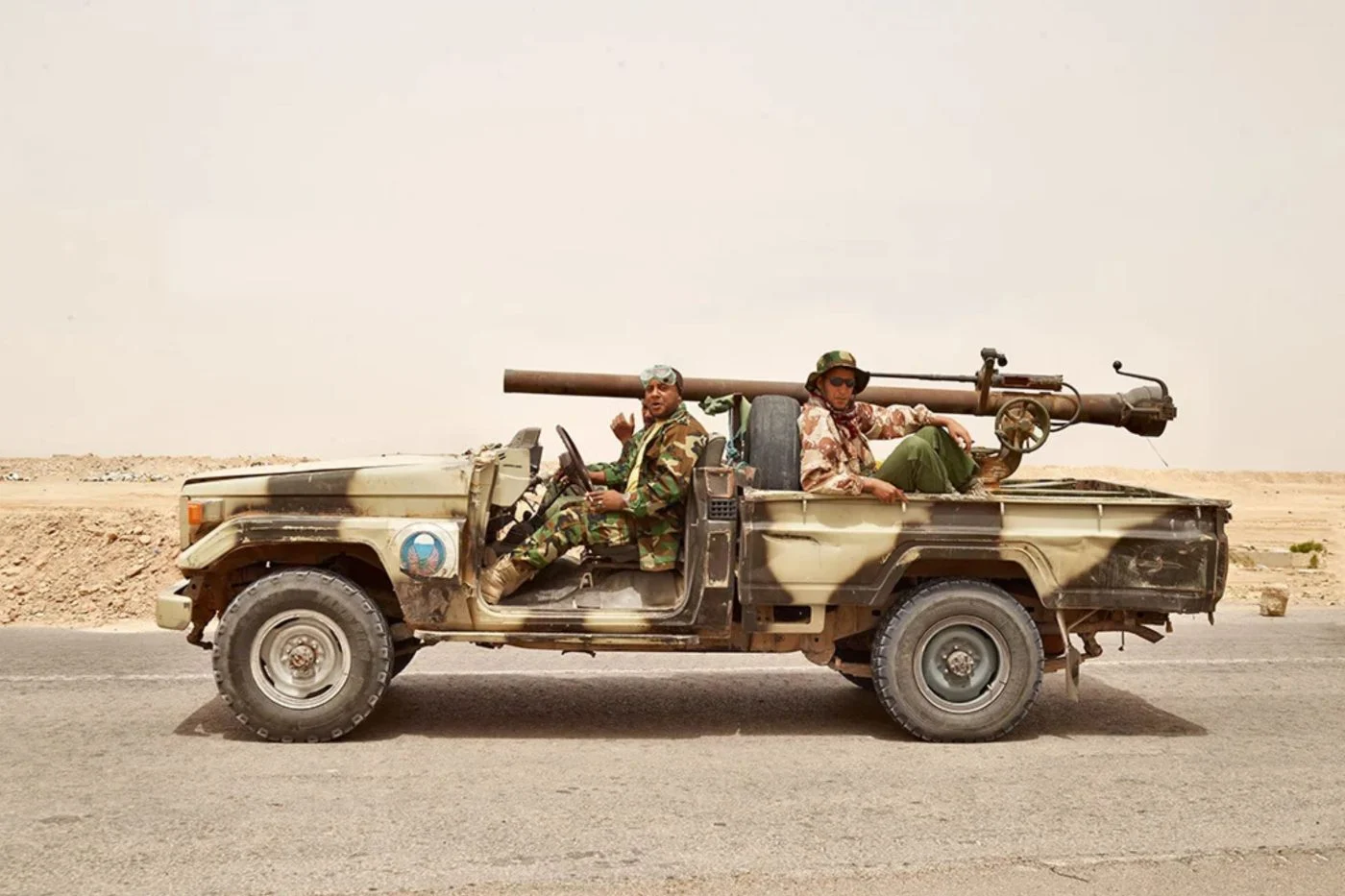
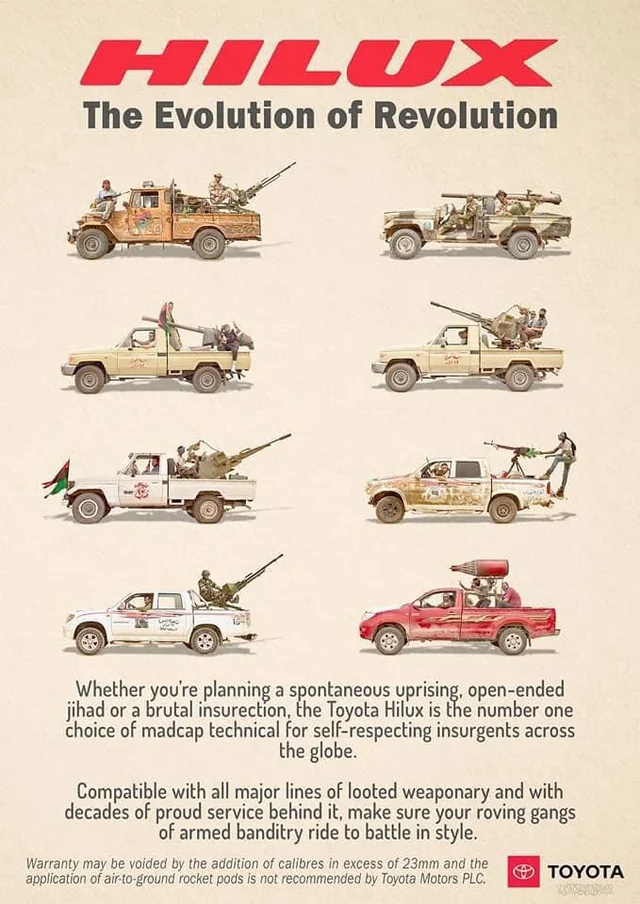
The open cargo bed provided an ideal platform for mounting weapons. Heavy machine guns, recoilless rifles, anti-aircraft guns, mortars and anti-tank missile systems could all be fitted with relative ease. Unlike tanks or armoured personnel carriers, Hilux technicals could travel quickly over rough terrain while consuming far less fuel.
The ‘Toyota War’
The conflict that cemented the Hilux’s military reputation occurred during the final phase of the Chadian-Libyan War in 1987.
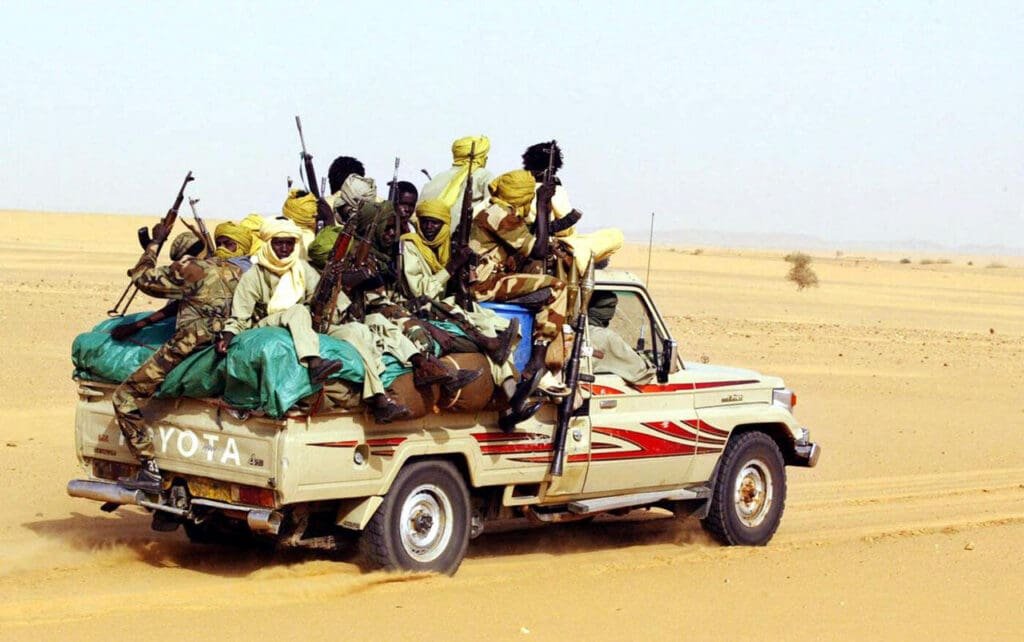
Libyan leader Muammar Gaddafi had intervened repeatedly in Chad throughout the 1970s and 1980s, deploying modern Soviet-supplied tanks, armoured vehicles and aircraft. On paper, Libyan forces possessed overwhelming superiority. Chad’s military was comparatively small, poorly equipped and lacked heavy armour.
Yet Chadian commanders recognised that fighting a conventional battle would lead to defeat. Instead, they adopted highly mobile desert warfare tactics built around fleets of Toyota pickup trucks, many supplied through French and regional support networks.
Chadian commanders recognised that fighting a conventional battle would lead to defeat. Instead, they adopted highly mobile desert warfare tactics built around fleets of Toyota pickup trucks
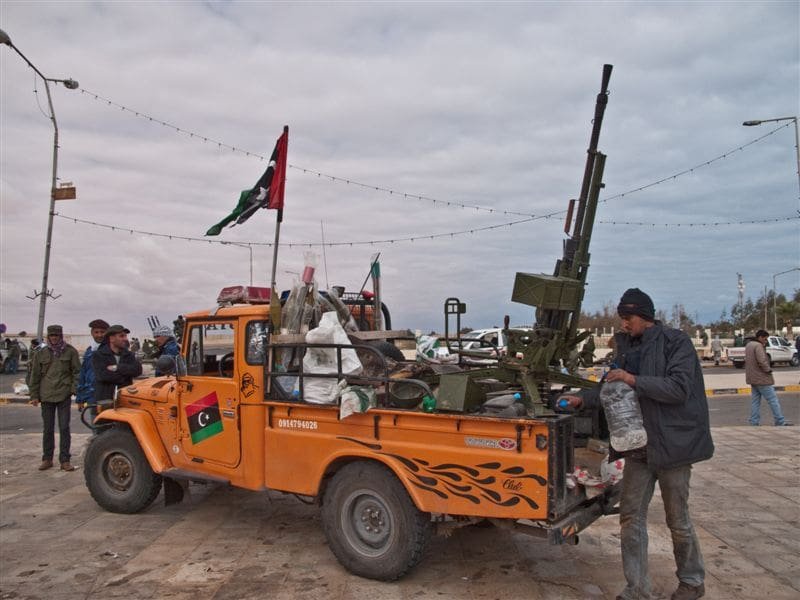
Mounted on these vehicles were a variety of weapons, including MILAN anti-tank guided missiles, heavy machine guns and recoilless rifles. Rather than confronting Libyan forces head-on, Chadian units used speed and manoeuvre to strike vulnerable points in enemy formations.
The desert environment proved ideal for such tactics. Heavy Libyan tanks and armoured vehicles often struggled with mobility and logistics. Chadian Toyota columns could travel rapidly across vast distances, attack isolated units and withdraw before effective counterattacks could be organised.
One of the most significant engagements occurred at the Battle of Fada in January 1987. Chadian forces launched a surprise assault using Toyota-mounted anti-tank teams. Libyan armour was devastated, with dozens of tanks and armoured vehicles destroyed. Similar tactics were employed throughout the campaign, culminating in a series of victories that shocked military observers.
By the end of the conflict, Chad had inflicted severe losses on Libyan forces despite possessing far fewer resources. The extraordinary success of the Toyota-mounted formations led journalists to dub the campaign the ‘Toyota War.’
A new model of warfare
Military analysts quickly recognised the broader significance of the conflict. The Toyota War demonstrated that mobility, intelligence and anti-armour weapons could compensate for a lack of heavy equipment.
The campaign became an early example of what would later be termed asymmetric warfare. Instead of matching an opponent’s strengths, weaker forces exploited speed, flexibility and local knowledge to target vulnerabilities.
The lessons were not lost on insurgent groups, militias and even national armies. Throughout the 1990s and 2000s, technicals became common across conflict zones including Somalia, Sudan, Afghanistan, Iraq, Libya and Syria.
The Hilux legacy
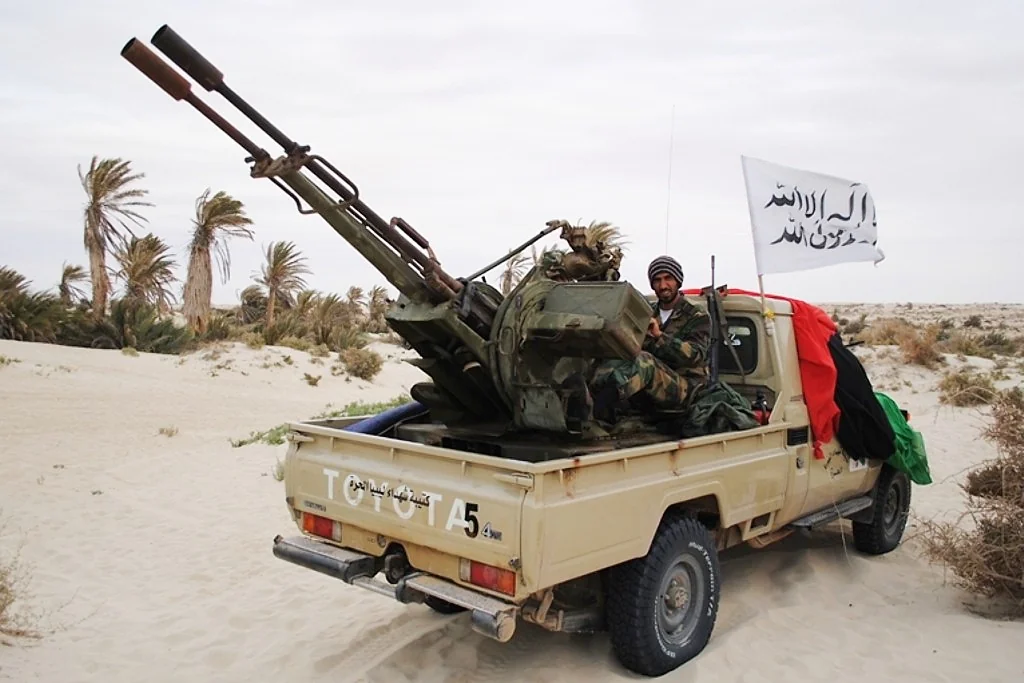
Today, the Toyota Hilux remains one of the most recognisable vehicles in military history despite never being designed for combat. Images of armed fighters standing in the back of Hilux pickups have become synonymous with modern irregular warfare.
Its success illustrates a recurring lesson of military history: battlefield effectiveness is not always determined by technological sophistication. In many conflicts, reliability, mobility and adaptability prove just as important as armour and firepower.
The Hilux’s journey from construction sites and farms to some of the world’s most dangerous battlefields is a testament to the enduring value of practical engineering
The Hilux’s journey from construction sites and farms to some of the world’s most dangerous battlefields is a testament to the enduring value of practical engineering. More than half a century after its introduction, it remains the definitive technical—the vehicle that changed the way guerrilla wars are fought.
Leave a Reply