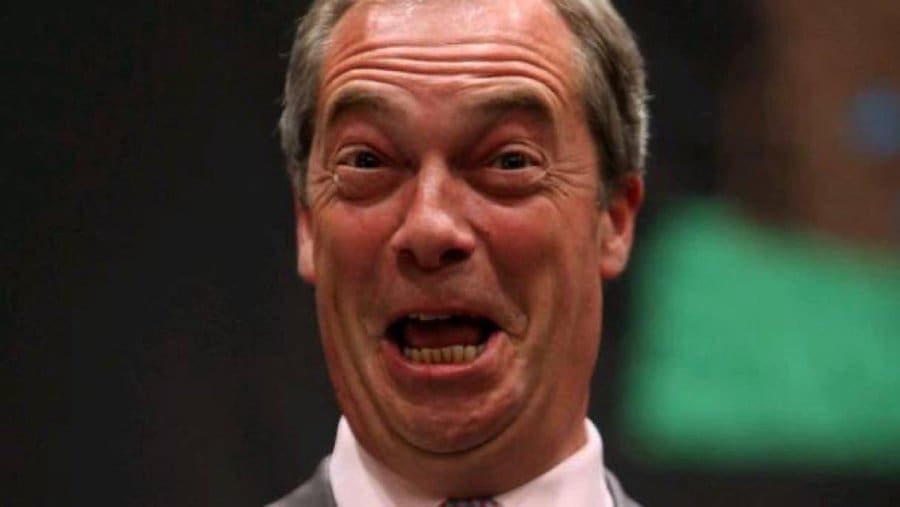
Nigel Farage’s Reform UK has won control of at least seven councils in this week’s local elections. A party that often relies on dog-whistle racism and xenophobia will now try to control large swathes of England.
These results make grim reading for anti-fascists and are an indictment of both Tory opportunism and Labour cowardice.
Indulging Farage
Far too often, the mainstream parties (and the mainstream media) have shied away from confronting Reform, preferring to indulge the gurning spiv Nigel Farage and his strangely assorted army of malcontents, cranks, and Powellites.
Very large numbers of English voters will have supported Farage at these elections while having little idea of what the party truly stands for.
Most Reform voters are not seriously xenophobic, they don’t want to privatise the NHS, they don’t respect Donald Trump, and they would never queue up to take Moscow gold.
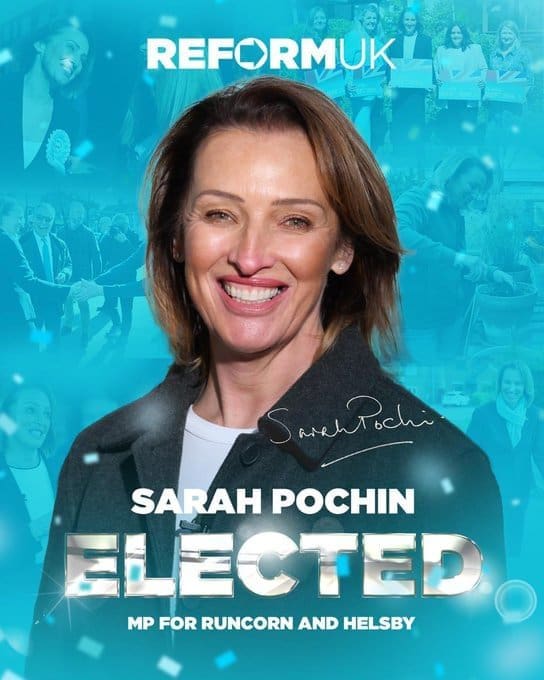

But they voted for Farage’s party which represents all the above. They did so because they wanted to reject the establishment, and the establishment’s representatives were too cowardly to confront the central issues head on.
Silver linings
There are two silver linings in these results.
The first is that Reform (just like their predecessors in UKIP) will struggle with the realities of running county councils, and it will only be a matter of time before their councillors start to fall out with each other.
The second is that parties from the traditional fascist right, who might be expected to benefit once Reform falls apart, are themselves in disarray.
Farage’s main rival within the Brexit movement, Nick Tenconi’s UKIP, has spent recent months trying to become a political wing of militant Islamophobia. At this week’s elections, UKIP only just scraped together thirteen candidates.
Failed disastrously
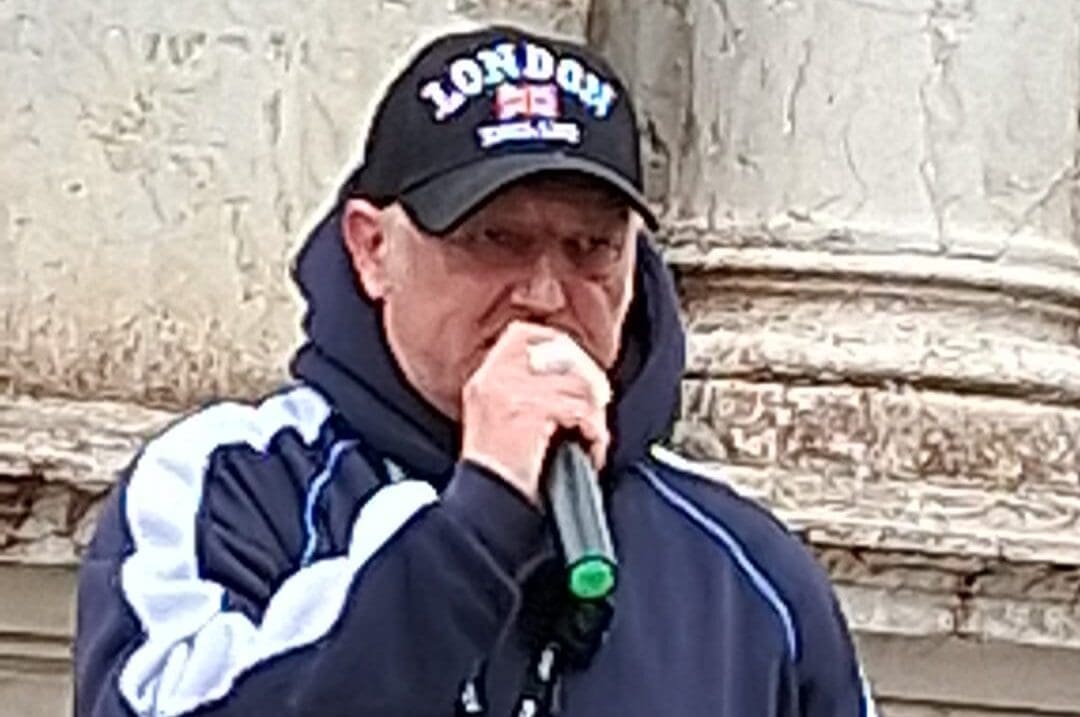
All failed disastrously. A typical example was the self-styled “Pastor” Rikki Doolan, one of the loudest online promoters of jailed EDL founder Tommy Robinson and a frequent speaker at Islamophobe rallies where he tries to put a “Christian” veneer on coked-up mobs of football hooligans.

Doolan stood for UKIP in Nettleham & Saxilby, Lincolnshire, but finished last of seven candidates with only 18 votes (0.5%).
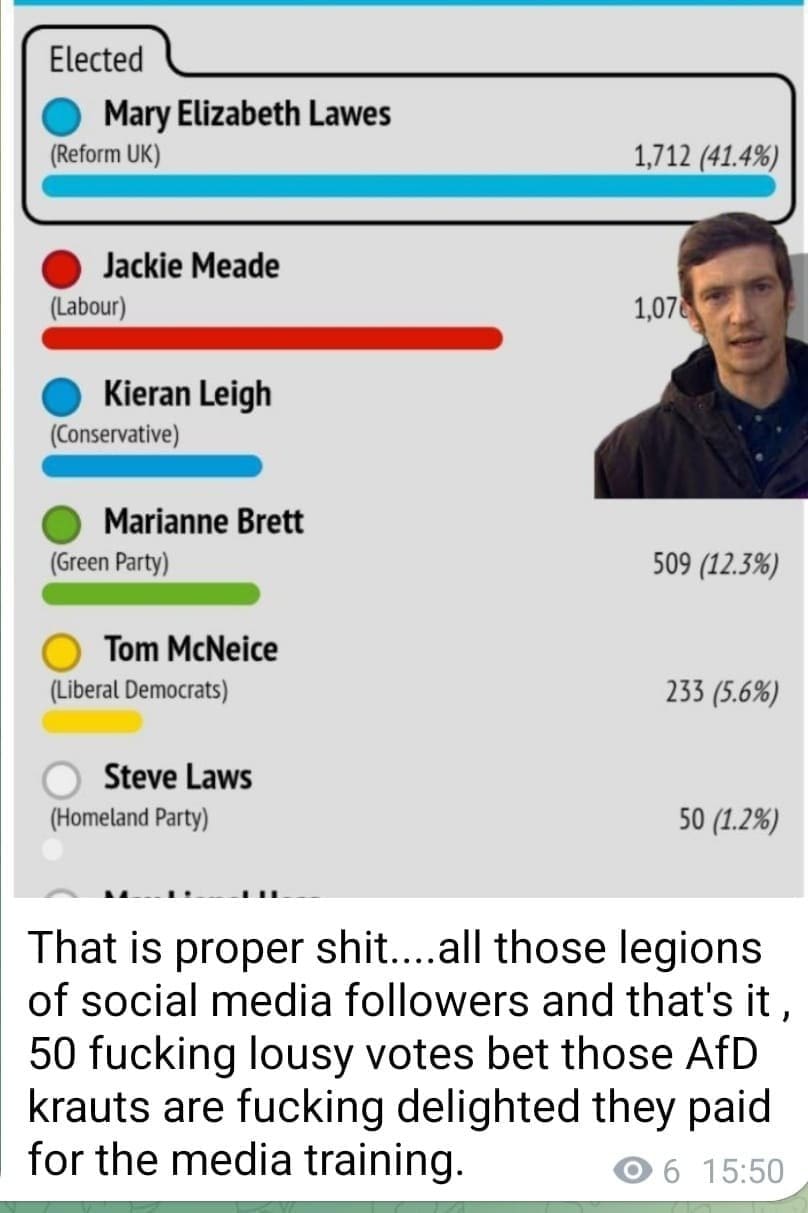
An even bigger online celebrity than Doolan is Steve Laws, a video blogger from Kent who has radicalised in recent years, lurching from UKIP to Patriotic Alternative, then to PA’s splinter Homeland, and most recently leading a hardline racist faction that fell out with Homeland’s leader Kenny Smith.
Ended up in last place
By the time he quit Homeland last month, Laws was already on the ballot as Homeland candidate for Folkestone East, Kent. But like Doolan he ended up in last place, with 50 votes (1.2%).
Homeland’s five candidates spread across Kent, Norfolk, Lincolnshire and Derbyshire, polled between 1% and 2.6%.
Andrew Piper, a Homeland parish councillor who was heavily involved in the subterfuge that led to Homeland hiring a district council facility for its recent racist conference, finished last with 67 votes (2.5%) in the Deepings West & Rural division of Lincolnshire.
For a party that has tried to build up an image as the most serious force on the British far right and as the “sensible nationalist” alternative to Reform, this was a striking display of organisational weakness.

The only success for any candidate from the old-school racist/fascist movement was Peter Molloy, who has reinvented himself as a local independent in Spennymoor, County Durham. Molloy was able to shrug off revelations of his BNP past and was re-elected this week ahead of a Reform UK rival.
Oddball figures
As usual on the far right, the BDP’s leading figures include oddballs who have been in and out of several different parties. For example Frank Calladine, who fought both the Doncaster mayoralty and the Conisbrough ward, was previously in the English Democrats.
Calladine has fought several Doncaster elections but hasn’t improved with age. He took only 0.6% in the mayoral contest, and 2.8% in his city council ward.


Two of the biggest names on the far right didn’t even contest these elections. The BNP no longer exists except as a registered name to collect legacies, while Paul Golding’s Britain First is rapidly collapsing.
Ghostly remnant
The National Front limps on as a ghostly remnant, with a handful of ragged marchers on Remembrance Day and a sole candidate at this year’s election.
Timothy Knowles polled only 18 votes (0.6%) in a Derbyshire County council division near Heanor. Perhaps voters there are unimpressed by the once frequent use of their area as a location for nazi skinhead gatherings.
Just as when the NF fell apart in 1979, the BNP’s collapse and the failure of the Tommy Robinson movement to create a party has led to various tiny offshoots and micro-parties.
Feeble Islamophobes
Former BNP organiser Dr Andrew Emerson stood in both city and county elections in Chichester for his one-man party Patria, attracting just seven votes (0.2%).
At the other end of the intellectual and social scale, the feeble Islamophobes of the National Housing Party also had just one candidate, Lloyd Morgan in Hillmorton, Warwickshire, who polled 33 votes (1.1%).

Another party that we should now classify among the far-right fringe is George Galloway’s misnamed ‘Workers Party of Britain’.
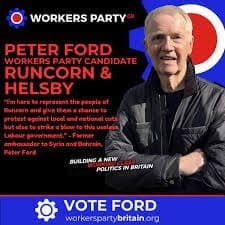
Galloway’s deputy Peter Ford is a former British Ambassador to Syria who (as Searchlight recently exposed) has a long record of associating with the dregs of far right, antisemitic conspiracy theorists and was an apologist for the vicious Assad dictatorship.
Move to Strasserism
Ford stood as Workers Party candidate in the Runcorn by-election but was roundly rejected, finishing ninth with only 164 votes (0.5%) not far above the Monster Raving Loony party. Ford is more often in the company of Dangerous Jew-baiting Loonies.
Galloway made a move towards Strasserite fascism last year when he recruited the anti-Muslim ranter Billy Howarth. To no-one’s surprise, Howarth soon staggered off again in the direction of EDL style street protests, speaking last weekend at a rally in Manchester city centre that featured Nick Tenconi’s UKIP and other extremists.
This week Howarth stood against his former WPB friends in a by-election for Balderstone & Kirkholt, Rochdale. The by-election was won by Reform’s Jordan Tarrant-Short, but not before Howarth had to be cautioned by police when he started ranting and raving during the count.
Howarth ended up in fifth place with 8%, while Galloway’s candidate Laura Pugh finished third with 17%.
Closet racists
Reform’s victories have created both an opportunity and a problem for the British far right, especially for the Homeland Party, which thought of itself as the only serious party to Reform’s right.
It’s inevitable that among the hundreds of councillors elected this week, there will be some who are closet (or even not so closeted) racists and who will either be expelled or will be potential recruits for a fascist party.
But the miserable joke votes achieved by the five Homeland candidates – in most cases even lower than their rivals in the Brit Dems – have done nothing to enhance the party’s self-styled image as “sensible nationalists”.
Unless Kenny Smith can make swift improvements, Homeland is far more likely to die its own death of a thousand splits than it is to benefit from convulsions inside Reform.