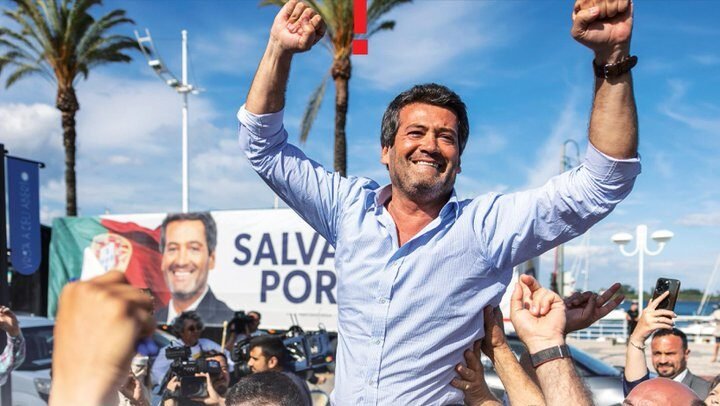
Across Europe, election coverage increasingly follows a familiar script: journalists must already have the template and it’s simply a matter of filling in the blanks with the names of the local parties. Portugal’s vote on 18th May was no exception.
As the final results came in on Monday morning, the conservative Democratic Alliance (AD) increased its seat count to 89, gaining 6 seats with 32.72% of the vote. The far-right Chega party also saw significant gains, securing 58 seats – an increase of 9 – with 22.56%.
Biggest losses
The biggest losses were suffered by the Socialist Party, which dropped 20 seats to finish with 58, capturing 23.38% of the vote.
The remaining left-wing parties, including the CDU (a coalition of communists and greens) and the Left Bloc, also saw their support decimated.
Sadly, none of this is surprising. Since the 2008 financial crisis, the Socialist Party has aligned itself with austerity measures and supported anti-strike legislation.
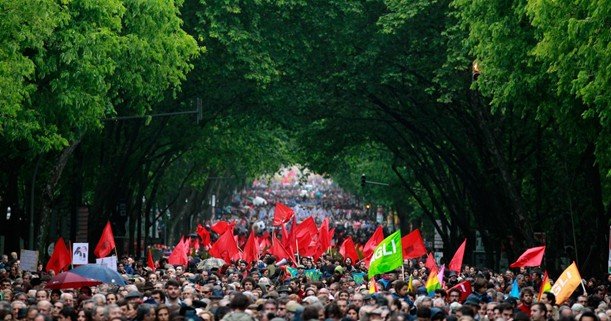
When the Left Bloc and the Communist-led CDU chose to prop up the government during the Troika’s intervention, the parliamentary opposition was effectively neutralised.
With no one left in Parliament willing – or able – to challenge the status quo, and with some MPs implicated in corruption scandals, it’s little wonder that voters have begun looking elsewhere for answers.
Chega, the far-right party founded in 2019, has quickly risen to prominence with backing from known oligarchs and international millionaires.
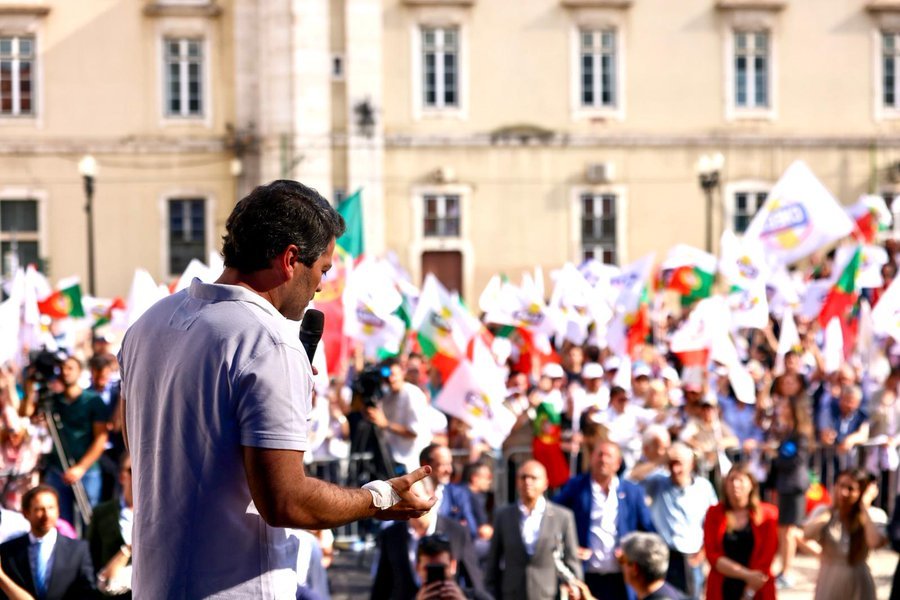
Led by Andre Ventura, a former football commentator, the party has openly courted support within the police force. Its platform centres on the aggressive privatisation of the welfare state and a hardline anti-immigration stance, frequently scapegoating the Roma community for a wide array of the country’s problems.
The conservative AD also leaned into racially-charged rhetoric during the campaign, echoing themes that resonated with Chega’s base.
What happened to the left? Arrogance in power, corruption, and a slow abandonment of the very people who put them there
To his credit, Socialist Party leader Pedro Nuno Santos condemned the use of racism and immigration as political tools, and made a point of visiting immigrant communities during the hustings – a rare gesture of inclusion in an increasingly divisive political climate.
The traditional Communist strongholds in southern Portugal – particularly the Alentejo region, including Grândola, immortalised by the song that signalled the start of the 1974 Revolution – have now turned from red to Chega blue. It’s a stark indicator of just how deep the public disillusionment runs.
Roots of disillusionment
This disillusionment is rooted in persistently low wages (among the lowest in the EU), a chronic lack of affordable housing, meagre state pensions, and precarious employment conditions.
Public services like healthcare and education are strained, and with birth rates at historic lows, many no longer feel they can afford to start families.
Those with marketable skills are increasingly emigrating in search of better opportunities, leaving critical labour shortages behind.
What happened to the left? Arrogance in power, corruption, and a slow abandonment of the very people who put them there. In Lisbon and across the South, neighbourhoods have been gentrified beyond recognition, pushing out residents who have lived there for decades.
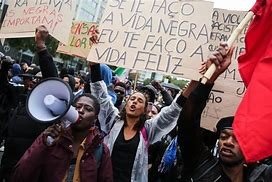
Those further left watched all this unfold — they disagreed, they debated, they marched. They protested against austerity, against the housing crisis, and against police violence, including the killing of Odair Moniz – shot dead by police after a 12-hour shift – and the recent assault on immigrant communities that saw officers line people up against a wall in Martim Moniz, in scenes chillingly reminiscent of wartime round-ups in Nazi-occupied Europe.
Stuck in nostalgia
Yet for all the indignation, the extra-parliamentary left failed to move beyond protest. There was no united front, no shift from demonstration to organisation.
Instead, they remained nostalgic, still wrapped in the warmth of the 25th of April 1974, as if the spirit of the revolution might somehow reawaken on its own. But how? That generational knowledge – of how to build, organise, and fight collectively – is fading.
And the far right is more than ready to fill the void.

Speaking to people on the morning after the results, a contradiction kept surfacing. While the right-wing media has pushed the narrative of immigration as a flood or an invasion, few people we spoke to seemed to be outright racists.
In fact, many acknowledged the vital role immigrants play in their daily lives: their doctor is Cuban, their tenants are Brazilian, their elderly parents cared for by Angolans, the friendly woman in the school canteen is Nepalese. ‘Where would we be without them?’ one person asked.
Striking political messaging
Schools are now multicultural hubs – some village primaries would have shut down without immigrant children, leaving teachers without work. People know this. And yet, they still voted for Chega!
Chega has proven itself opportunistic, expertly tapping into people’s fears and telling them exactly what they want to hear. Compared to the Communist Party and the Left Bloc, Chega’s political messaging was far more striking and omnipresent.
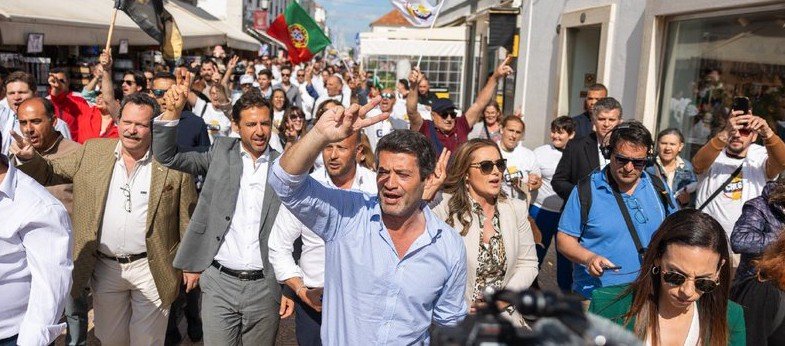
Their propaganda was everywhere – bold slogans promising to ‘clean up Portugal,’ ‘save Portugal,’ and ‘make Portugal great again’ dominated the public space. It was simple, emotional, and effective.
And in a political climate marked by disillusionment and fragmentation, that was enough.