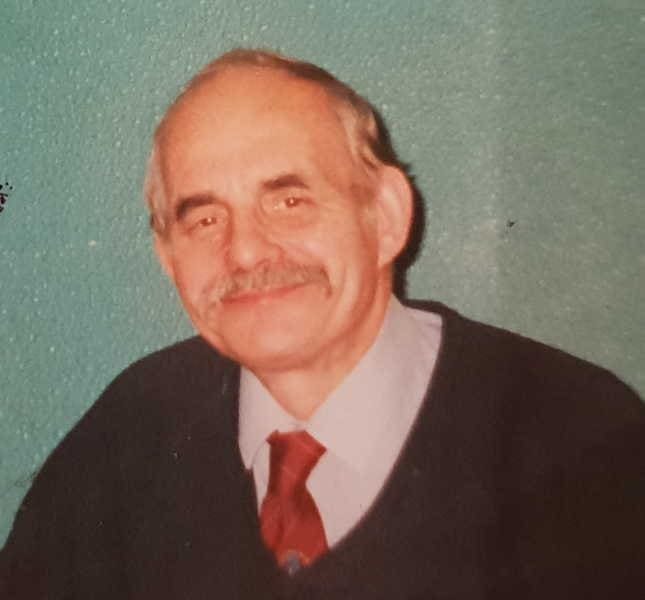
The recent death of author Frederick Forsyth has led to much discussion of his best-known work, The Day of the Jackal. Here we tell the story of a real ‘Jackal’; a fugitive French far-right assassin, involved in the very plot to kill De Gaulle which formed the basis of Frederick Forsyth’s novel, who was captured in London thanks to a Searchlight informant.
In the middle of the terrible Winter of 1963, 62 Group intelligence officer Harry Bidney met a man on the Woolwich ferry where, for a couple of bitterly cold hours, they talked as they travelled backwards and forwards across the Thames.
The man he was meeting – for the first time – had come forward with an offer to work undercover for the 62 Group. His name was Les Wooler and he was to become one of Searchlight’s most enterprising and successful informants operating over many years.
Honourable intentions
For that meeting he was still regarded with suspicion, and other 62 Group members were close at hand in case thongs turned out badly. But Les convinced Harry that his intentions were honourable, and they eventually came to an agreement.
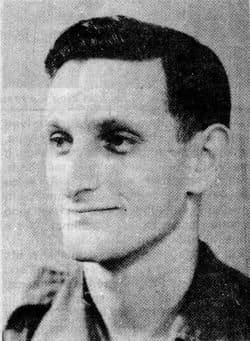
Les was born in Dartford during the war and served in the RAF as a young man. At the age of 19 he had been recruited to Union Movement by Oswald Mosley’s son, Max, at the time an officer in the Territorial Army Parachute Regiment.
Les became close to Sir Oswald, serving as one of his bodyguards, stood as the Union Movement parliamentary candidate in East Woolwich in 1964, and later in local council elections.
Contacted the 62 Group
But Wooler became caught up in UM’s internal factional politics and ended up being purged. Fed up with the whole scene he left Um, joined CND, and sent a signal to someone in the 62 Group that he was up for a meeting to discuss what he knew about Union Movement.
To prove his bona fides he handed over documents and letters which he still possessed, and he agreed to rejoin Union Movement, claiming he had joined CND in order to spy on it.
Soon he was back in the fold, and spending much of his time at the headquarters office.
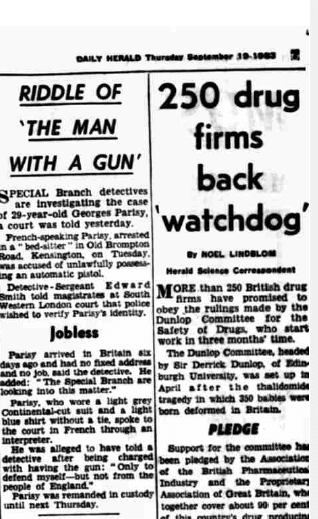
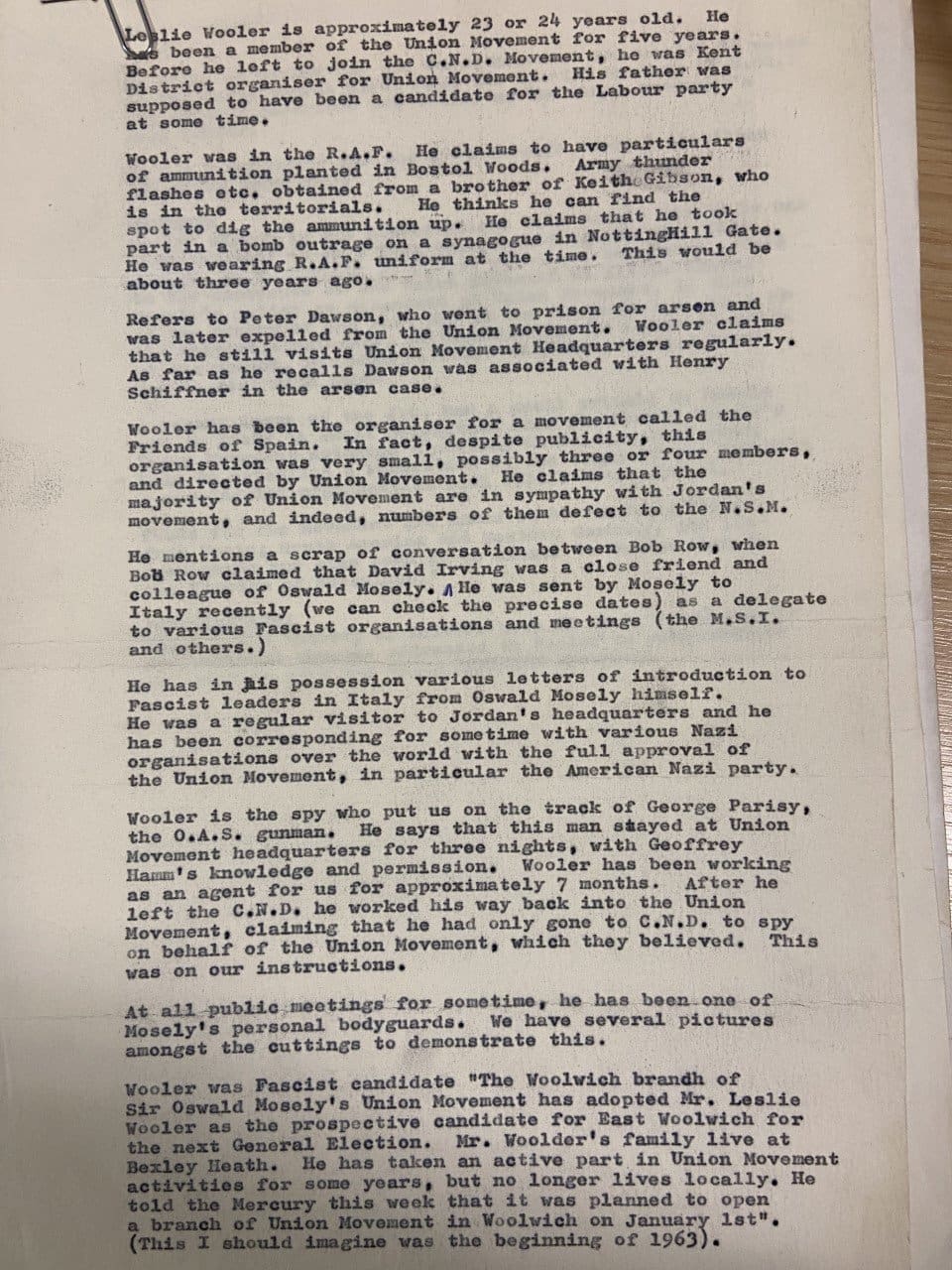
Within weeks, he handed the 62 Group a major coup: he told them about a young fugitive OAS gunman, Georges Parisy, who was on the run from France and being looked after by Union Movement members in London.
The OAS (the Organisation Armée Secrète) was a French far-right, paramilitary group set up in 1961 to try to prevent Algerian independence. It was responsible for terrorist attacks, bombings and assassinations, and was known to want to kill President Charles De Gaulle who had allowed a referendum in Algeria on self-determination.
Assassination attempt
OAS was behind an assassination attempt on De Gaulle’s life in August 1962 in the Paris suburb of Le Petit Clamart, and this formed the basis for Forsyth’s ‘Day of the Jackal’, although his novel embroidered the events considerably.
It was also what the fugitive Georges Parisy was being hunted for, though by this time, almost a year later, OAS had been smashed by the French state and was in complete disarray.
Parisy had been allowed to stay at UM headquarters for the first three nights after his arrival in the UK. He was now hiding in the bedsit flat of a UM member in Old Brompton Rd, Kensington.
We handed the information to the police and Parisy, who had been involved in a plot to assassinate President Charles De Gaulle, was arrested by Special Branch officers. He was later deported.
The Parisy arrest took place two years before Searchlight was first launched – as an occasional newspaper – by 62 group members in 1964. But Les played a key role in Searchlight investigations throughout the 1970s, especially when he infiltrated the far right groups infiltrating the Conservative Party.
Get the whole story
This is an edited version of an article in the final issue of Searchlight. There you can read much more of Les Wooler’s extraordinary story – including how he photographed Union Movement’s entire membership files whilst pretending to be cuddled up with a girlfriend in the records room at UM headquarters.


