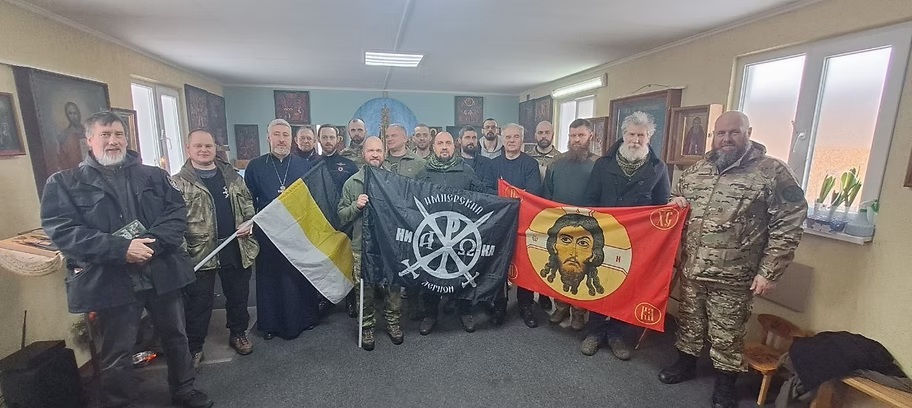
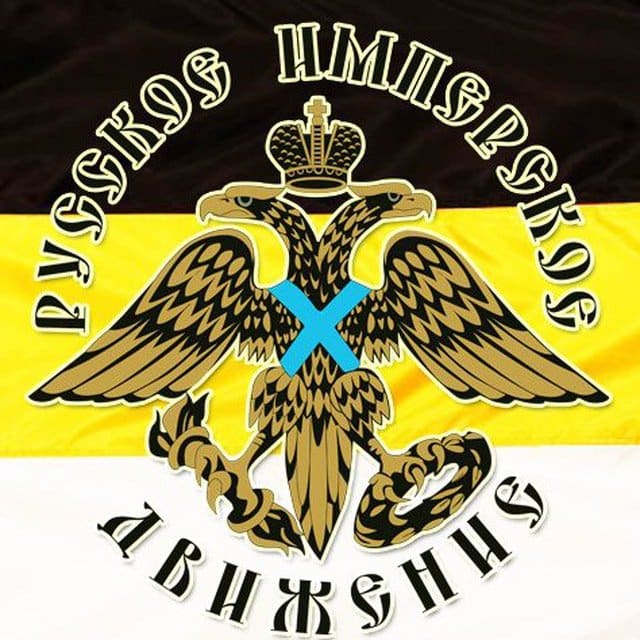
The controversy surrounding the UK government’s recent ban on Palestine Action under the Terrorism Act 2000 has tended to obscure the act that a far-right Russian organisation, the Russian Imperial Movement (RIM), was banned at the same time.
Once considered a fringe nationalist group, RIM has become an international hub for training and radicalizing far-right militants from across Europe and North America.
Its mix of Tsarist nostalgia, Orthodox fundamentalism, and white supremacist ideology has earned it a place on international terrorist watchlists — and a growing reputation among far-right extremists looking for combat experience.
Global reach
The Russian Imperial Movement was founded in the early 2000s by Stanislav Vorobyev, a monarchist activist in St. Petersburg.
The group’s core aim is the restoration of the Russian Empire — complete with a tsar, strict Orthodox rule, and the rejection of Western liberalism.
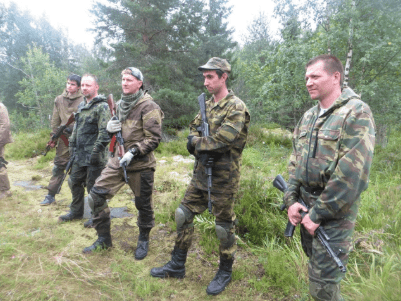
Over time, it has morphed into something more dangerous: a paramilitary movement with an international footprint. It operates military-style training camps where participants learn tactics ranging from urban combat to explosives handling.
These ‘Partizan’ camps have drawn recruits from Sweden, Germany and the United States.
While the group claims it only prepares Russians for homeland defence, evidence suggests otherwise.
In 2020, the US government labelled RIM a Specially Designated Global Terrorist Entity — the first time such a designation was applied to a white supremacist group.
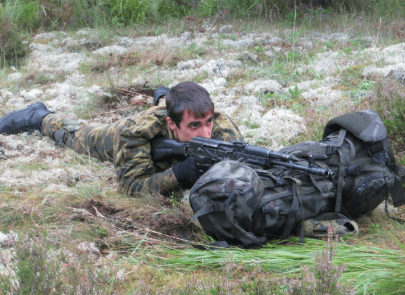
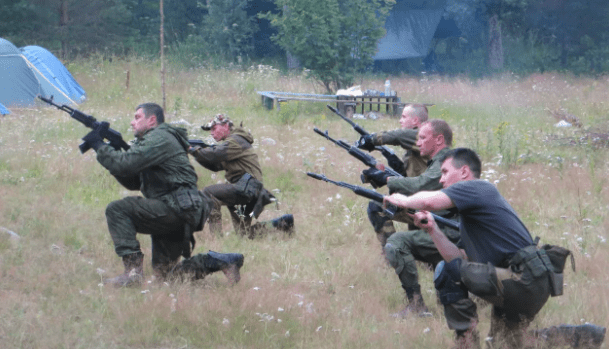
Authorities in Sweden tied RIM to a bombing campaign against refugee centres in Gothenburg in 2017. The attackers were members of a neo-Nazi group, the Nordic Resistance Movement, who had trained at RIM facilities.
Similar links have emerged in Germany and Finland, where right-wing extremists have undergone training in Russia.
RIM provides something few other far-right groups can: hands-on militant instruction in a relatively safe, unmonitored environment.
Fighters in Ukraine
RIM’s ambitions aren’t limited to training. The group has also deployed fighters in eastern Ukraine, siding with pro-Russian separatists since the war broke out in 2014.
Its paramilitary wing, the Imperial Legion, has been active in Donetsk and Luhansk, reinforcing Russia-aligned militias.
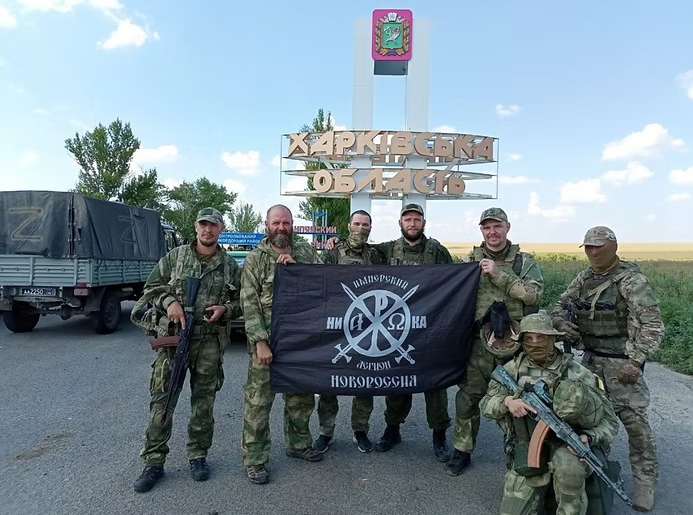
Though not officially connected to the Russian military, RIM appears to operate with the Kremlin’s tacit approval. Russian authorities have neither shut it down nor publicly endorsed it — creating a gray zone of plausible deniability where the group can thrive.
Exporting extremism
RIM has also become a networking hub for the global far right. It has hosted foreign extremists at its events, shared ideology online, and aligned itself with movements across Europe.
Groups like the Nordic Resistance Movement and Germany’s Der Dritte Weg have acknowledged links with RIM.
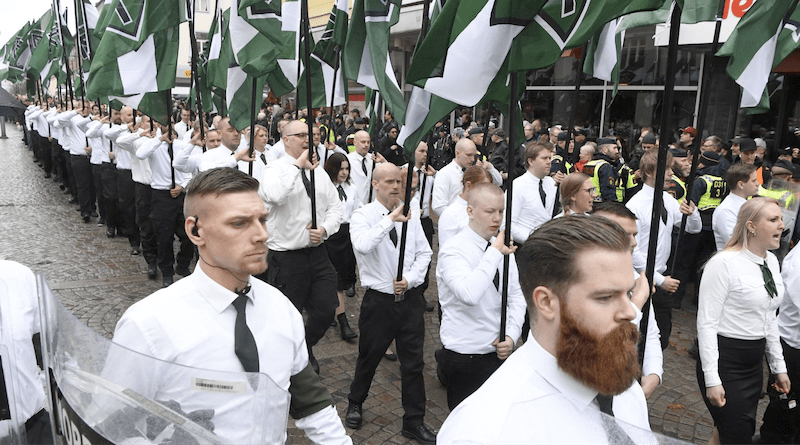
NRM is a pan-Nordic neo-Nazi outfit, with groups in Sweden Norway Denmark and Iceland. It was also established in Finland until banned there in 2019.
Mythic status
RIM’s connections in the UK, though indirect, are mainly with Mark Collett’s Patriotic Alternative.
Several of his closest contacts internationally are part of the Russian Imperial Movement’s propaganda network among Western racists and fascists.
And he has in the past cultivated contacts with the Nordic Resistance Movement, one of RIM’s closest collaborators.
In some far-right circles, RIM has achieved a kind of mythic status — regarded as a real-world training ground for what white supremacists call “the coming race war.”
Criminal offence
Despite international sanctions and growing media attention, RIM continues to operate openly in Russia. Its leaders give interviews, host events, and publish ideological materials. They face little opposition.
Meanwhile, Western governments have been playing catch-up. Canada added RIM to its terrorist entity list in 2021 and now the UK has followed suit, proscribing the organisation under the Terrorism Act 2000.
Justifying the proscription, which will make it a criminal offence to be a member of the group, or to invite or recklessly express support for it, the UK government said:
RIM is a white supremacist, ethno-nationalist organisation which seeks to create a new Russian Imperial State.
Via its paramilitary unit, the Russian Imperial Legion, RIM has fought alongside Russian forces in Putin’s illegal invasion of Ukraine, directly advancing its own ideological causes.
RIM manages a paramilitary training programme called Partizan, which increases the capability of attendees to conduct terrorist attacks. In 2016, two Swedish nationals attended Partizan before committing a series of bombings in Gothemburg, Sweden.
Several European nations have issued advisories about their citizens traveling to Russia to train with extremist groups.
But with Russia’s internal crackdown focused mainly on liberal dissidents and not far-right extremists, there is little sign that RIM will be reined in any time soon.


