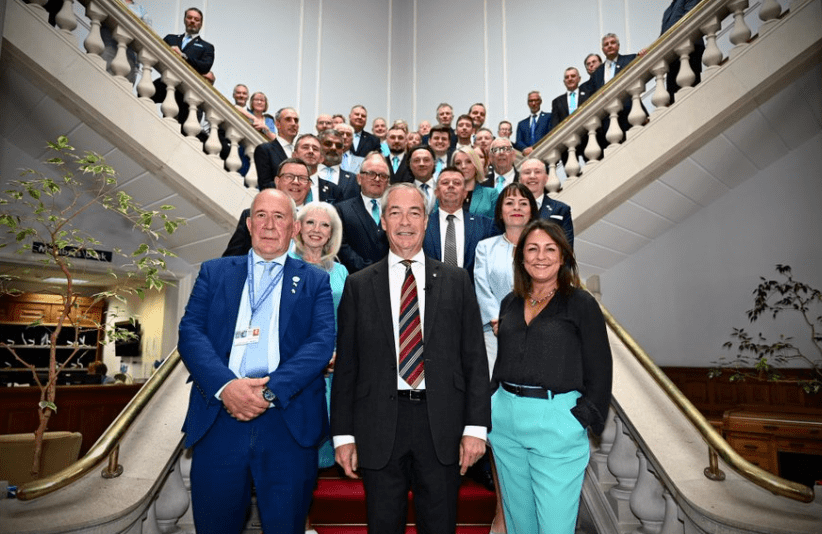
When Reform UK swept to power at Kent County Council last May, the victory was heralded as a populist revolution. After decades of Conservative dominance, Reform’s 57-seat majority promised a new era of straight-talking efficiency and common-sense governance.
Six months later, that promise has curdled into farce. Leaked recordings, mass expulsions, and paralysed committees have turned the council once billed as Reform’s “flagship” into a cautionary tale of what happens when incompetent political insurgency meets the everyday reality of public administration.
Simple message
Reform’s May win stunned observers. In one night, Kent’s Conservatives were swept away, replaced by a slate of mostly first-time councillors campaigning not on any kind of political programme, but one simple message: cut waste, slash bureaucracy, and give residents “value for money.”
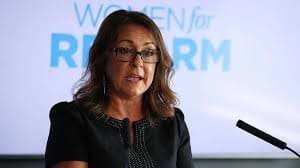
At the centre of it all was Linden Kemkaran, a noisy broadcaster turned politician, chosen as leader of both the party group and the council itself.
Confident and media-ready, Kemkaran promised to make Kent the “shop window” for a new kind of politics – energetic, decisive and unafraid to challenge entrenched habits.
Little interest
But almost as soon as she took office, cracks began to appear. Long-serving council officers struggled to brief an administration that didn’t yet understand the machinery of local government and, in some cases, showed little interest in doing so.
Promises to cut taxes clashed with warnings from finance officials about statutory spending and shrinking reserves.
Reform’s new intake had included dozens of political novices, suddenly responsible for one of Britain’s largest county budgets. Without institutional knowledge, early decisions were driven by right-wing dogma, not process. The result was paralysis.
And inside the Reform group, unity was already fraying.
Suck it up
The first major explosion came in October, when footage of a private virtual meeting of Reform councillors was leaked online.
In the recording, Kemkaran, visibly frustrated, angrily berated her colleagues for questioning her decisions.
“Sometimes I will make a decision that might not be liked by everybody,” she snapped, “but I’m afraid you’re just going to have to fucking suck it up.”
Moments later, Councillor Paul Thomas tried to raise concerns about the leadership’s direction. She muted his microphone.
The video spread like wildfire. What was meant to be an internal pep talk instead exposed raw factionalism, anger, and a leadership style described as “combative to the point of contemptuous.”
The damage was instant – and irreversible.
Soap opera
Within days, Reform’s local hierarchy and national leadership moved to expel those deemed responsible for the leak or for “bringing the party into disrepute.”

What followed was a sequence of suspensions and sackings that turned County Hall into a rolling soap opera.
- The first casualty of Reform’s new regime had in fact come months earlier: Councillor Daniel Taylor, suspended in the summer after being charged with threatening to kill his wife. The party described the suspension as a “safeguarding measure,” but the optics were grim. Taylor denied the charges.
- Councillor Paul Thomas, one of the few Reform members to question Kemkaran publicly, was next to go. After his microphone was muted in the now-infamous Zoom call, he was swiftly suspended, then expelled for “dishonest and deceptive behaviour.” Thomas insisted he was guilty only of trying to hold the leadership to account, something, he said, that had become “impossible” inside Reform.
- Councillor Oliver Bradshaw fell soon after. Accused of complicity in the leak, he was expelled within eight days of suspension. Bradshaw denied any involvement and condemned the disciplinary process as “a kangaroo court with no evidence and no appeal.”
- Councillor Bill Barrett, a former businessman and one of the group’s early organisers, was expelled for “undermining the interests of the party.” He responded by publicly denouncing the leadership as “toxic” and setting up a breakaway Independent Reformers bloc with fellow outcast Robert Ford.
- Councillor Robert Ford, once seen as a key figure in the new administration, was also purged. Reform cited “conduct incompatible with party values,” after complaints from female members of staff. The suspension was then escalated to a disciplinary issue.
- Councillor Brian Black, another senior member and a Fire Authority representative, was expelled soon after. Reform HQ accused him of “dishonest and deceptive behaviour,” though Black said he had never even been interviewed before being dismissed. His removal left key committee posts unfilled and deepened the administrative gridlock.
- Councillor Maxine Fothergill was suspended but to date has not been expelled. A property professional, she denied any role in the leak and described the disciplinary action as “a distraction from the real work we were elected to do.”
- Then, in early November, came the suspension of Councillor Isabella Kemp, once employed by Reform’s national headquarters. Kemp was removed from both her council group and party role amid allegations of “conduct undermining the organisation.” She announced she would be taking legal action.
Behind the scenes the atmosphere was increasingly poisonous: accusations of bullying, betrayal, and intimidation flew across WhatsApp groups and council corridors.
Legal action
By the start of November, eight councillors in all had been suspended, expelled, or otherwise removed since May. Some of those defected to the Conservatives or declared themselves independents. Others threatened legal action.
A ninth, fortune teller and clairvoyant Amanda Randall (psychic readings £14.99), defected to UKIP.

By November, Reform’s dominance had evaporated – technically still in control, but haemorrhaging authority with every news cycle and the machinery of local government grinding to a halt.
Council committees were left short-staffed. Appeals panels, including those deciding school-transport cases, were postponed. Routine planning and scrutiny work slowed to a crawl as the council scrambled to fill vacant positions.
Operationally dangerous
For the officers trying to keep Kent’s £2.5 billion organisation functioning, the infighting was more than embarrassing; it was operationally dangerous.
“It’s chaos,” said one senior staffer privately. “You can’t get direction from a cabinet that keeps changing. Meetings descend into rows. Everyone’s watching their backs.”
Residents began to notice. Parents waiting for transport appeals found hearings cancelled. Highways maintenance budgets stalled. Local charities reported missed payments.
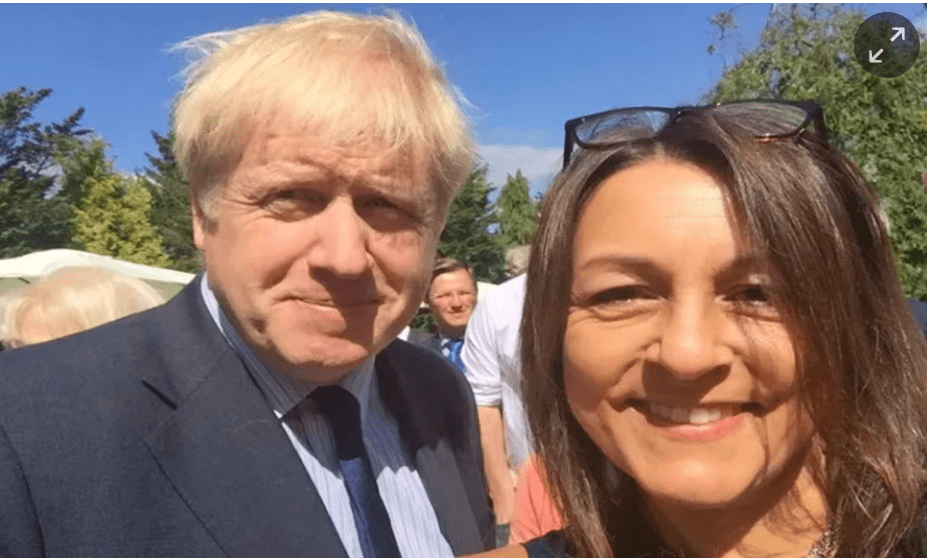
Reform’s big election pledges – a freeze on council tax, a slimmed-down senior management, and a sweeping “audit of waste”- were always, to say the least, ambitious. Some might say they were just reckless, vote-grabbing slogans.
Once in office, the promises collided with reality. Kent’s largest budget items – adult social care, children’s services, education – are statutory obligations. So are hundreds of contracts signed years earlier.
Risking insolvency
Kemkaran’s flagship “Doge” audit, an internal review of contracts touted as a model of Reform’s efficiency drive, fizzled out amid confusion over its scope and cost.
Within weeks, senior officers were warning that the books didn’t balance. Without tax rises or service cuts, the council risked insolvency.
For Reform, which had campaigned on fiscal rectitude, that was a nightmare scenario. Councillors quietly admitted they’d underestimated the constraints.
“We thought there’d be easy savings,” one insider said. “There aren’t. It’s all legal obligations and red tape.”
Council officers have privately expressed despair. “They’re treating the council like a campaign,” said one. “It’s constant slogans and no governance.”
Farage brand damaged
Local business groups and unions have both voiced concern that the turmoil is undermining the county’s reputation and delaying infrastructure investment.
Even national Reform figures have begun to distance themselves, describing Kent as “a local issue.” But the damage to the Farage brand – and to public trust – has already been done.
Insiders described chaotic scenes in which replacement councillors arrived without training or background papers, unsure of the authority’s statutory duties. One senior officer told local journalists that months of work had been “torched by politics”
The crisis even engulfed the Kent and Medway Fire and Rescue Authority, traditionally one of the most stable joint bodies under the county’s remit.
With several of Reform’s expelled or suspended councillors, including Brian Black and Robert Ford, holding seats on the authority, their removals triggered a cascade of vacancies that paralysed decision-making.
Struggling for quorum
At one point, the authority struggled to reach quorum for key meetings. A scheduled vote on station staffing levels had to be postponed twice after members were either expelled or refused to attend under protest.
Senior fire officers warned privately that strategic planning for 2026 was “in limbo,” with funding allocations and recruitment rounds left unsigned.
Insiders described chaotic scenes in which replacement councillors arrived without training or background papers, unsure of the authority’s statutory duties. One senior officer told local journalists that months of work had been “torched by politics.”
Deepening crisis
The crisis deepened when leaked emails showed that the authority’s Reform-aligned chair had clashed with chief fire officer Ann Millington over operational independence. Staff representatives accused the leadership of “playing politics with public safety.”
By late autumn, with the fire budget unsigned and audit deadlines missed, Whitehall officials were reportedly monitoring the situation closely.

For now, Kemkaran remains leader, clinging to her majority and vowing to “restore order.” Her allies insist that the worst is over and that the council is refocusing on delivery.
But opponents – inside and outside her party – see a different future. They predict more resignations, more legal fights, and eventually, a motion of no confidence.
No place for amateurs
In the end, Kent’s Reform UK ‘showcase’ experiment stands as a warning written in real budgets and broken committees. Populism thrives on the promise that complex problems have simple answers, that indignation can substitute for expertise, and that shouting “enough!” is the same as governing.
In times of disillusionment, such messages are seductive, especially when established parties seem exhausted or remote. But democracy is not a place for amateurs armed with slogans. It demands patience, competence, and respect for process.
Kent voted for a reckoning. Instead it got a rehearsal in chaos, a vivid reminder that tearing down the old order may be easy, but building something better requires more than fury and faith.


