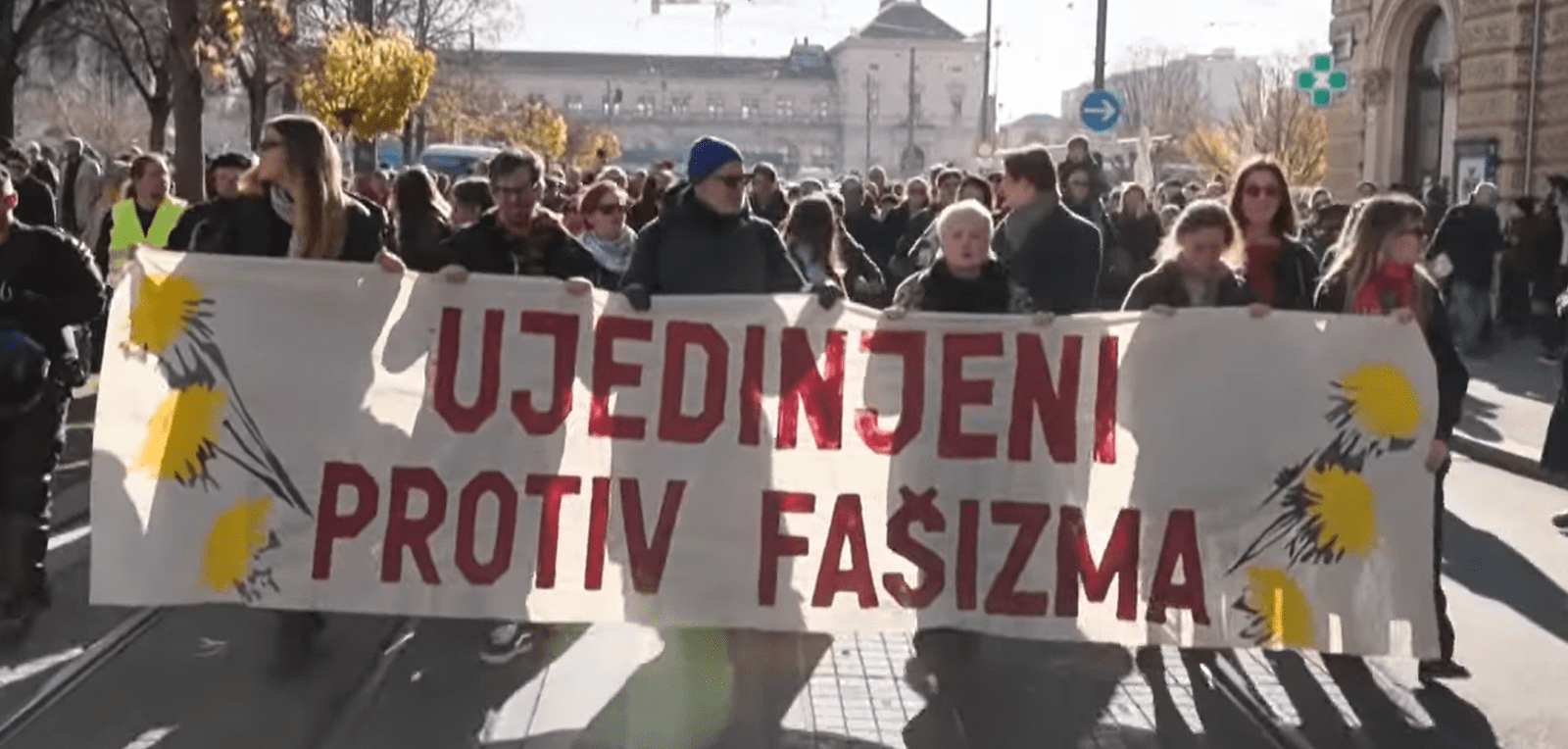
On Sunday, tens of thousands of Croatians poured into the streets in cities from Zagreb to Rijeka, Pula, Zadar and Split in a striking show of anti-fascist solidarity.
Marches organized under the banner “United Against Fascism” drew people chanting “We are all anti-fascists!” and carrying banners that warned against the return of a politics that draws symbols and rhetoric from Croatia’s darkest chapter in World War II.

The demonstrations were a reaction to a string of extremist incidents in November, especially where extremist groups targeted cultural events for Croatia’s ethnic Serb community often using the Ustasha-era salute “For the homeland – Ready!” evoking the pro-Nazi puppet state of the 1940s:
- On 3 November, about fifty masked individuals stormed an event in Split meant to inaugurate the Days of Serbian Culture, shouting “For the homeland – Ready!”, insulting people, and preventing the performance from going ahead.
- On 7 November, masked men gathered outside the Serb Cultural Center in Zagreb to block the opening of an exhibition dedicated to the legacy of an artist-historian. They chanted Ustasha slogans, sang fascist songs, threatened and spat at journalists, and attempted to intimidate the audience. Police eventually dispersed them.
- On 9 November, during a karate tournament in Rijeka involving a Serbian team, masked and partly armed individuals tried to violently interrupt the event – targeting the Serbian participants. Police had to intervene.
- There have been acts of vandalism against buildings associated with the Serbian national minority, such as the smashing of the glass frontage of a Serbian-minority branch office in Split, apparently because of the use of Cyrillic script.
- Earlier this year, ‘stumbling stones’, memorials to victims of Ustasha crimes during the war, were defaced in Zagreb.
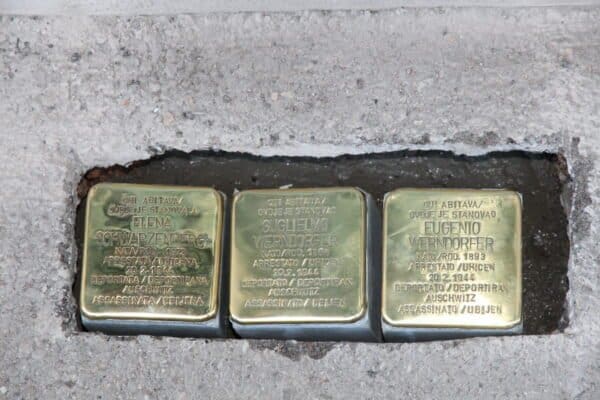
Sunday’s demonstrations demanded the government clamp down on far-right groups, investigate intimidation against minorities and curb public displays that rehabilitate historical fascism.
The marches were peaceful for the most part, though there were pockets of confrontations with the police.
Prominent figures
The protests also come against a political backdrop that critics say has created space for the far right.
In the months after recent elections, alliances and public events involving prominent nationalist figures have worried anti-fascist campaigners.

A huge concert in July – up to half a million are reported to have attended – by the controversial nationalist singer Marko Perković whose shows have featured pro-Ustasha displays, was particularly provocative, and seen by many as a moment when nationalist mobilisation moved into the mainstream.
Prime Minister Andrej Plenković has rejected accusations that his government is enabling extremism, calling such claims exaggerated.
Unresolved legacies
For Croatia, a country still living with the unresolved legacies of the 1990s war and the memory of wartime violence against Serbs, Jews, Roma and anti-fascist Croats, these demonstrations are both a protest and a test.
They reveal a society split between those who invoke a muscular, exclusionary patriotism and those insisting that national pride must not be built on historical revisionism or the rehabilitation of fascist symbols.
For many in Croatia, Sunday’s marches were a reminder that anti-fascism is not just second world war nostalgia: it has to be a brave, active, public defence of democracy and democratic norms.


