
Brigitte Bardot, who has died aged 91, once the most photographed woman in Europe and a symbol of post‑war cinematic modernity, spent the latter half of her life not in the spotlight of film but in the trenches of France’s extreme‑right politics.
Her transformation from international sex symbol to ideological fellow‑traveller of the nationalist right was one of the most striking political evolutions of any European celebrity of the 20th century.
Inflammatory
Bardot’s early fame was built on the soft‑focus glamour of 1950s and ’60s French cinema. By the time she retired from acting in 1973, she had already begun to cultivate a public persona defined less by film and more by outspoken, often inflammatory interventions on immigration, religion, and national identity. What followed was a decades‑long pattern of statements and publications that placed her firmly within the ideological orbit of the French far right.
Her repeated convictions under France’s laws against incitement to racial or religious hatred – five in total – marked her out as a celebrity unusually willing to test the limits of the country’s anti‑racism legislation.
Defending French culture
Muslims, migrants, and LGBTQ+ people were frequent targets of her polemics, delivered through open letters, interviews, and a series of autobiographical books that became rallying points for sections of the nationalist right.
Bardot insisted she was merely defending French culture; courts repeatedly found otherwise.
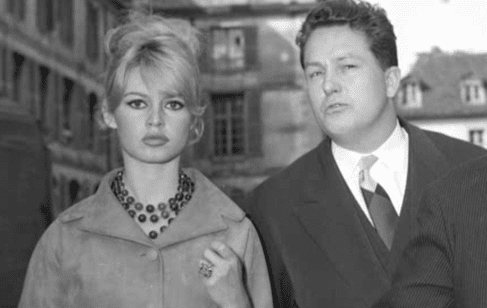
Her political affinities were never ambiguous. She publicly supported the Front National (later Rassemblement National) from the 1980s onwards, praising Jean‑Marie Le Pen at a time when most mainstream French figures kept their distance.
Though she occasionally attempted to frame her sympathies as cultural rather than partisan her rhetoric, particularly on Islam and immigration, echoed the party’s talking points with striking fidelity.
French identity
Marine Le Pen later described Bardot as a “symbol of French identity”, a formulation that neatly captured the movement’s attempt to fold her celebrity into its nationalist project.
Bardot’s animal‑rights activism, the one area where she retained broad public visibility, was also frequently entangled with her politics. Her denunciations of halal and kosher slaughter were framed as humanitarian but delivered in language that repeatedly crossed into cultural hostility.
For far‑right audiences, this fusion of animal‑welfare campaigning with anti‑immigration sentiment proved especially potent.
Cultural monument
In her final decades, Bardot became a kind of cultural monument for the French far right: a glamorous relic of a nostalgically imagined France, repurposed as a voice of grievance against multiculturalism, feminism, and what she termed “the Islamisation of Europe”.
Her statements were eagerly circulated on far‑right forums and social‑media channels, where she was treated less as a former actress than as a veteran ideological combatant.
Brigitte Bardot’s legacy will be contested. To many, she remains a cinematic icon of the 20th century. But her political afterlife tells a different story: one of a celebrity who willingly aligned herself with exclusionary nationalism, and whose cultural capital was steadily absorbed into the machinery of the French extreme right.


