
Stephen Yaxley-Lennon -the activist who performs as “Tommy Robinson” – is lying again. In a recent post, he presented grainy footage of a 1970s Tube station as supposed proof of a monochrome past. “London was always white,” his narrative implies.
But history, the deep and documented truth of our capital city, says something profoundly different.
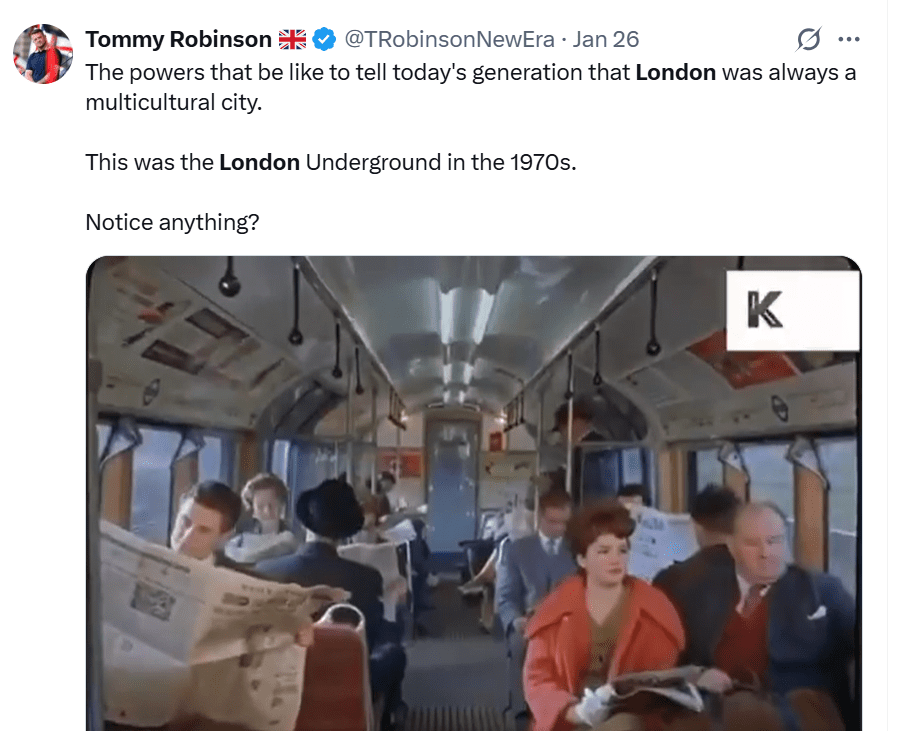
His selective nostalgia is not just a mistake; it’s a deliberate fraud. The argument that modern multicultural London represents a break from a pure, homogeneous past is a foundational myth of ethno-nationalism. It is a grift built on historical amnesia.
For those of us whose families have lived here for generations, the truth is evident in our own memories and in the very stones of the city.
Ethnic layering
London’s story is one of continuous ethnic and cultural layering, a port and capital that has attracted, absorbed, and been shaped by global peoples for over two thousand years.
To claim otherwise is to deny the essence of London itself.

London’s foundation as Londinium by the Romans in AD 43 embedded it within a vast, multi-ethnic empire. Soldiers from North Africa, merchants from the Middle East, and officials from across Europe walked its original streets.
This set the precedent: London’s destiny was to be a world city. While the early centuries saw migrations from nearer shores, significant and distinct communities began forming well before the modern era.
Deep rooted Jewish presence
The Jewish community exemplifies this deep-rooted presence.
Though expelled in 1290, Jews were formally readmitted in 1656. Sephardic Jews from Spain and Portugal, followed by Ashkenazi Jews from Central and Eastern Europe, established themselves in Aldgate and later the East End.

From the 19th century, figures like the philanthropist Sir Moses Montefiore campaigned for civil rights and built housing for the poor.
Intellectuals and tailors
In the 20th century, Jewish intellectuals, artists, and scientists, from philosopher Sir Isaiah Berlin to cinema mogul Michael Balcon, profoundly enriched British life.
The legacy of East End tailors laid foundations for the garment industry, while their activism helped shape the labour movement.
Chinese sailors
The Chinese presence, though smaller in earlier centuries, is far from recent. Chinese sailors, known as lascars, arrived on East India Company ships in the 18th century.
The first significant settlement emerged in Limehouse in the late 19th century.
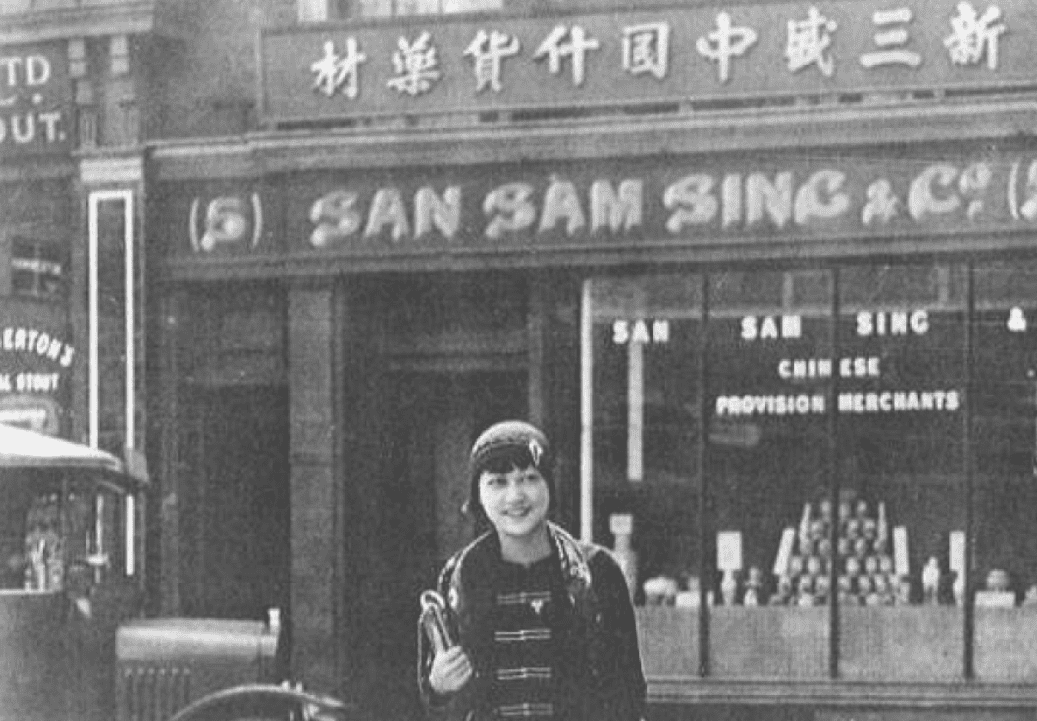
These pioneers established London’s first Chinese businesses – shops, laundries, and restaurants – catering to sailors and curious Londoners.
Post-World War II migration, particularly from Hong Kong, transformed this presence, making Soho’s Gerrard Street the nucleus of a new Chinatown.
African roots
The Afro-Caribbean contribution, though intensely highlighted from 1948 onwards with the arrival of the Empire Windrush, has much deeper roots.
Africans have been in London since Roman times, and there was a notable Black presence in the 16th and 17th centuries.

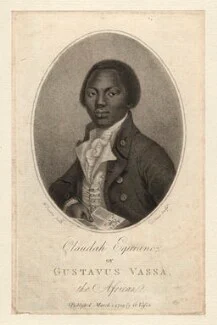
The abolitionist movement was powerfully centred in London, led by figures like Olaudah Equiano, a former slave who also became a leading spokesman for London’s black community at the end of the 18th century. His 1789 autobiography was published in the city.
The post-war Windrush generation fundamentally reshaped London, working in the NHS and transport, and creating vibrant cultural institutions like the Notting Hill Carnival.
Arab influences
Arab and Middle Eastern influences permeate London’s history. Syrian and Egyptian traders operated in Roman Londinium. The 19th and early 20th centuries saw Yemeni sailors settling around the docks in Tower Hamlets, creating one of the UK’s oldest Muslim communities.
Arab intellectuals, from the poet Khalil Gibran onwards, have long used London as a base. Today, contributions flourish in finance, medicine, and the culinary landscapes of areas like Edgware Road.
In conclusion, London’s multiculturalism is not a modern policy. It is the city’s inherent condition, story of 2,000 years of cumulative settlement.
To walk through London is to traverse a palimpsest of global history: a Roman wall, a medieval synagogue plaque, a Georgian square built with merchant wealth, a Victorian dock built by global labour, a Caribbean café in Brixton, a Chinese pharmacy in Soho, and an Arab coffeehouse in Marylebone.


