As the Undercover Policing Inquiry (UCPI) moves through its later phases, a picture is emerging of the scale and intent of police infiltration of anti‑fascist organisations from the late 1980s through the 2000s.
The recent testimony of three veteran activists – Dan Gillman, Frank Smith and Joe Batty – has added shocking detail to what many have long suspected: that Special Branch and the Special Demonstration Squad (SDS) treated anti‑fascists as a greater threat than the violent far‑right groups they opposed.
Operational mindset
The Inquiry has already established that dozens of undercover officers were deployed into anti‑racist, anti‑fascist and left‑wing groups over four decades. But the evidence from Gillman, Smith and Batty – activists with roots in London and Kent – exposes the operational mindset behind those deployments.
Their accounts show not only surveillance, but attempts at manipulation, disruption and, in the most disturbing case, incitement to serious criminal activity.
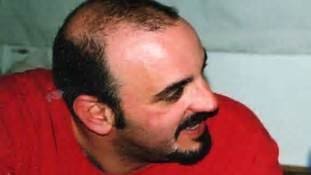
Much of the recent testimony centres on the deployment of “Carlo Neri” – real name Carlo Soracchi, codenamed HN104 and “Craggy Island” – who infiltrated anti‑fascist circles in London between 2001 and 2005.
Arson attack
Soracchi embedded himself in the broad anti‑fascist movement, but particularly the Socialist Party-linked “Away Team”, and the looser networks of anarchist‑leaning anti fascists.
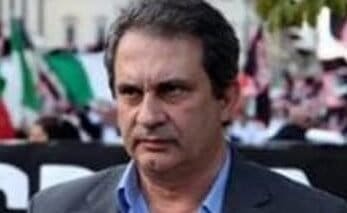
Gillman and Batty both told the enquiry how Soracchi attempted to steer them towards an arson attack on a charity shop in west London linked to Roberto Fiore, the Italian fascist fugitive and long‑time London resident. They refused.
But the Inquiry has heard that Soracchi repeatedly pushed the idea, presenting it as a legitimate escalation against fascist organising. That an undercover police officer, supposedly deployed to prevent disorder, was encouraging firebombing is one of the most startling revelations to surface in the UCPI so far.
Fiore is now suing the Metropolitan Police over the allegations.
Frank Smith’s evidence reinforces the pattern. He describes Soracchi as a man who “always wanted to go further”, constantly probing for willingness to engage in violence.
Smith, like the others, rejected the suggestions. But the fact that the officer was making them at all raises profound questions about the SDS’s operational culture. Was this a rogue officer, or had the whole unit gone rogue?
Penetrated
The intelligence reports disclosed alongside the testimony show how deeply the police penetrated the anti‑fascist movement. Reports track meetings, internal debates, personal relationships and organisational tensions.
They map the connections between AFA, the Socialist Party, Youth Against Racism in Europe (YRE), No Platform groups, and Searchlight, with Special Branch maintaining a file on the magazine’s publisher Gerry Gable and monitoring the activities of its former editor, Nick Lowles.
The picture that emerges is not of a police service neutrally gathering information to prevent disorder. Instead, the reports often read like political analysis: who is influencing whom, which groups are gaining ground, which strategies are being debated.
Anti-fascist threat
Anti‑fascists were treated as a threat to be contained, not as groups responding to a genuine threat of far‑right violence.
This is particularly striking given the context. The 1990s and early 2000s saw sustained far‑right activity: Combat 18’s campaign of intimidation and bombings, the rise of the BNP under Nick Griffin, and repeated racist attacks across the country. Yet the UCPI has so far revealed no equivalent infiltration of the far right on the scale directed at anti‑fascists.
Soracchi attempted to steer them towards an arson attack on a charity shop in west London linked to Roberto Fiore, the Italian fascist fugitive and long‑time London resident
Beyond the politics, the evidence reveals the personal damage caused by undercover policing. Soracchi formed intimate relationships under false pretences, including with Donna MacLean, whose own reflections now appear in public commentary.
She is only one of several women who were abused by undercover officers. The emotional fallout, betrayal, manipulation, the sense of being used as a prop in a covert operation, is a recurring theme across the Inquiry.
Critical test
Soracchi is due to give evidence in early March 2026. His testimony will be a critical test of the Inquiry’s ability to confront the most troubling aspects of the SDS’s legacy. The activists’ accounts are clear, detailed and mutually reinforcing.
Whether Soracchi confirms, denies or attempts to reframe his actions, the UCPI now has a stark choice: acknowledge the political policing of anti‑fascism, or retreat into the familiar excuse of “isolated mistakes” and “rogue officers”.
For those of us who lived through the era, the truth has been obvious for decades. The state watched anti‑fascists more closely than it watched fascists. It was that simple. The Inquiry is finally catching up.


