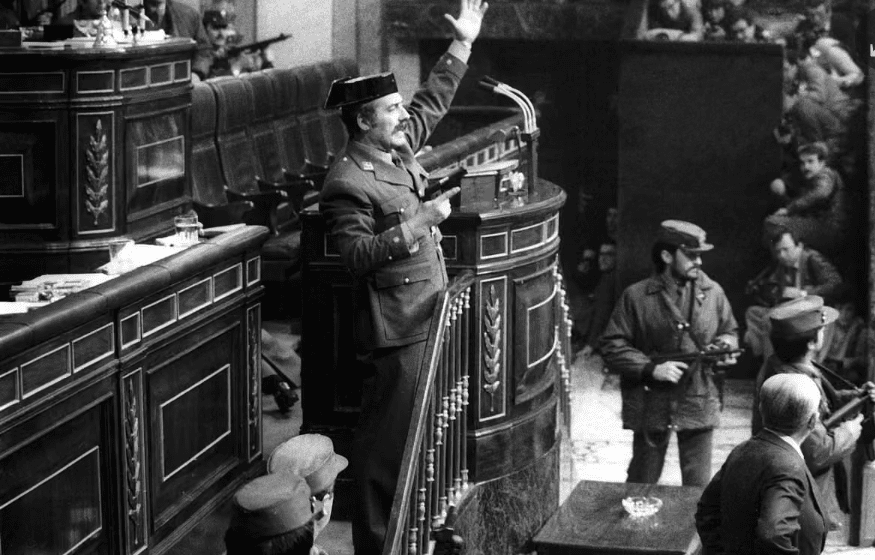
Yesterday we were all reminded – as if we needed reminding in the age of Trump, Farage and Lowe – that even in Western Europe democracy can’t be taken for granted.
On the same day as the death of a man who opened fire in the Spanish parliament leading an attempted military coup, documents were released showing the complicity of senior military and intelligence officers in his coup plot.
Some of these men and those they trained are still alive and politically active today on the Spanish far right, inspiring a new generation of fascist ideologues and their thuggish followers.
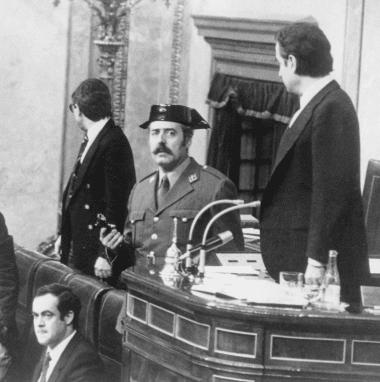
Antonio Tejero died yesterday aged 93. He had been critically ill since last October when it was widely but wrongly reported among the European far right that he had died, but he survived for another four months.
On 23 February 1981 Tejero made worldwide headlines when, resembling Peter Sellers, he stormed into Madrid’s parliament with heavily armed fellow Civil Guard officers, shooting into the air and barking at parliamentarians: “Sit down, you cunts!”
The coup attempt failed within 24 hours, but yesterday documents were released showing that he had support from senior generals and pro-fascist elements in the Spanish intelligence services who were trying to halt their country’s transition to democracy.
Armed assault
Tejero’s armed assault on parliament came not much more than five years after the death of General Francisco Franco, who ruled Spain for thirty-six years after overthrowing its earlier democratic republic in a bloody three-year civil war from 1936 to 1939.
Even today, the democratic constitution ratified three years after Franco’s death is contemptuously described by Spain’s far right as the “1978 regime”.
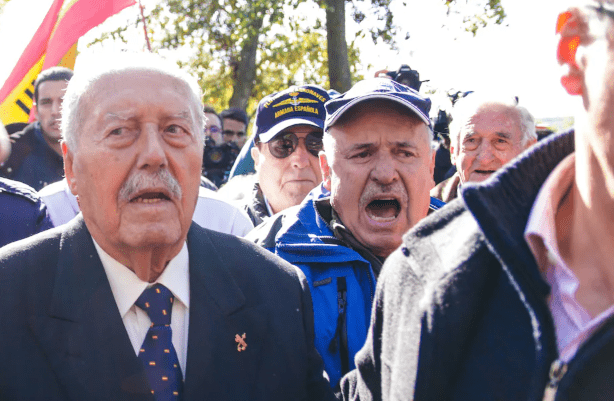
In February 1981 some complacent international journalists (especially those who grew up with liberal assumptions about the permanence of democracy) saw Tejero’s coup attempt as a comical failure showing fascism could safely be relegated to the history books. The documents released yesterday prove otherwise.
Members of the post-Franco Spanish security and intelligence service CESID assisted Tejero, using their agency’s facilities including surveillance of the parliament building to give him logistical backup.
Intelligence officers
At least six CESID officers were identified by later investigators and expelled from the service, though only one – Captain Vicente Gómez Iglesias – was ever convicted.
The most senior military figures behind the coup (but who later lost their nerve when King Juan Carlos and conservative monarchists stood by the constitution) included Major General Alfonso Armada, a veteran of the fascist Blue Division who volunteered to fight with Nazi Germany during the Second World War even while Spain remained officially neutral.
Armada was sentenced to 30 years in prison for his role in the coup. He was released after five and a half years for health reasons but lived for another twenty-five years before his death (like Tejero aged 93) in 2013.
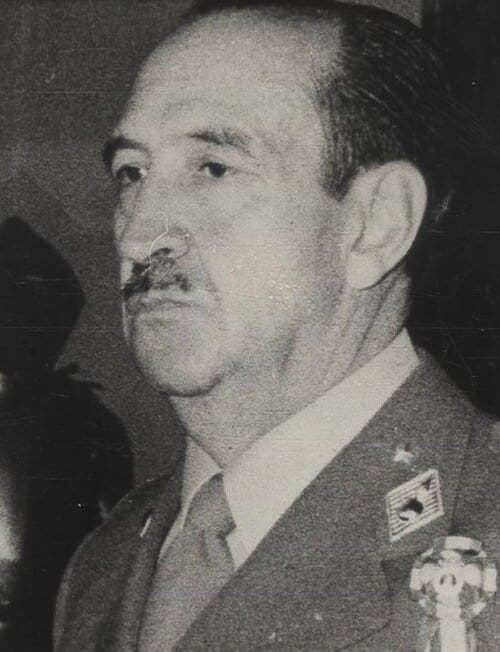
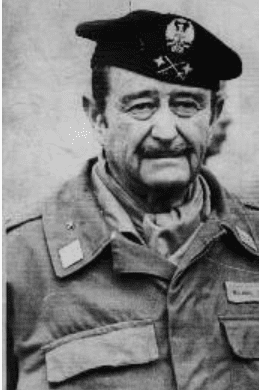
It’s no coincidence that the other senior officer backing the coup, the aristocratic Lieutenant General Jaime Milans del Bosch, was also a veteran of the pro-nazi Blue Division.
In 1981 Milans del Bosch was commander of the Valencia region and was the only one of the coup plotters to go ahead with ordering his tanks onto the streets in support of Tejero.
Milans del Bosch surrendered after a day, and received a 27-year prison sentence, serving nine years before being released.
Pro-nazi elements
For social, religious, and ideological reasons, Spain’s far right has always been bitterly divided and the 1981 coup’s failure was influenced by those splits. But the involvement of intelligence officers is significant, due to a long history of pro-nazi elements in the Franco-era intelligence service.
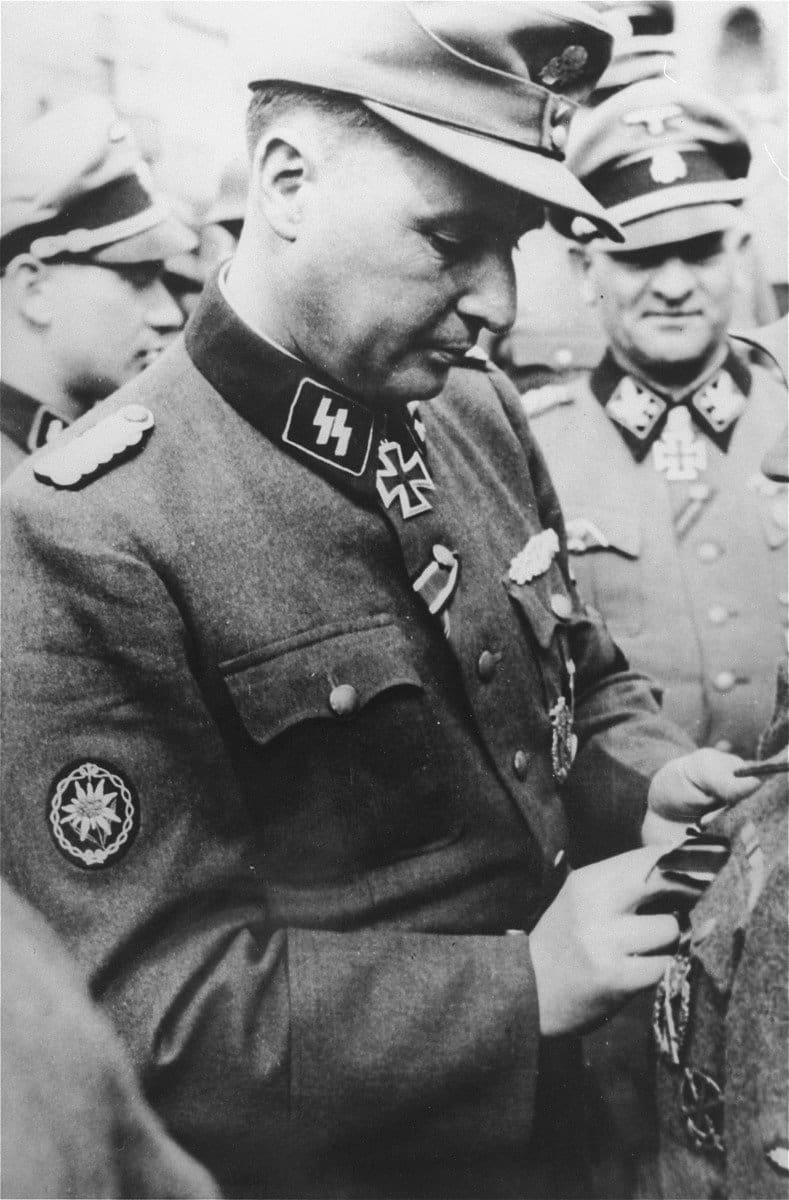
Two of the chiefs of that service in the postwar years, who each also served as Mayors of Madrid for a combined twenty-one years from 1952 to 1973, are known to have been closely tied in with postwar Nazism.
The Count of Mayalde and Carlos Arias Navarro were close friends of the SS war criminal Léon Degrelle, who hid out in Spain for decades until his death in 1994 and was an idol to generations of nazis.
They protected Degrelle when other conservative factions in Franco’s regime wanted to make Spanish fascism more respectable by handing Degrelle over to Belgian courts.
In their era, Madrid was a magnet for other nazis including the international arms dealer Otto Skorzeny.
While Franco banned all other political parties, the fascist youth movement CEDADE hosted younger fanatics including leading terrorists who based themselves in Spain and Portugal while plotting outrages in their home countries.
New generation
CEDADE leaders are still around influencing a new generation of Spanish racists and fascists who still dream of emulating Tejero and overthrowing democracy.
The latest version, Núcleo Nacional, is led by Moscow propagandist Enrique Lemus, masked thug Iván Rico, and nazi ideologue Isabel Peralta, and has close links to the British magazine Heritage and Destiny.

Peralta’s political education was very much influenced by three CEDADE veterans, Ramón Bau (who now leads a CEDADE spin-off called Devenir Europeo), publisher and Holocaust denier Pedro Varela, and Degrelle’s former lawyer and biographer José Luis Jerez.
Rival groups on the Spanish far right allege that Peralta’s new friends are a front for the more mainstream far right party Vox, and even for the hardline wing of Spain’s conservative party PP.
Their theory is that these far-right conservatives plan to use Núcleo Nacional’s hooligan gangs to create chaos on the streets and prepare the way for a reactionary coup.
No complacency
The lesson of 1981 is that though such theories might seem paranoid, they can’t be ruled out. And with British politics increasingly scarred by the ultra-right, there’s no reason for complacency here either.
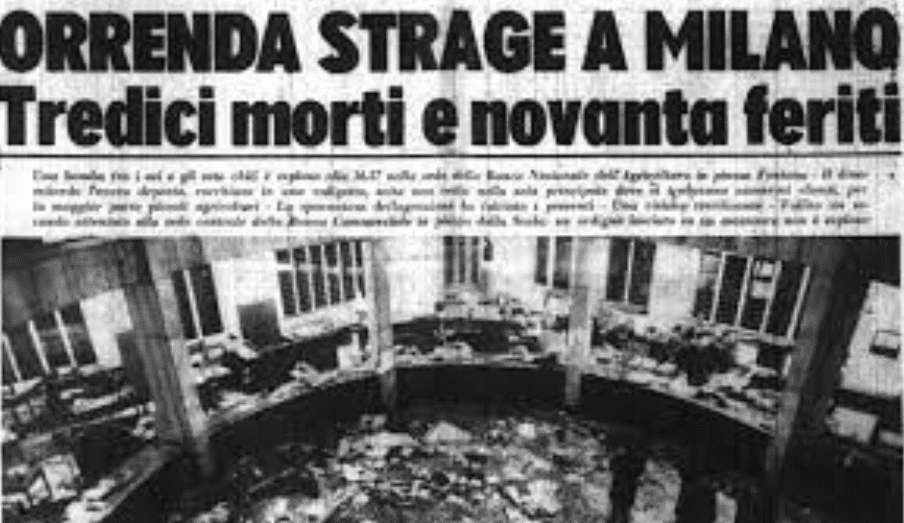
Tejero’s failed coup was seen as the end of the “years of lead”, a period of European terrorism whose far right components began with the 1969 Piazza Fontana bombing in Milan that killed seventeen people.
The most infamous event of that period was the bombing of Bologna railway station in August 1980, killing 85 people, after which Italian fascists fled to Britain and were safehoused by the nazi publisher Tony Hancock, League of St George international officers Steve Brady and Mike Griffin, and other British extremists.
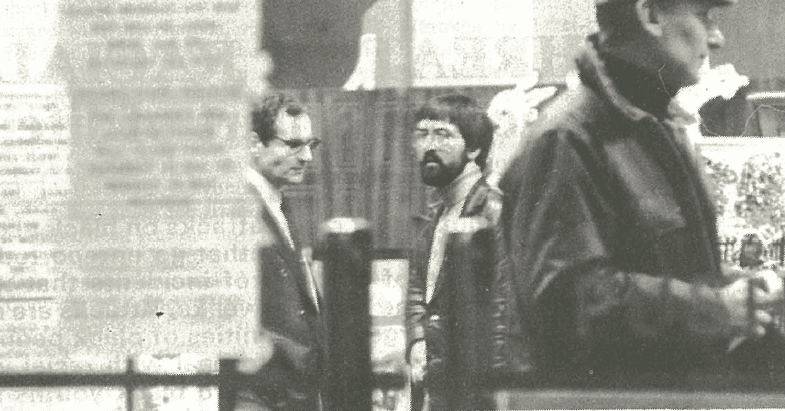
The British far right always had a soft spot for Franco’s dictatorship. For years the notoriously reactionary Fellows of Peterhouse, Cambridge (theoretically “respectable” academics such as the historian Maurice Cowling who influenced Margaret Thatcher’s Tories) wore mourning each November on the anniversary of the dictator’s death.
Examples in 2026 of revived openly fascist politics can easily be seen in Advance UK and Restore Britain (as Searchlight has revealed recently).
21st century fascism comes in many forms, not necessarily led by tanks and soldiers storming Parliament, but the Tejero story should remind us that democracy and civil society don’t survive unless both politicians and citizens are prepared to fight for them.


