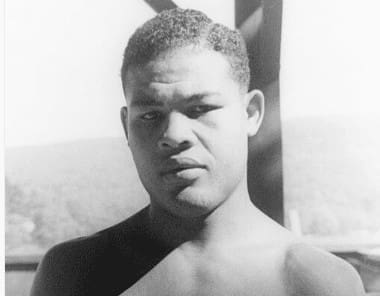
Joe Louis, who held the world heavyweight boxing title from 1937 to 1949, is remembered today chiefly as a sporting legend. His life as a racial justice pioneer has been all but forgotten.
And on this day in 1944, he struck an important blow for racial justice.
Born Joseph Louis Barrow in 1914 to sharecroppers in rural Alabama, Louis grew up under the constant shadow of Jim Crow.
Escaping poverty
When he was twelve, his family joined the Great Migration north, settling in Detroit’s Black Bottom neighbourhood to escape both poverty and the menacing reach of the Ku Klux Klan.
He was a shy child with a stammer, struggling academically; in his own words, “I couldn’t hardly get past the sixth grade”. Then he discovered boxing. The ring gave him not only a career but, eventually, a platform.
His first brush with symbolic politics in sport came in June 1935, when he knocked out Primo Carnera, a fighter personally championed by Benito Mussolini, as Italian forces were preparing their invasion of Ethiopia.
For Black Americans, the bout carried great significance.
Maya Angelou would later capture the communal intensity of Louis’ fights in ‘I Know Why the Caged Bird Sings’, describing what defeat would have meant for her people. Victory, conversely, felt like defiance.
Demolition
Even greater was Louis’ demolition of German boxer Max Schmeling in June 1938.
Though Schmeling never joined the Nazi party, he was cast, by press and public alike, as a proxy for Hitler’s regime.
President Roosevelt summoned Louis to the White House and told him the nation needed his fists.
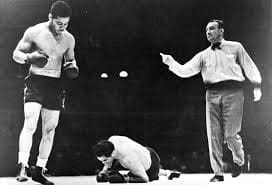
In front of 70,000 at Yankee Stadium, with an estimated 100 million people listening on radio worldwide, Louis won by knockout inside the first round.
For the first time, white American crowds cheered for a Black man, though the motivation was more defeating fascism rather than embracing racial equality.
Louis was shrewd enough to understand the distinction and his wartime service was shaped by a complicated patriotism.
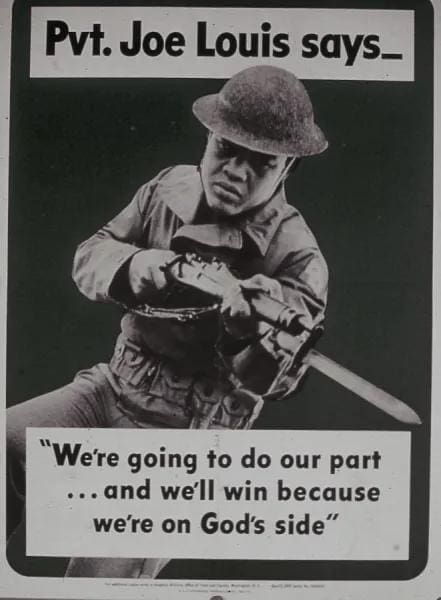
He enlisted, toured military camps at his own expense, and became the centrepiece of a US Army recruitment campaign, remarkable given that the Army was still segregated.
Yet Louis did not acquiesce to the system.
On 22nd March 1944, travelling through the American South with fellow boxer Sugar Ray Robinson, he was ordered by a white military policeman to move to the “coloured” section of a bus station at Camp Sibert, Alabama.
Both men refused, and when the officer raised his baton, Robinson tackled him to the ground.
Propaganda catastrophe
Louis and Robinson men were detained but soon released, not least because arresting the nation’s most famous soldier would have been a propaganda catastrophe.
The episode directly inspired future baseball legend, Jackie Robinson, then a 2nd lieutenant in the 761st “Black Panthers” Tank Battalion stationed at Camp Hood, in Texas.
Some months later, he was court martialled for refusing a similar order, and in his defence he cited Louis and Sugar Ray Robinson’s stand as his justification for refusing.
Outrages
After the war, Louis grew angrier.
He sponsored a benefit concert for Isaac Woodward, a decorated Black sergeant blinded by a South Carolina police chief in 1946, one of many violent outrages committed against returning Black veterans.
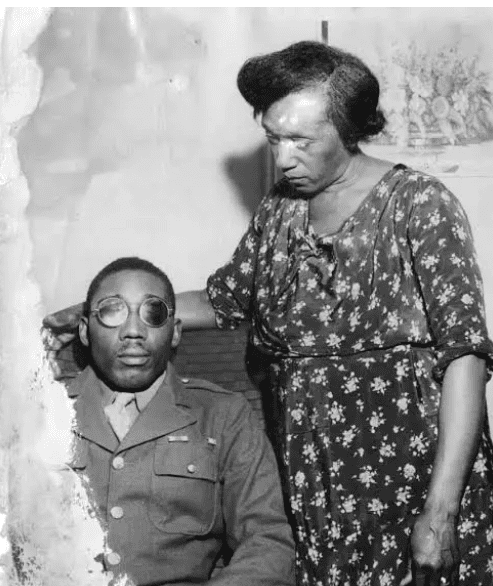
At a dinner at the Waldorf Astoria, with Frank Sinatra in the audience, Louis delivered a speech of raw political force:
“I hate Jim Crow. I hate disease. I hate the poll tax… I am going to help people fight Jim Crow and try to make a better America.”
In 1948, his statement criticising the Army’s discriminatory treatment of Black servicemen and women was read before a Senate Armed Services Committee.
President Truman, shaken by attacks on Black veterans, subsequently issued Executive Order 9981, which set in motion the desegregation of the US armed forces.
Louis never received a White House invitation from Truman, but he had made his voice heard.
Financial ruin
His later years were bruising in different ways; crippling tax debts, health troubles, financial ruin.
He died in 1981, aged 66, and was buried at Arlington National Cemetery after President Reagan waived eligibility rules (Louis had never actually been in combat).
His old opponent Max Schmeling helped pay for the funeral.
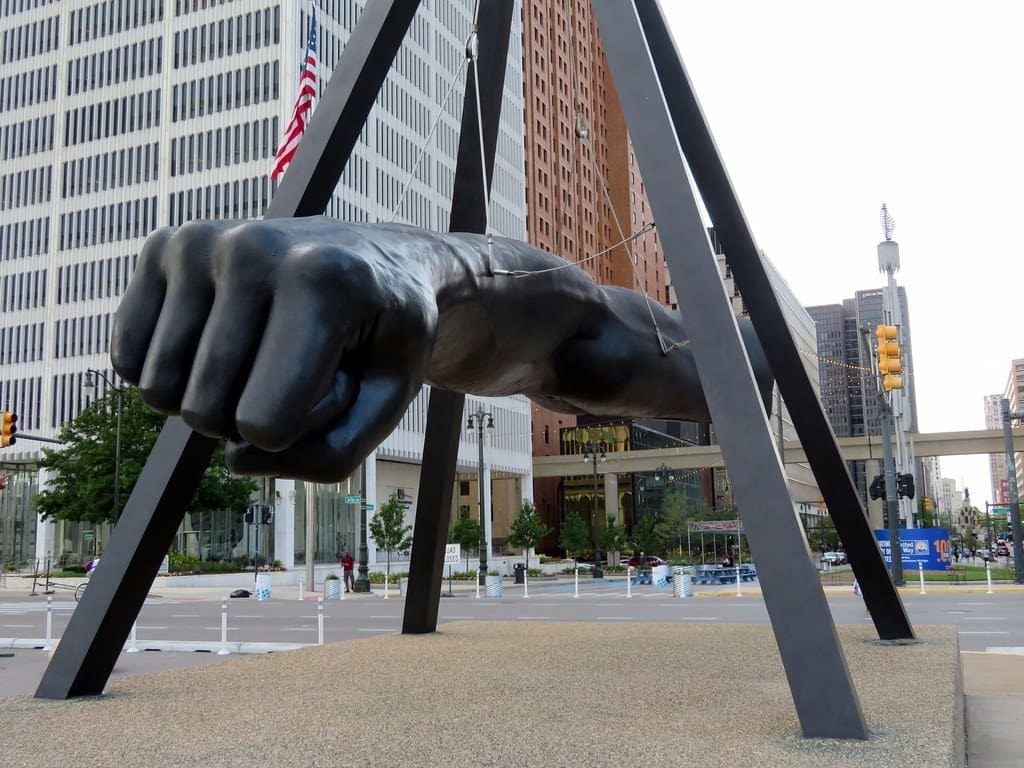
A 24-foot bronze sculpture of a clenched fist stands in downtown Detroit today, a monument to the contribution he brought to a struggle that the world was slow to acknowledge.


