
Last Thursday’s elections for the Scottish Parliament, Welsh Senedd, and English local councils were a shock to anti-fascists, with unprecedented success for Reform UK including the election of many councillors who should be classed as far right. But the results also raised questions and heightened divisions among British fascists.
There have been times during Searchlight’s more than sixty years of anti-fascist investigation and campaigning when most of the far right seemed united behind one path, such as the NF in the 1970s and BNP in the 2000s.
Even then there were bitter dissenters, but there was a clear majority faction. Now there are not just rival parties but at least four rival strategies debated inside the racist and fascist right.
Firing squad
These latest election results have failed to resolve such arguments. They have given ammunition to advocates of each as they form a circular firing squad on social media.
First we have those who try to create a political party, along lines that we can trace back to John Bean’s original BNP in the early 1960s, through the NF, and eventually the Tyndall-Griffin BNP. A more or less openly racist and only semi-disguised fascist or nazi party, contesting elections and strongly differentiated from the more mainstream right.

Representatives of that tradition can now be found in the British Democrats, and it’s no coincidence that many of their leading figures are veterans going back to the BNP, NF, and even in some cases the openly nazi NSM. Variations of the same strategy can also be seen in two parties that broke away from the largest 21st century British nazi group Patriotic Alternative, doing so precisely because they wanted to fight elections.
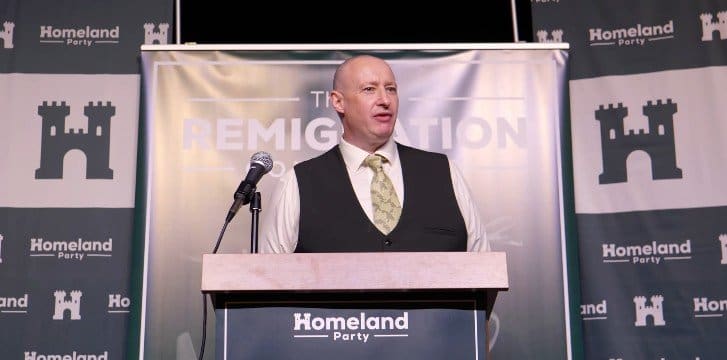
As Searchlight recently pointed out, it’s very strange that one of those parties, the Homeland Party led by ex-BNP and ex-PA official Kenny Smith, seems to have disappeared without trace save for occasional social media posts about clearing up litter or lamenting the decline of pop culture since the 1990s.
Yerbury humiliated
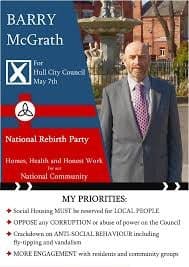
Another aspiring fascist standard bearer, Alek Yerbury’s National Rebirth Party, contested just one council ward on Thursday and received a humiliating 0.8% of the vote in St Andrew’s & Docklands, Hull.
This came after months of Yerbury berating ther parties for contesting elections before they had built a solid base of support, and where elctioneering would just be a stupid waste of time and resources.
The British Democrats’ results were a little better, but were a poor reflection on the party’s 20-odd years of trying to reinvent the BNP. Party chairman Jim Lewthwaite polled 3.9% in Wyke, Bradford, which he once represented as a BNP councillor – and that was the best of his party’s meagre crop.
One scrap of good news for Lewthwaite and his fellow BDP pensioners was that in all the chaos following the collapse of Homeland and continuing splits among ex-PA activists, they managed to recruit one of the best-known of these young activists, Kai Stephens, who stood in Crome, Norwich, and took 2.3%.
But a basic problem continues to be the existence of Nigel Farage’s populist version of anti-immigration politics.
The Farage dog whistle
It doesn’t seem to matter how often Farage and his colleagues protest that they aren’t racist, or how many Tories they recruit, or how many ethnic minority candidates they have. Former and potential BNP voters – the type of voters who the British Democrats and others would need on board if they were to get anywhere close to winning even a handful of council seats – hear the Farage dog whistle and believe (rightly or wrongly) that Reform UK is BNP-lite.
That seems good enough for them, and even when offered a more blatantly racist alternative, they stick with Reform.
Alternative strategy
That brings us to the second alternative strategy advocated by those British fascists who argue that in the 2020s it’s a waste of time to follow the path taken from early 1960s to early 2010s. Instead, they argue for a fascist version of what Trotskyists used to call entryism. In the case of Militant that meant infiltrating Labour, and in the late 1970s and early 1980s some British fascists tried such approaches inside the Conservative Party.
Today’s entrism has two varieties, Reform and Restore. Or if you prefer, Farage and Lowe.
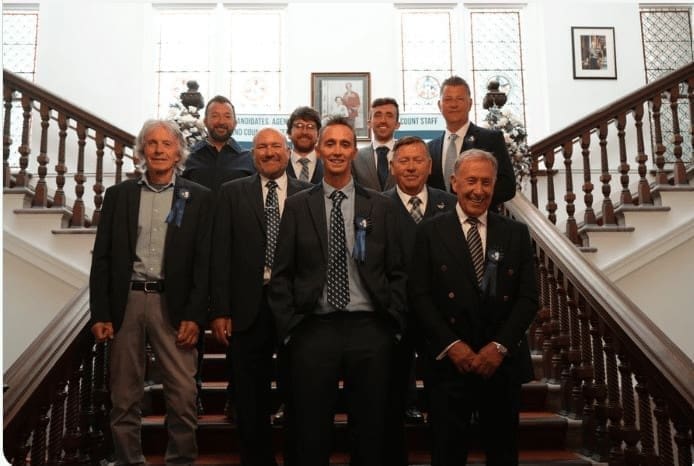
As anti-fascists have observed, Reform’s candidates include many racists and fascists, including some who have a record in nazi or Islamophobic movements. Many more of these will be uncovered over the coming weeks and months. Restore and Rupert Lowe are more blatant.
They shamelessly and openly associate with some of Britain’s most extreme racists, including Holocaust deniers and other antisemites.
Nazi cheer leaders
Those cheering on Lowe’s project and proudly stating they are campaigning for Restore include the prolific online racist Steve Laws, who in just a few years has passed through UKIP, Homeland and PA but is now one of Restore’s most emphatic champions, Laws’ ex-Homeland sidekick Sam Wilkes, who churns out Holocaust denial and racist panegyrics to Rhodesia while backing Restore campaigns from the safe distance of his Guernsey home, Essex racist Callum Barker, who made his name with hotel protests in Essex, and ex-BNP thug Chris Mitchell, who like Wilkes seems obsessed by denying the Holocaust and posting other offensive material as well as posing for photos with his new hero Rupert Lowe.
Thursday’s election results gave some support for each of the entryist factions. Laws and other Restorers could celebrate the clean sweep that Lowe’s nine county council candidates achieved in Great Yarmouth, as well as a tenth victory in a borough by-election (again in Great Yarmouth).
Lowe sceptics
But the Reformites can argue that these ten victories pale into insignificance compared to the Farage party’s achievements in winning control of councils from Havering to Gateshead. And they can argue that while the British Democrats and National Rebirth were managing at best 3.9% and at worst 0.8%, Reform won landslide victories in the same seats and across those councils.
There’s also another type of Lowe-sceptic gaining ground online and engaging in fierce rows with Laws and other Restore backers. These sceptics argue that Lowe is just another Tory, and that racists are fooling themselves if they think he will be substantially more hardline on immigration than Farage.
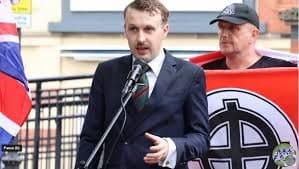
Lowe’s critics on the far right predictably include leaders and spokesman for other parties. Alek Yerbury and British Democrat deputy chairman Steve Smith have been among the most outspoken in deriding those who choose to follow the Pied Piper of Great Yarmouth.
No point in elections
But there are also critics who don’t belong to any other registered party and who now argue that there’s no point to electoral politics at all.
Among the loudest of these voices are former BNP chairman Nick Griffin and the conspiracy theorist host of Unity News Network, David Clews, whom Searchlight recently exposed for teaming up with George Galloway in a pro-Russian propaganda event. Griffin and Clews have their own reasons, partly financial, for trying to persuade their listeners that any type of traditional politics is now a waste of time.
Financial reasons
As usual, Patriotic Alternative leader Mark Collett has been judging the mood of his online audience and donor base, deciding which way to jump. He has longstanding ties both to Clews and UNN, but also to Steve Laws, and he wouldn’t want to alienate the pro-Restore faction too badly.
Their cryptocurrency wallets are as good as anyone else’s. So Collett’s advice is that elections are a waste of time, but if you really must take part in elections, Rupert Lowe and Restore are the best of a bad bunch.
Another factor is that Collett’s earlier line was based mainly on wanting to undermine his hated rival Kenny Smith and the Homeland Party.
Now that Smith has disappeared and Homeland is in terminal crisis, Collett isn’t quite sure where to aim his negativity. All he’s sure of is that the best thing any British racist can do is donate to Mark Collett.
A very tiny alternative spin on the entrist strategy was seen again this year in some Scottish Parliament regions. This is a cunning plan by Holocaust denier Alistair McConnachie, a former UKIP member with links to BNP and other far right activists in England, to try to deceive Green Party supporters. McConnachie registered “Independent Green Voice” in 2003.
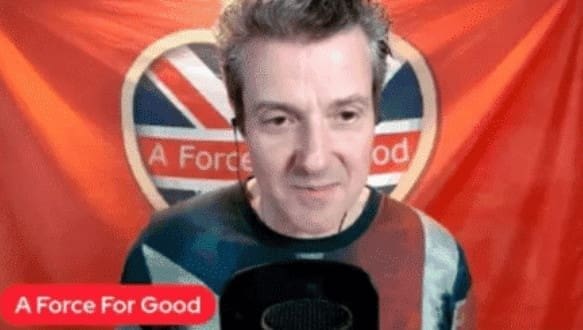
He occasionally stands in elections trying to peel away sufficient voters to lose the Greens’ some seats in close contests. IGV this year had candidates in eight Scottish regions, polling between 0.7% and 1.2%.
If the sceptics prove right and both Reform and Restore disappoint their backers, there’s a fourth strategy advocated by a minority of the far right who reject Farage and Lowe, but who also reject more openly fascist parties like Brit Dems, Homeland and National Rebirth, while disagreeing with Collett and insisting that there’s still some point in elections.
Conspiracy theorists
These are the oddballs who have ended up in tiny parties that are anti-immigration, anti-Islam, conspiracy theorist (especially in relation to vaccines and the pandemic), but not openly racist – in some cases having ethnic minority activists or even ethnic minority leaders.
Longest established of them are the English Democrats, led by Essex solicitor Robin Tilbrook whose services have been used by numerous racists and fascists. Since the pandemic Tilbrook has been increasingly active among conspiracy theorists.
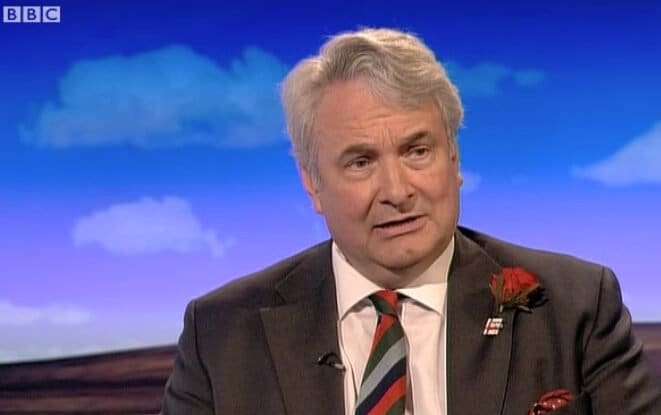
For years he has tried to build alliances with dissident factions on the fascist scene even though his own party is “civic nationalist” not openly racist. His close allies over the years have been the likes of former BNP election guru Eddy Butler, and the ex-jailbird Gregory Lauder-Frost from the Traditional Britain Group.
The best ED result this year was in Dearne North, Barnsley, an area it has targeted for years, but even this peak result was only 3.2%.
Anti-fascists surprised
A newer party with roots in Islamophobia and conspiracy theory, and with some links to ex-BNP organisers such as Merseyside’s Dr Paul Rimmer, is National Housing Party UK.
They surprised many anti-fascists by standing candidates in the London boroughs of Camden and Islington, which hadn’t seen racist campaigns since the days of the NF.
After what seems to have been an active leafletting effort, the best NHP result was 6.6% in Holborn & Covent Garden, Camden. If this proves more than a flash in the pan, anti-racists will need to make some effort there and in nearby wards to ensure residents are aware that NHP is a far right party.
UKIP staggers gravewards
While the NHP is in its infancy, UKIP is staggering towards its grave. Personal and financial disputes continue to dog the party and its effective owner Ben Walker, while its nominal leader Nick Tenconi finds new ways to make a fool of himself. UKIP’s results were among the most abysmal of the many fringe parties last Thursday.
Its trick of putting up English candidates for the Scottish Parliament didn’t go down well. Ben Walker and the other UKIP candidates for Holyrood barely registered with 0.1% and 0.2%. Only three of its English council candidates scraped past 2%.

The Heritage Party – which broke away from UKIP and has become increasingly focused on conspiracy theories and anti-vaccination campaigns as well as trying to be even more anti-immigration than its rivals – still has one or two active branches.
But their decision to fight every Welsh constituency, perhaps imagining that the new proportional election system for the Senedd might help them – backfired badly. In fifteen of the sixteen Welsh constituencies, the Heritage vote was below 1%.
An even smaller ex-UKIP party competing with Heritage for the support of anti-vaccination conspiracists is the Alliance for Democracy and Freedom. While Heritage focused a lot of their effort on Wales, the ADF set its sights on Scotland but again failed badly, with a peak vote of 1.4%.
Habib’s failure
Ben Habib and Advance UK once thought they were a class above such fringe efforts. Habib genuinely believed that the many financial scandals and other disreputable behaviour for which Nigel Farage is notorious among his former friends, would eventually start to convince even the most blinkered voters that they needed a more honest alternative to Reform.
But although recruiting a few of Farage’s branch organisers and councillors, Advance never took off. Habib never seems to have realised, perhaps because people are too polite to tell him to his face, that members of a dog-whistle racist party were never going to defect en masse to a party led by a man of East Asian origin.
All Habib’s efforts to suck up to the thuggish sections of the far right, from Ulster loyalists to Tommy Robinson’s ex-EDL hooligans, have failed.

Thursday’s election results will be the last straw for most Advance members. They had less than a handful of credible votes, mainly in the West Midlands boroughs Sandwell and Walsall, but otherwise looked just like another crank fringe party. Searchlight expects that what remains of Habib’s party will soon give up and join Rupert Lowe’s Restore.
Four way choice
So which of the four strategies will appeal most to Britain’s far right over the next few months? Joining one of the small openly racist and fascist parties? Teaming up with Farage or Lowe? Opting for one of the small parties that avoid blatant racism but are in other ways more ‘radical’ and conspiracist than Reform or Restore? Or rejecting electoral politics entirely?
Among those who follow the latter course will be those whose rage is fuelled by the irresponsible rhetoric of men like Collett, and who take up terrorist violence. While others will take a longer term but ultimately even more violent path of old-fashioned Hitlerism, as preached by Britain’s oldest nazi organisation British Movement and BM-aligned grouplets training for some future apocalypse.
As we have for more than sixty years, following the example set by our former editor Gerry Gable, Searchlight will continue to use both new technology and more traditional methods of intelligence-gathering to monitor and expose this multi-faceted continuing threat to our society.
Far-right election resuts, excluding Reform UK and Restore Britain.
Note that some of these percentages are calculated to reflect the fact that there were multi-vacancy elections in some areas
BRITISH DEMOCRATS
Basildon: Castledon & Crouch, 1.1%
Bradford: Wyke, 3.9%
Norwich: Crome, 2.3%
Rushmoor: Rowhill, 2.9%
Wakefield: Wakefield North, 2.3%
National Rebirth Party
Hull: St Andrew’s & Docklands, 0.8%
PATRIA
West Sussex: Chichester South, 0.3%
NATIONAL HOUSING PARTY
Camden: Holborn & Covent Garden, 6.6%
Camden: King’s Cross, 2.3%
Camden: Regent’s Park, 1.5%
Camden: St Pancras & Somers Town, 2.1%
Islington: Clerkenwell, 2.0%
North East Lincolnshire: West Marsh, 3.3%
Oldham: Hollinwood, 1.6%
ENGLISH DEMOCRATS
Barnsley: Dearne North, 3.2%
Bury: Besses, 1.5%
Bury: Holyrood, 2.4%
Epping Forest: Rural East, 2.5%
Essex: Ongar & Rural, 1.3%
Tunbridge Wells: Southborough & Bidborough, 1.8%
West Sussex: Rustington, 1.2%
HERITAGE PARTY
Scottish Parliament:
South Scotland, 0.1%
Welsh Senedd:
Afan Ogwr Rhondda, 1.1%
Bangor Conwy Môn, 0.3%
Blaenau Gwent Caerffili Rhymni, 0.4%
Brycheiniog Tawe Nedd, 0.3%
Caerdydd Ffynnon Taf, 0.2%
Caerdydd Penarth, 0.2%
Casnewydd Islwyn, 0.4%
Ceredigion Penfro, 0.5%
Clwyd, 0.4%
Fflint Wrecsam, 0.4%
Gwynedd Maldwyn, 0.3%
Gŵyr Abertawe, 0.3%
Pen-y-bont Bro Morgannwg, 0.5%
Pontypridd Cynon Merthyr, 0.6%
Sir Fynwy Torfaen, 0.4%
Sir Gaerfyrddin, 0.6%
English councils:
Bradford: Thornton & Allerton, 1.7%
Cheltenham: College, 0.5%
East Surrey: Oxted, 0.6%
East Sussex: Old Town (Eastbourne), 0.9%
Kingston upon Thames: Old Malden, 1.1%
Milton Keynes: Broughton & Moulsoe, 1.2%
Norfolk: Feltwell, 2.1%
Portsmouth: Eastney & Craneswater, 0.5%
Rochford: Hawkwell East, 1.4%
Southend: Blenheim Park, 0.6%
Southend: Kursaal, 0.6%
Southend: Milton, 1.2%
Southend: Thorpe, 0.4%
Watford: Leggatts, 0.9%
Welwyn Hatfield: Brookman’s Park & Little Heath, 0.5%
West Surrey: Woking North, 2.2%
West Surrey: Woking South, 1.2%
West Surrey: Woking South West, 1,1%
UKIP
Scottish Parliament:
Central Scotland & Lothians West, 0.1%
Glasgow, 0.1%
South Scotland, 0.2%
West Scotland, 0.1%
English councils:
Bradford: Airedale, 0.5%
Brent: Welsh Harp, 1.7%
East Sussex: Langney, 1.1%
East Sussex: Pevensey & Stone Cross, 2.4%
Hillingdon: Charville, 1.3%
Hillingdon: Colham & Cowley, 2.2%
Leeds: Gipton & Harehills, 0.3%
Sheffield: Richmond, 1.0%
Tamworth: Stonydelph, 2.1%
ALLIANCE FOR DEMOCRACY AND FREEDOM
Scottish Parliament:
Cunninghame North, 1.4%
Hamilton, Larkhall & Stonehouse, 1.1%
Renfrewshire West & Levern Valley, 1.1%
South Scotland, 0.1%
West Scotland, 0.2%
ADVANCE UK
Scottish Parliament:
Caithness, Sutherland & Ross, 0.4%
Central Scotland & Lothians West, 0.2%
Edinburgh & Lothians East, 0.1%
Highlands & Islands, 0.2%
Inverness & Nairn, 0.3%
Mid Scotland & Fife, 0.2%
North East Scotland, 0.2%
English councils:
Bolton: Kearsley, 2.1%
Essex: Clacton North, 0.8%
Essex: Clacton West & St Osyth, 1.8%
Rochdale: Hopwood Hall, 1.6%
Salford: Walkden South, 2.6%
Sandwell: Princes End, 3.4%
Trafford: Bowdon, 0.2%
Trafford: Bucklow St Martin’s, 2.5%
Trafford: Davyhulme, 0.8%
Trafford: Flixton, 0.7%
Trafford: Timperley North, 0.4%
Trafford: Urmston, 0.8%
Walsall: Brownhills, 8.3%
Walsall: Pelsall, 8.6%
Walsall: Pheasey Park Farm, 2.7%
Walsall: Streetly, 4.0%
INDEPENDENT GREEN VOICE
Scottish Parliament
Central Scotland & Lothians West, 0.9%
Edinburgh & Lothians East, 0.7%
Glasgow, 1.2%
Highlands & Islands, 0.8%
Mid Scotland & Fife, 0.9%
North East Scotland, 0.8%
South Scotland, 0.9%
West Scotland, 0.8%
FAR-RIGHT INDEPENDENTS
David Durant, Havering, Harold Wood, 2.5% [Durant is a former National Front activist who joined Patrick Harrington’s faction that became Third Way and several other titles, before getting elected for a while as a councillor for a residents’ group.]
William Jeffreys, Welsh Assembly, Pen-y-bont Bro Morgannwg, 0.3% [Jeffreys is an extreme racist and antisemite who has written for the nazi magazine Heritage and Destiny]
Laurence Keeley, East Sussex, Wealden East, 2.5% [Keeley is a UKIP activist who stood for UKIP on a Scottish Parliament regional list this year but was on the ballot paper as an independent in his home county Sussex].


