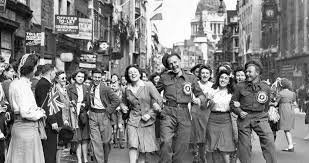
The build up to the 80th anniversary of VE Day has been blighted by US President Donald Trump’s public disregard for the contributions of the Allied nations, particularly the Soviet Union and Britain. Trump’s proposal to rename VE Day as Victory Day reveals everything anti-fascists need to understand about his peculiar brand of nationalistic America First-ism.
While our screens will be filled with official pomp and ceremony, we should be in no doubt that the Second World War was a war against fascism.
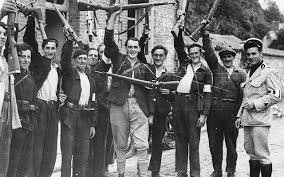
In fact, the anti-fascist war started a few years earlier with the Spanish Civil War (1936-39) when the movement sent cadres from many countries to form the International Brigades in an unsuccessful attempt to help save Spain’s broad Popular Front government from a right-wing military insurgency.
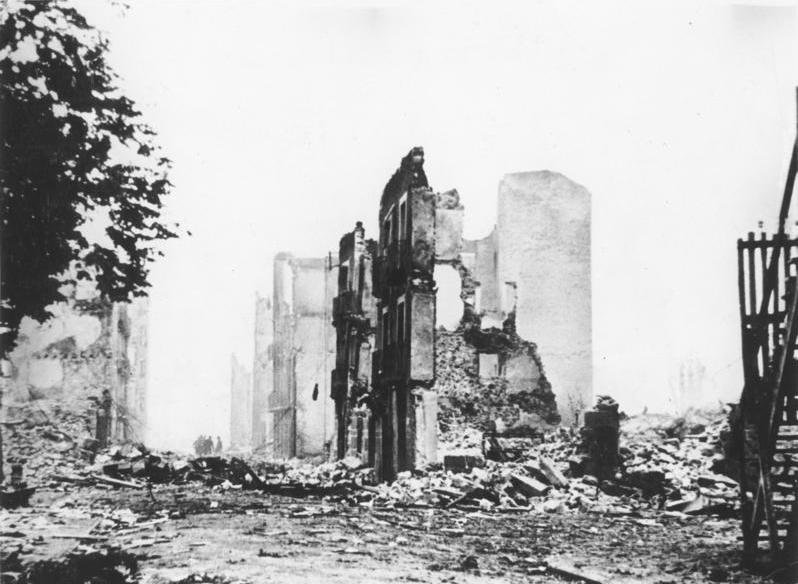
The intervention of Germany (and Italy) by sending its airborne Condor Legion to bomb civilians – pioneered in Ethiopia – in places such as Guernica marked a new frightening phase in modern warfare and helped ensure that the Spanish Republic would fall.
Only 20 years after the pointless slaughter of ‘the war to end all wars’ – the First World War – Nazism brought humanity to the abyss using the most modern technology to commit crimes of medieval barbarism.
Rightly, we should all celebrate the mighty achievement of the Allied armies, led by Britain, the Soviet Union and the United States, who fought a long war with great sacrifices to defeat Nazi Germany.
Resistance movements in Europe
While in Britain commemorations will have a domestic focus, we should not forget those in the resistance – of many hues – in the countries under occupation, who fought back with the threat of instant death or torture hanging over not only themselves but their entire families and even whole villages, were they to be caught.
Nazism’s greatest cruelty was inflicted on the Eastern Front where Hitler saw himself leading a divine mission to “wipe out Bolshevism”. Some 27 million Soviet lives were lost and massive destruction was wreaked on its towns and cities.
Extermination camps
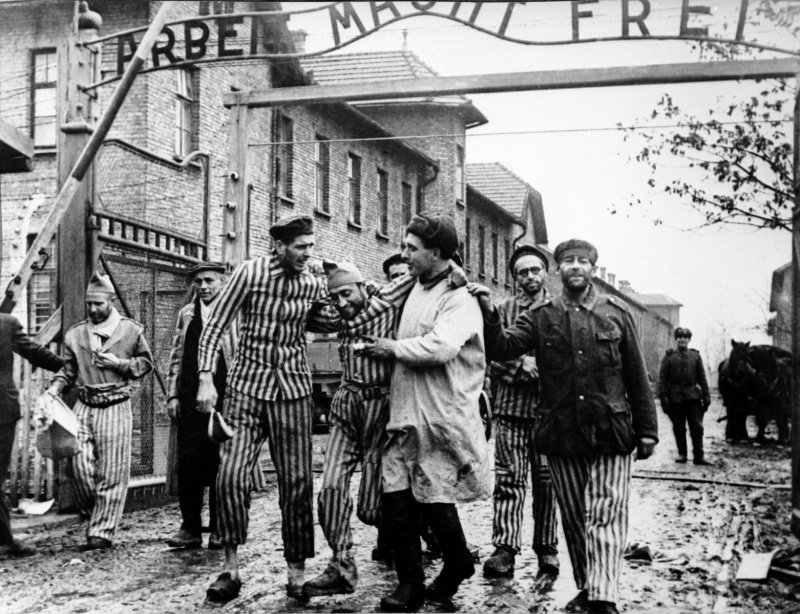
It was in the Nazi-occupied East too that the extermination camps were built. It was in these camps that six million Jews, together with hundreds of thousands of Gypsies and others who were considered racially inferior, were murdered with the help and planning of German industry.
From the earliest concentration camps such as Sachsenhausen in Germany to the extermination camps such as Auschwitz-Birkenau in Poland, resistance was organised.
In the ghettoes where Jews were forced to live before their mass murder, incredible resistance was put up, most famously in Warsaw. In the forests and hills throughout the war thousands of partisans sabotaged the occupiers’ plans.
Many had seen everything that they had known and loved destroyed by the Nazi jackboot and lived with the sole hope of freeing their country from the yoke of fascist tyranny.
The people’s war in Britain
In Britain the Second World War became known as a people’s war because it affected every man, woman and child. Food had to be rationed and there were constant shortages. Some foodstuffs, such as bananas, were not available at all.
The terror of the bombing of Guernica was a precursor to what was visited on the people of London, Coventry, and numerous other places.
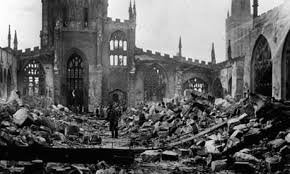
While men fought abroad women took over jobs that had been considered “men’s work”. Families took in children from the cities who were evacuated to safer areas away from the dreaded nightly bombing raids of the Luftwaffe.
Hundreds of thousands who weren’t in the armed forces volunteered to join the Home Guard ready to hunt down enemy paratroopers or even firebomb tanks in the event of an invasion, which after the fall of France in 1940 seemed imminent.
Piles of bodies
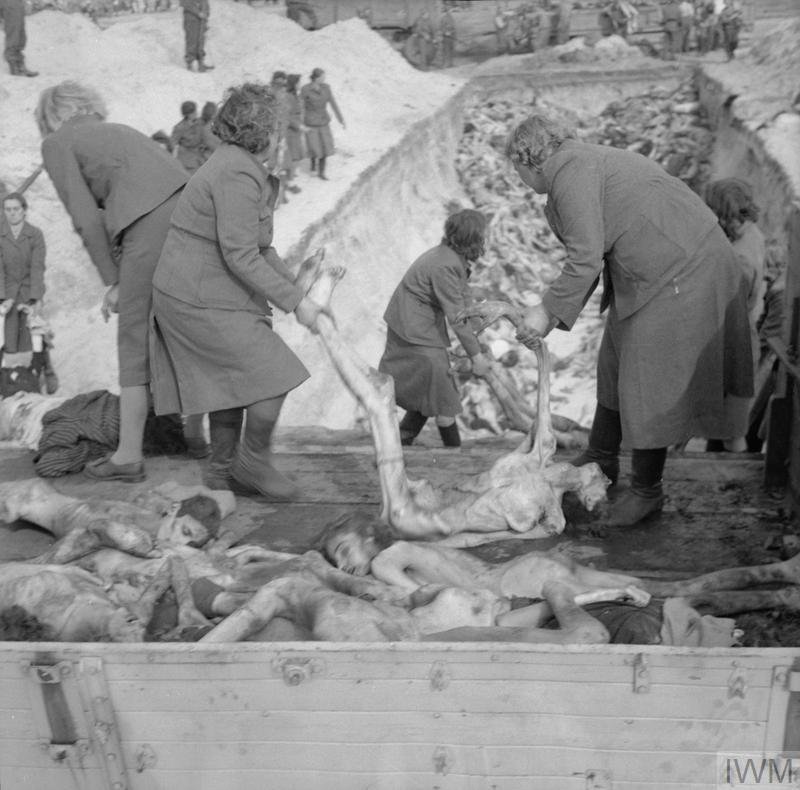
When British troops finally entered Germany in 1945 as liberators, the footage they shot of the Belsen concentration camp became ingrained in the nation’s consciousness. For many years Richard Dimbleby’s famous broadcast carrying images of the emaciated Belsen prisoners and the piles of bodies summed up nazi horror for the British people.
It is hardly surprising then after all the sacrifices and shortages of the war that when VE Day was declared on 8 May 1945 Britain’s streets were a sea of red, white and blue flags and bunting.
People danced in the streets and the nation rejoiced, bonfires were lit and bands played in the streets. Schools closed for two days and children who had never celebrated Guy Fawkes night – because of the blackout – saw fireworks for the first time in their lives.
For many years Richard Dimbleby’s famous broadcast carrying images of the emaciated Belsen prisoners and the piles of bodies summed up nazi horror for the British people
In Britain, thousands had lost loved ones, homes had been destroyed by German bombers, but the war had forced people to work together and support each other in a way that they had never known before.
A new consensus emerged based on people’s wartime experience that gave impetus to the formation of the welfare state and National Health Service. People were determined that after the war their sacrifices would not be in vain.
Fascists remained unrepentant
Meanwhile, the fascists remained unrepentant. The defeat of Nazism in Germany should have been fascism’s death blow, but it wasn’t.
In Britain, as elsewhere, the fascists regrouped and began to organise again. Oswald Mosley and other British fascists had been interned during the war as potential Quislings, though they were released before the war’s end.
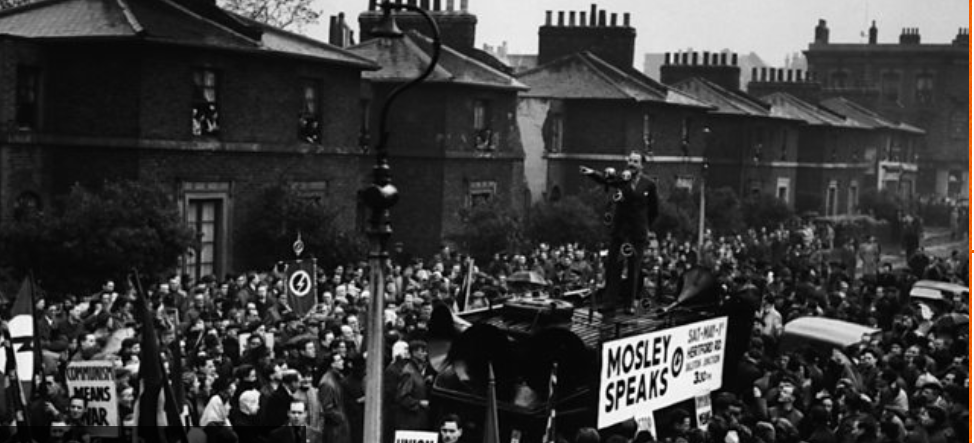
They began to organise, at first surreptitiously through book clubs, before a full-blown relaunch as Union Movement. Apoplectic, anti-fascists called for fascism to be outlawed. But calls for a ban came to no avail and were less enthusiastically pursued as time passed and the Cold War set in.
By the 1950s in Britain it seemed that communists, not fascists, would be the most likely target for any state repression.
Fierce opposition to fascist resurgence
In the absence of official action, anti-fascists resolved to stop Mosley themselves. The 43 Group of Jews, Communists and other anti-fascists, many now with military experience, was launched and organised fierce opposition to any resurgence of fascism.
Since the end of the war Britain’s fascists have tried to rewrite history to present themselves as patriots rather than supporters of the most evil regime of the 20th century and likely, all time.
They have also systematically denied the fact of the Holocaust in order to rehabilitate their ideas.
Now we have a US president who also wants to rewrite history by claiming that the USA “did more than any other country, by far” in the Second World War.
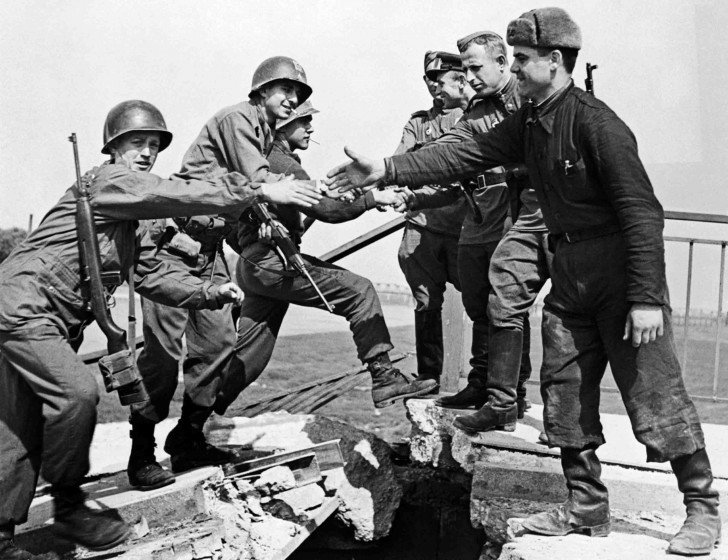
There is no doubt the contribution was immense but it was part of a colossal Allied effort which saw the Soviet Union bear the brunt and Britain’s cities bombed to smithereens. Trump’s blundering statements will not change the fact that VE Day will always stand as a commemoration of an important part of history.
It is an event where we recall the mighty allied alliance that defeated the fascist beast and swore never to allow it to rise again.


