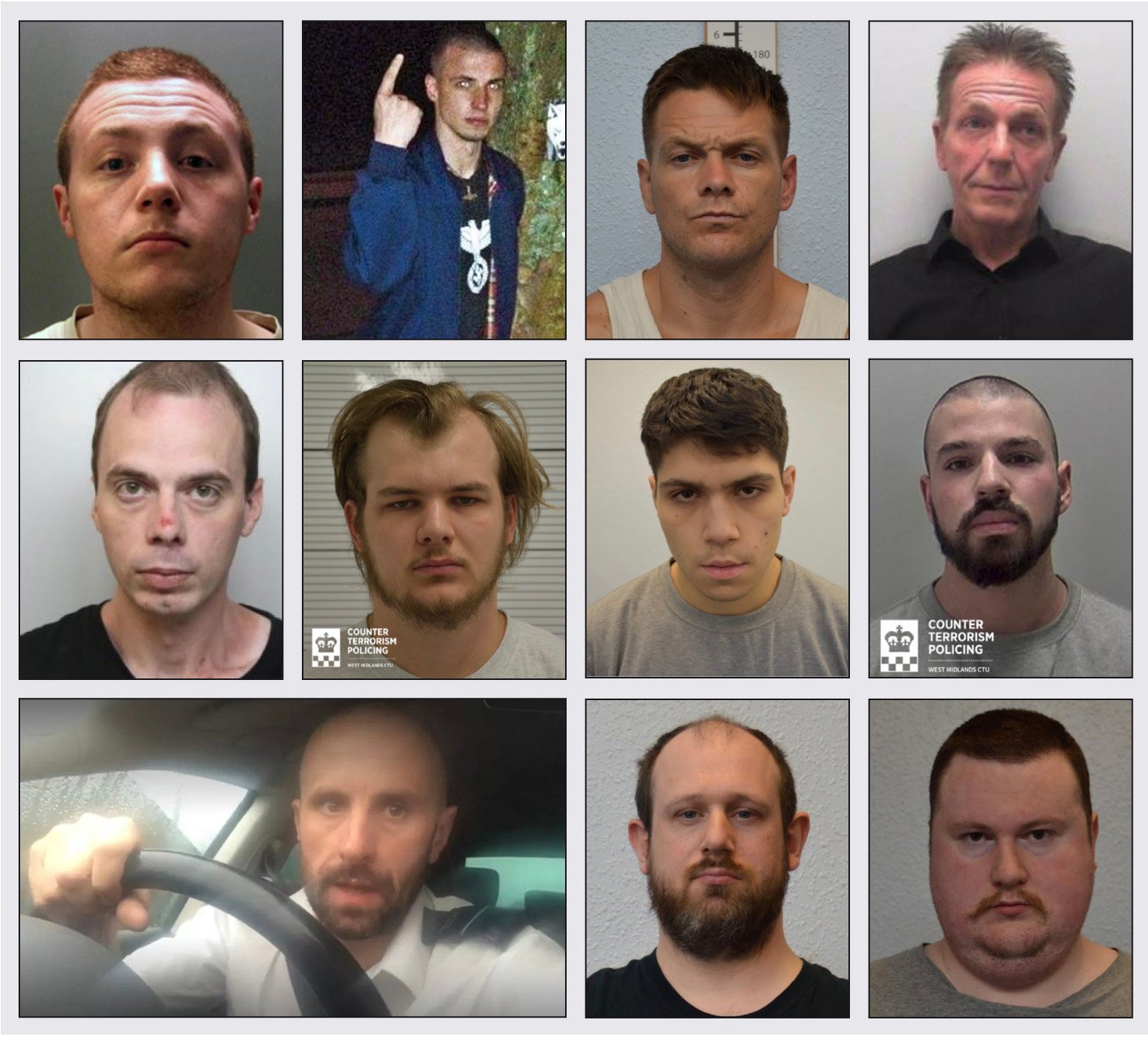
A steady procession of far-right extremists going through the courts facing terrorism charges once again raises serious concerns about the Shawcross review of the Prevent programme and the direction in which it might take official action against terrorism and extremism.
The controversial, long-awaited report on Prevent, the government’s counter-terrorism programme, conducted by William Shawcross was published in February. Shawcross, previously criticised for anti-Muslim comments, was appointed by the then Home Secretary Priti Patel.
Unwarranted focus
From the outset it was predicted that the review would seek to drive the programme towards a greater but unwarranted focus on Islamic extremism. Indeed, many feared that this was the intention from the outset. And the report has done little to assuage those fears.
More than 500 civil liberties groups, Muslim-led civil society organisations and individuals vowed to boycott the review even before it was published, citing ‘serious concerns about bias’.
Following its release, The People’s Review of Prevent – a project run by Prevent Watch, an independent community-funded organisation that supports individuals and groups negatively impacted by Prevent – published a detailed, critical response highlighting the many shortcomings of the report.
Different conclusions
The People’s Review argued that there was no secure basis for Shawcross’s recommendations and that ‘the evidence utilised in the report would in fact support different conclusions’.
A coalition of 17 human rights organisations, including Amnesty International, also boycotted the review expressing ‘grave concern’ over the appointment of William Shawcross as the reviewer, given his previous record of anti-Muslim statements.
The long-running criticisms of Prevent are manifold. Many human rights groups have argued extensively that the programme is discriminatory and that it disproportionately impacts Muslims across the UK.
One of the fundamental fears of the human rights groups was that the review would attempt to whitewash the Prevent strategy and give it a ‘clean bill of health, without interrogating, in good faith, its impacts on human rights and fundamental freedoms’. In reality, the review went even further, arguing that the programme has insufficient focus on ‘Islamist extremism’ and an excessive focus on right-wing extremism.
‘Insulting’
Shawcross has been accused of failing in his role as independent reviewer of Prevent by attending only 0.4% of the review panels charged with examining the more extreme cases identified by Prevent.
Indeed, much of the Shawcross review reads like a piece of right-wing ideological propaganda, a sentiment echoed by Britain’s former top counter terrorism officer, Neil Basu, of the Metropolitan Police, who said that parts of the report were ‘insulting’ to professionals whose job it is to avert terrorist attacks in Britain.
The conclusions that Shawcross makes in his review are simply not supported by the evidence.
Dispropotionate focus
One key claim made by Shawcross is that Prevent’s definition drawn for ‘Islamist’ extremism is too broad and in the case of right-wing terrorism it is too narrow. This, he says, means that Prevent does not accurately reflect ‘the lethal risks we actually face’. In effect, Shawcross is suggesting that because of this Prevent currently focuses disproportionately on far right extremism.
The problem here is that the facts contradict his assertions. If we take 2021–22, the last year for which data are available, 13% of all referrals to Prevent were adopted into Channel, the more intensive avenue of support provided for the most serious cases in which individuals are at greatest risk of extremism or radicalisation.
Of these, 19% were for ‘Islamist’ extremism and 42% were for far-right extremism. However, the proportion of all referrals for both groups was broadly similar: 16% for Islamist extremism and 20% for right-wing extremism.
One glaring issue is Shawcross’s almost complete lack of discussion of right-wing extremism. He lists terror cases that he describes as ‘Islamist in nature’ as evidence that Prevent has failed in its duty and, by implication, that ‘Islamist’ extremism is what is slipping through the net. There is no mention here of any of the numerous, recent arrests and violent acts committed by right-wing actors.
Growing convictions
Official figures released by the Home Office in June show that the number of far-right terror convicts in UK prisons is increasing. At the end of March, there were 65 individuals in custody for crimes motivated by ‘extreme right wing’ ideology, eight higher than the equivalent figure 12 months earlier.
This represents an enormous leap from March 2016 when just four far right inmates were recorded. Since the report’s release in February, at least 12 far-right extremism cases have come before the UK courts, for terror related offences:
- Kurt McGowan of Workington, Cumbria, convicted in February of sharing instructions for making weapons and explosives. Sentenced to 7 years
- Sejr Forster from Norwich, a neo-nazi and army recruit. Convicted in February for possessing bomb making instructions. Awaiting sentence
- Nicholas Roddis from Rotherham, sentenced to 4 years for breaching terrorist notification requirements and possessing ammunition. Had previously been sentenced to 7 years in 2009 for terrorism offences
- Vaughan Dolphin from Walsall, jailed for 8 and a half years in May for possessing instruction manuals for making guns and explosives. He had caused an explosion in his aunt’s kitchen as he tried to create an explosive device
- Ashley Prosiad-Sharp, a Hitler-worshipping prison officer from Barnsley, convicted for the possession and dissemination of terrorist material and possession of weapons
- Kristofer Kearney, a Patriotic Alternative member, pleaded guilty to disseminating terrorist publications online. Sentenced to two concurrent terms of 4 years and 8 months
- Darren Reynolds, a right-wing conspiracy theorist from Sheffield, convicted on eight counts of terrorist offences relating to the destruction of 5G masts. He was also in possession of a crossbow with bolts, a replica assault rifle and a booklet called How to Become an Assassin
- Luke Skelton, nazi sympathiser from Washington, Tyne and Wear, convicted in May of preparing to commit terrorism and possessing bomb ingredients. Four years in prison
- Ben Styles of Leamington, ‘obsessed with far-right wing ideologies’, pleaded guilty in June to collecting terrorism material and possession of an illegal weapon. He was trying to manufacture a machine-gun and ammunition. Awaiting sentence
- An unnamed 17-year-old youth from South Wales pleaded guilty in June to disseminating terrorist material and distributing material likely to be useful in the preparation for terrorism. Awaiting sentence
- Christopher Gibbons of Carshalton and Tyrone Patten-Walsh from Romford, who hosted nazi podcasts, convicted in July of encouraging terrorism. Gibbons was also found guilty of disseminating terrorist publications Both awaiting sentence.
Bear in mind that these are the most extreme examples: this list does not include a number of right-wing extremists convicted of non-terrorist but nevertheless serious offences involving behaviour that might also be referred to Prevent.
The original call for an independent review of Prevent came in 2016 from the then Independent Reviewer of Terrorism Legislation, David Anderson KC.
In evidence to the Home Affairs Select Committee, he expressed concerns that the way the Prevent programme was operating was sowing mistrust and fear in the Muslim community. He also raised worries that elements of the programme were being applied in an insensitive and discriminatory manner.
Neo-conservative
Shawcross was never the person to address these concerns. He has expressed anti-Muslim views in the past and is affiliated with neo-conservative think-tanks. His review has simply brushed Anderson’s concerns aside and proposed a more anti-Muslim focus belied by much of the evidence presented to him and, as shown in this article, is now contradicted by the evidence of cases going through the courts.
If Prevent is to be genuinely effective, then the original review called for by David Anderson KC is still very much needed. In the meantime, if Shawcross’s report results in the tilt that he was obviously seeking, there is a danger that radicalisation towards right-wing terrorism, at present the greater danger, will slip under the radar.
There may be a price to pay for that.


One response to “Far-right terror cases undermine Shawcross report”
I wonder how many of these men were
a) referred to Prevent?
b) fit the category of ‘vulnerable adult?
c) will receive punishments that fit the crime?
d) had their far-right views presented as being synonymous with terrorism?