One song and two singers came to represent opposition and resistance to Hitler in the Second World War. The most beautiful and certainly most popular song of the Second World War was Lili Marlene.
A poem written in 1915, it was first recorded by German singer Lale Andersen in 1939 and was titled Das Mädchen unter der Laterne (The Girl under the Lantern). Another hugely popular version was recorded by Marlene Dietrich, a German exile living in the USA.
Lili Marlene (original German version) by Lale Andersen, 1939
Lili Marlene by Marlene Dietrich, 1944
The German forces’ radio station, Soldatensender Belgrad (Soldiers’ Radio Belgrade) popularised Andersen’s version of the song and played it on rotation. Its powerful transmitter meant that both Nazi and Allied frontline soldiers in the Mediterranean, Europe and the East listened.
The record became a huge hit among both German and Allied soldiers.
Yet the Nazis, and in particular its propaganda minister Joseph Goebbels, detested the song. They believed that its pessimistic and defeatist lyrics were bad for the morale of German troops.
Goebbels also had a visceral hatred of Andersen.
Goebbels snubbed
Andersen was not involved in any anti‑Nazi resistance movement, but she rejected the state’s anti-Semitism. Her support for the Jews of Germany was known by the Nazi authorities – they had intercepted her “friendly” correspondence with German Jewish refugees living in Switzerland.
Recently translated Nazi documents of the Jewish Warsaw Ghetto record that Andersen was invited to perform a concert for the Nazi ghetto guards. Andersen refused the invite.
This snub was too much for Goebbels, he had Andersen arrested in 1942 and charged with “undermining the troops’ morale”.
The singer’s popularity probably saved her from being sent to a prison camp, but she was barred from performing.
Over the following year, German soldiers made demands on their leaders to see Andersen perform and in particular hear the song Lili Marlene
Over the following year, German soldiers made demands on their leaders to see Andersen perform and in particular hear the song Lili Marlene.
As the situation in the Eastern Front deteriorated and the German army suffered a series of military defeats, Goebbels was forced to rescind the ban. He allowed Andersen to perform again in late 1943, but on one condition – that she did not sing that song.
At her first concert after the ban was lifted the audience stamped their feet and demanded she sang Lili Marlene. When the audience realised that she was not going to sing it, they sang it themselves.
The Nazis officially banned the song in 1944.
Hypnotic version
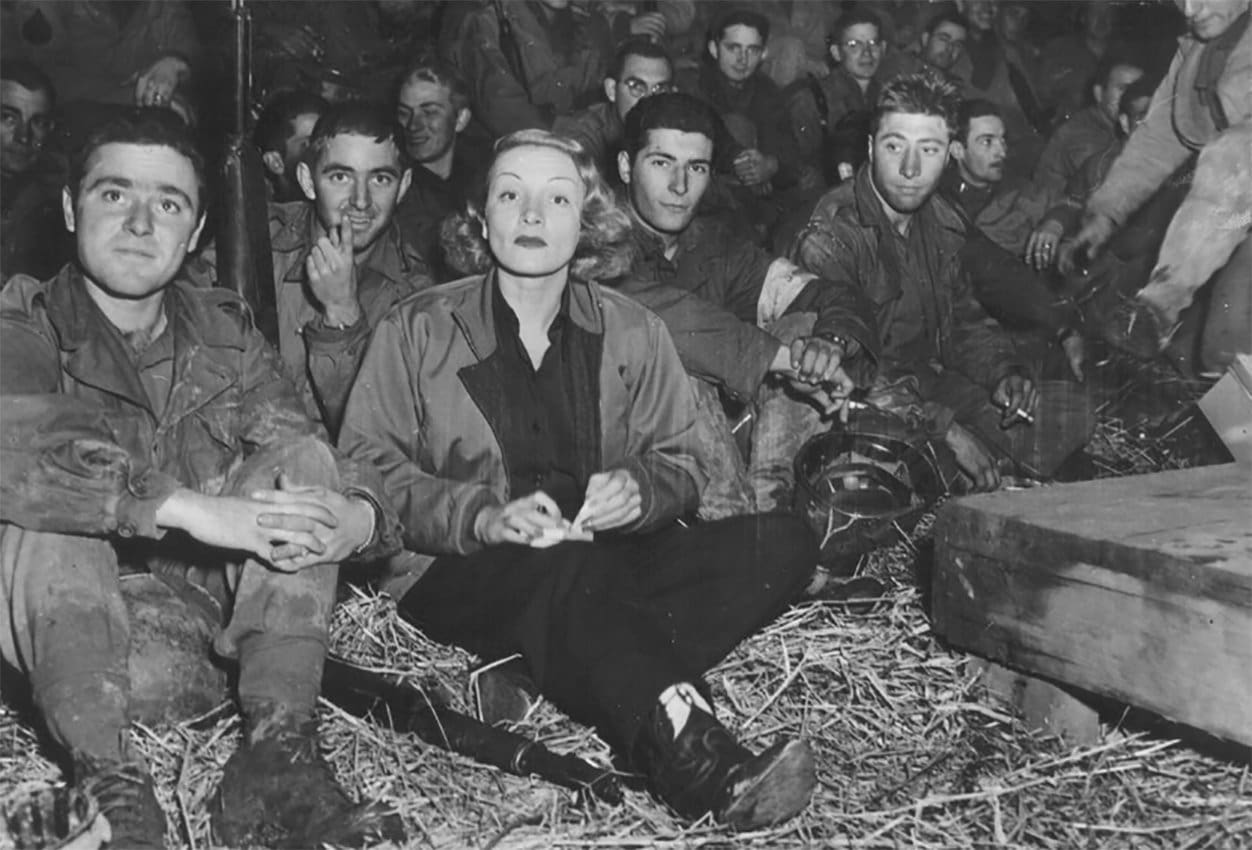
Across the Atlantic, a German in exile, singer Marlene Dietrich, was also singing her version of the song.
Unlike Andersen, Dietrich publicly opposed the Nazis. She cut her teeth in the left cabaret scene in Weimar Germany and became a major film star in Germany during the 1920s.
In 1930 she moved to Hollywood, USA, and became a huge box office star making a series of major films including The Devil is a Woman, Shanghai Express and Blonde Venus.
Steven Bach’s excellent biography, Marlene Dietrich: Life and Legend argued that she held left/liberal political convictions. He revealed that she and film-maker Billy Wilder helped Jews and dissidents escape from Germany. In 1937, her entire salary for Knight Without Armor ($450,000) was used to help Jewish refugees.
In 1939, she became a US citizen and renounced her German citizenship. When the USA entered the war in 1941, Dietrich became one of the first Hollywood stars to help sell war bonds.
Dietrich on the front line
She sang for Allied troops across Europe. When US troops entered Germany, she performed for them on the front line. The song the troops always wanted to hear was her hypnotic version of Lili Marlene.
In 1944, the Morale Operations Branch of the Office of Strategic Services (OSS) initiated the Musak project – musical propaganda broadcasts designed to demoralise Nazi soldiers. Dietrich recorded Lili Marlene for the project, it was hugely popular.
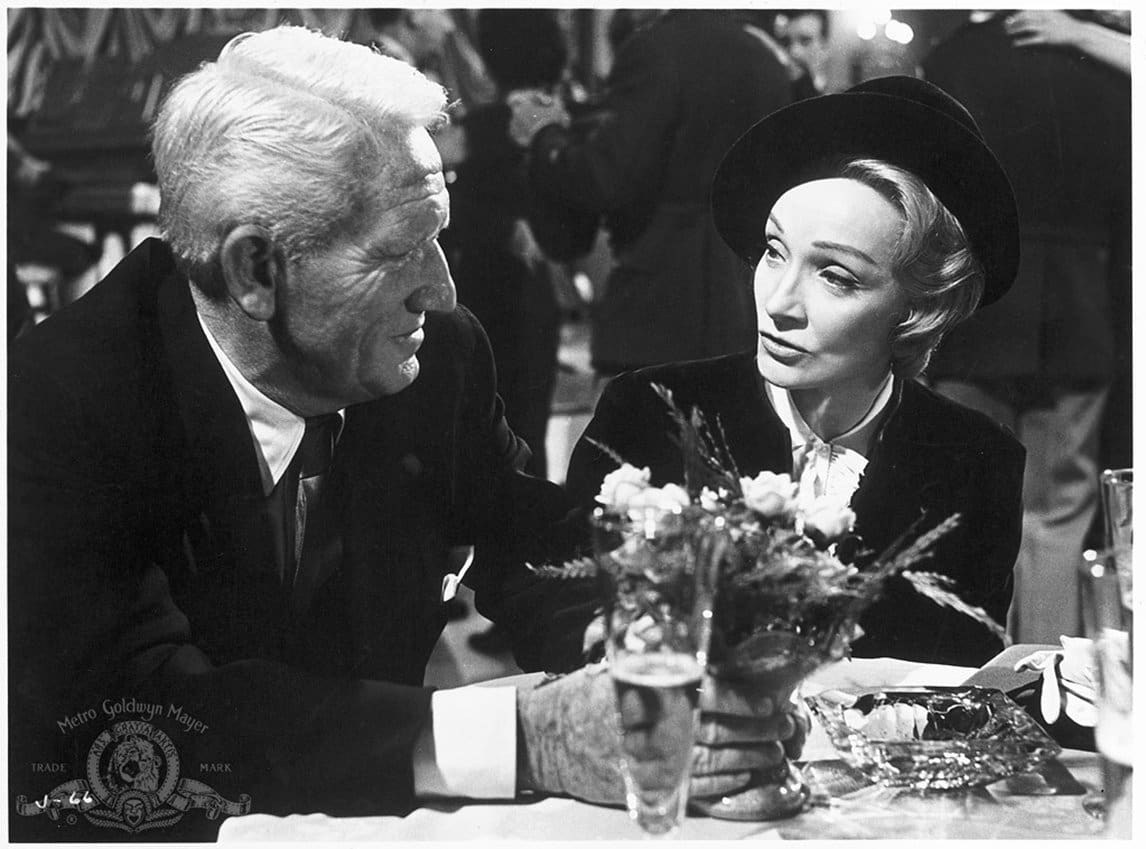
Dietrich would remain a major star for decades after the war. In 1961, she appeared in Stanley Kramer’s film Judgment at Nuremberg, a powerful portrayal of the post-war Nazi trials.
Goebbels was right to fear the power of Lili Marlene, it continued to haunt the Nazis long after the regime was reduced to ashes
In it, Lili Marlene makes a memorable appearance sung by a choir and hummed by Dietrich as she walks along the street with Spencer Tracy discussing the poignancy and beauty of the German lyrics and her hatred of Hitler.
Goebbels was right to fear the power of Lili Marlene, it continued to haunt the Nazis long after the regime was reduced to ashes.
Underneath the lantern,
By the barrack gate
Darling I remember
The way you used to wait
T’was there that you whispered tenderly,
That you loved me,
You’d always be,
My Lili of the Lamplight,
My own Lili Marlene
This article first appeared in the Autumn 2024 issue of Searchlight.


