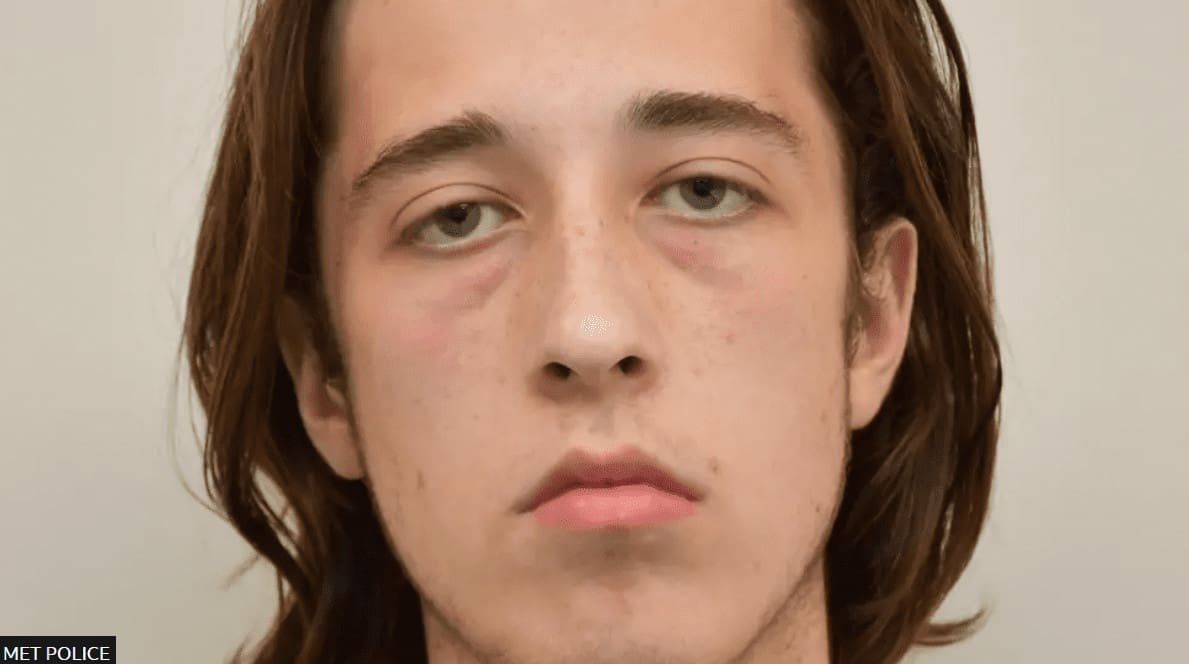
Alfie Coleman, the Essex neo-nazi whose first trial at the Old Bailey ended without a verdict, has been convicted of preparing acts of terrorism following a retrial.
Coleman, now 21 and from Great Notley, was found guilty today and remanded in custody awaiting sentencing on 8 July.
Seeking weapons
Coleman had spent the Covid lockdowns immersing himself in extreme right-wing material from the age of 14, graduating from downloading neo-nazi texts to actively seeking weapons.

What the prosecution described as a “highly sophisticated” MI5 undercover operation brought his preparations to an abrupt end and led to his arrest.
The sting culminated on 29 September 2023 in a Morrisons car park in Stratford, east London, where Coleman dropped £3,500 in the footwell of a Land Rover Discovery and retrieved a holdall from the boot containing a Makarov pistol, five magazines and 200 rounds of ammunition.
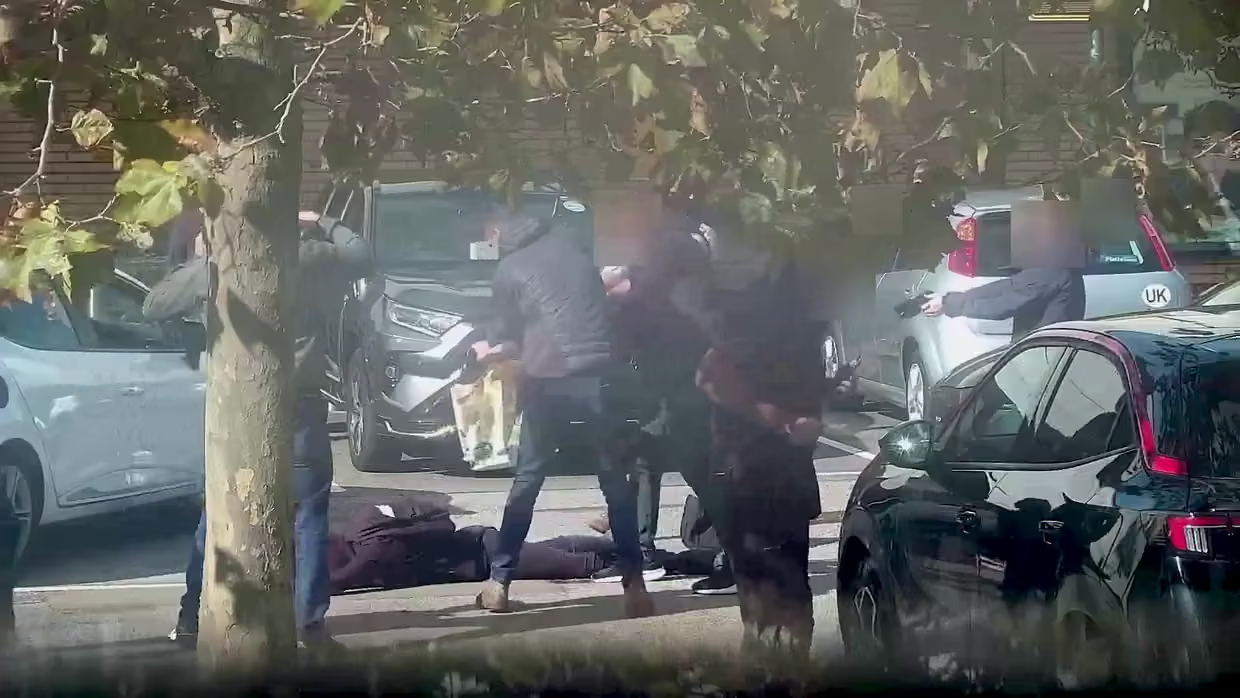
He had not gone 30 yards before counter-terrorism officers forced him to the ground.
The jury heard that Coleman had spent months in encrypted communications on Wire and Telegram with what he believed were sympathetic contacts but were in fact undercover MI5 officers.
Combat knife
Two days before the handover he had written: “Something has gotta be done, how long can we sit here and talk over the internet.” The same day he ordered a combat knife online.
Searches of the home he shared with his family uncovered swastika-adorned items, a bug-detection device, an air rifle and a collection of knives.

His electronic devices contained a manifesto modelled on that of Dylann Roof, the white supremacist who murdered nine Black churchgoers in South Carolina in 2015, along with a list of targets including the Lord Mayor of London, a mosque and work colleagues branded “race traitors”.
He had also emailed Patriotic Alternative in 2021 expressing interest in activism.
Commitment to violence
In the dock Coleman claimed he had “fallen for a trap” and that online talk did not translate into action. The jury disagreed.
Detective Chief Superintendent Helen Flanagan of the Met’s Counter Terrorism Command said Coleman was “a really dangerous individual” whose physical exchange of cash for firearms demonstrated commitment to violence “way beyond simply typing out ideas of fantasy on his computer.”


