
At Britain First’s recent Manchester demonstration, leader Paul Golding made a conspicuous show of policing the optics. But it was all a bit selective and didn’t extend to getting rid of a convicted terrorist.
Known neo‑Nazis such as Harry Jackson – an “auditor”, Patriotic Alternative member and ally of Ryan Ferguson – were briskly ejected by Britain First’s self‑styled security team.
Golding clearly wanted the cameras to see him drawing a line.

(Incidentally, he also did a nice line in insulting some ‘Pink Ladies’ who had showed up (“scumbag, fucking slag…fuck off”) and got convicted thug Nick Hubble to move on an elderly anti-rascist demonstrator who had got too close with a sign that simply said “Racism is not patriotism”).
Front line welcome
Ryan Ferguson later complained that only months earlier, in Birmingham, he had been welcomed into the front rank of a Britain First march, walking beside Golding while wearing a neo-nazi “88” T‑shirt.

Now, suddenly, he and his circle were being frozen out. Golding has evidently decided that if he wants to remain in the orbit of figures like Tommy Robinson, the movement’s rougher edges need sanding down.
But the performance wasn’t entirely convicing.
Notorious paramilitary
Because while Golding was busy purging the usual neo‑Nazi suspects, Johnny “Mad Dog” Adair, one of the most notorious loyalist paramilitaries of the Northern Ireland Troubles, also appeared on the Manchester march and was photographed among attendees, though his presence went entirely unchallenged by organisers or the ‘security force’.
Adair is no fringe hanger‑on. He is a former commander in the Ulster Defence Association (UDA) and leader of its most violent faction, C Company, based on Belfast’s Shankill Road. He was convicted for directing terrorism in 1995.
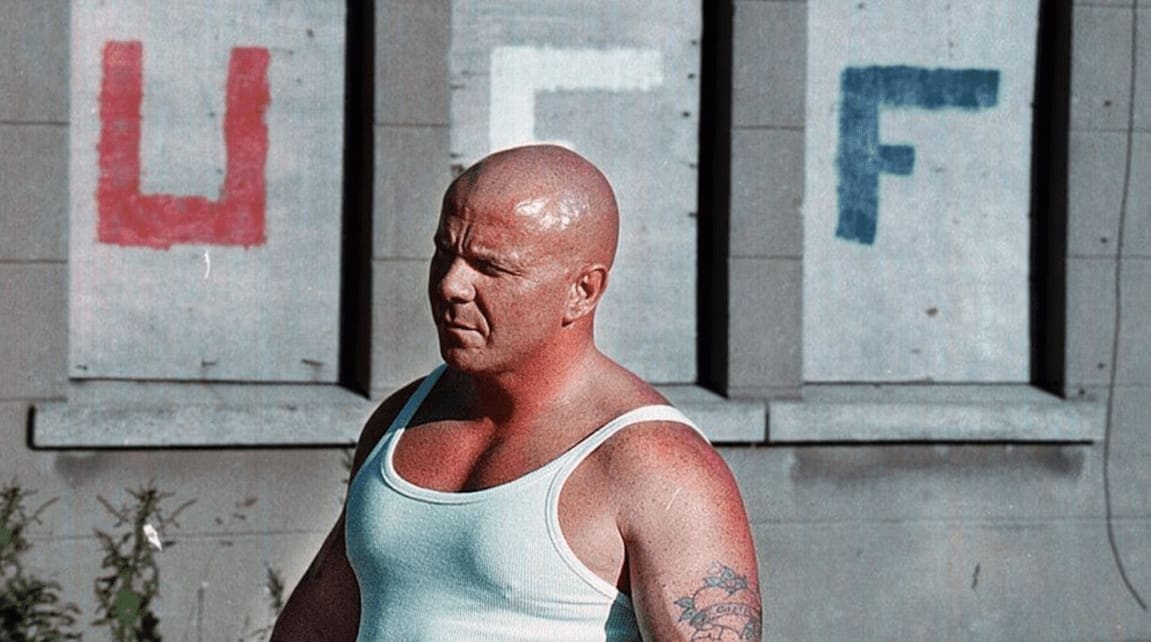
During the 1990s, C Company was linked to numerous sectarian murders, and Adair cultivated a reputation for theatrical brutality, media‑baiting bravado and internal feuds that eventually saw him expelled from Northern Ireland.
Factional warfare
After his release from the Maze Prison in 1999, Adair’s factional warfare escalated to the point that the UDA itself forced him out. He has since lived on the mainland, periodically resurfacing in the media, constantly trading on the notoriety of his brutal paramilitary past.
If Britain First wants to claim distance from extremism, it might start by asking why a man once at the centre of extreme loyalist violence can stroll into its events without so much as a raised eyebrow.
Until then, Golding’s line‑drawing looks like nothing more than performance.
Which is exactly what it is.


