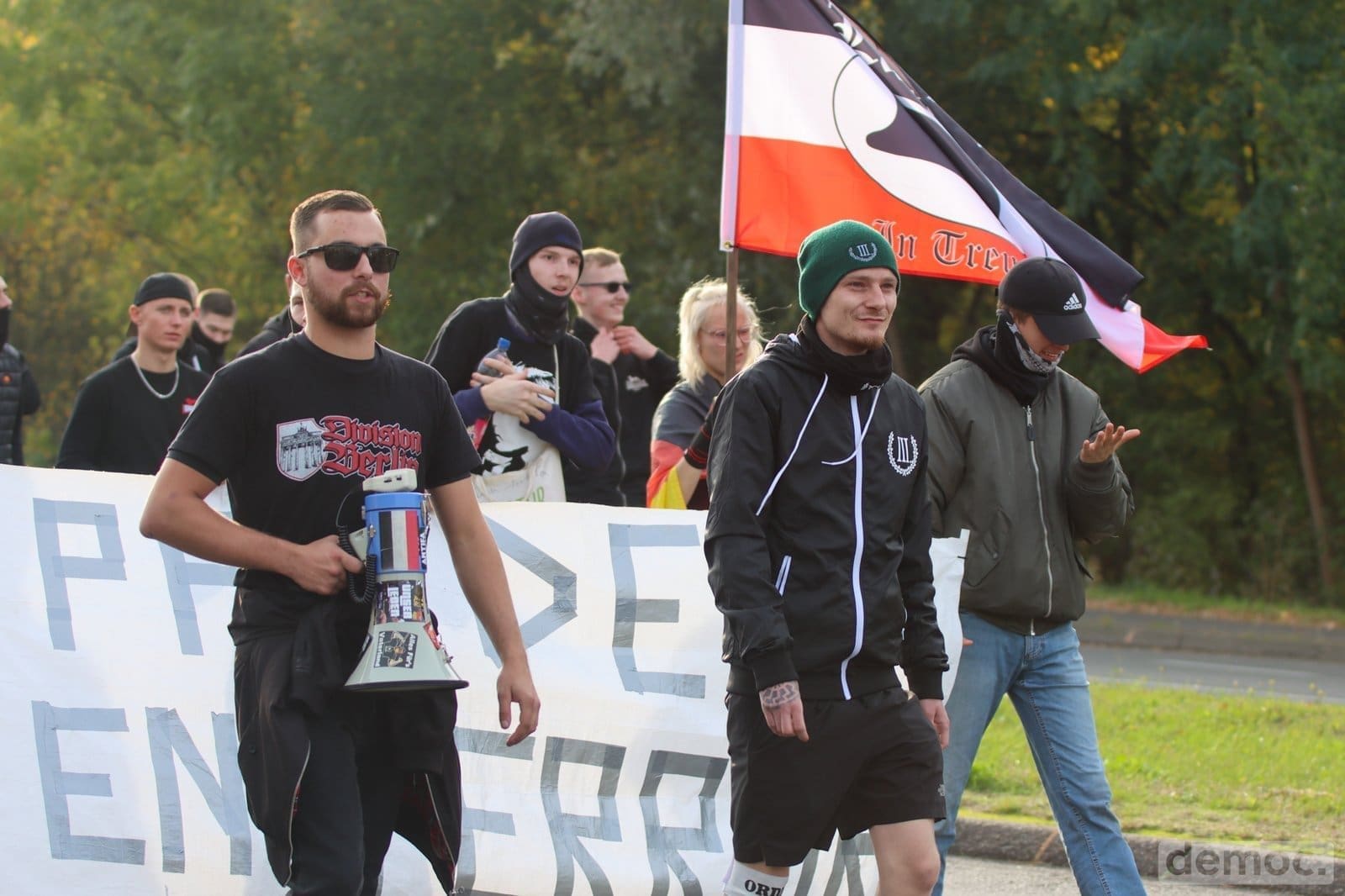
German police swooped on addresses across a dozen federal states on 6 May, targeting suspected ringleaders of two neo-nazi youth networks whose combined membership runs into the hundreds.
Around fifty homes were searched in raids stretching from Berlin to Bavaria, though no arrests followed. The two groups in the crosshairs were Deutsche Jugend Voran (Forwards German Youth) and Jung und Stark (Young and Strong).
Violence against opponents
As these groups advocate for using violence against political opponents, they are being treated as criminal organisations. In some cases, this was not just an empty threat; the Federal Prosecutor’s Office said, ‘Some of the accused are alleged to have attacked members of the left-wing scene’.
The raids primarily took place in the south and east of the country, including apartments in Berlin, Brandenburg, Bavaria and Saxony. The suspects were primarily young adults, and are thought to be the ringleaders of DJV and Jung und Stark.
Berlin networks
Berlin – largely a left-wing city – has seen a significant far-right presence. There have been several marches organised by far-right extremist groups in the capital, attended by alleged members of Jung und Stark and Deutsche Jugend Voran.
According to the head of the Right-Wing Extremism Division at the Berlin State Criminal Police Office, these far-right groups – particularly the youth groups – are less structured than in the past. ‘The youth groups are founded, renamed, re-founded, and then quickly disappear into obscurity again’, he said.

Far-right groups are a particular problem in the Marzahn-Hellersdorf district of Berlin. Located in the former east and home to Europe’s largest prefab housing estate, it is an economically deprived area with high poverty rates.
This strong right-wing culture is expressed through frequent neo-nazi violence, and through election results – in the 2025 general election, the far-right AfD won 29.5% of the district’s votes.
Online radicalisation
Both Jung und Stark and DJV maintain an online presence and reach members via social media, including on Telegram and Instagram. This is a typical tactic for recruiting members into extremist politics; luring in disenfranchised young people – especially young men – with openly violent and xenophobic rhetoric.
Far-right violent crime is a growing issue in Germany, with more of these incidents recorded in 2025 than in any other year since 2016. According to a statement from the centre-left party SPD, ‘Militant right-wing extremist groups are gaining support – shockingly, especially among young people’.
Norrmalised
This rise in neo-nazi violence is perhaps a symptom of far-right rhetoric being normalised across mainstream German politics.
The AfD has achieved significant electoral success despite its elected politicians regularly referencing nazi phrases and ideology, marking a significant shift in Germany’s remembrance culture and attitude towards its past.


